
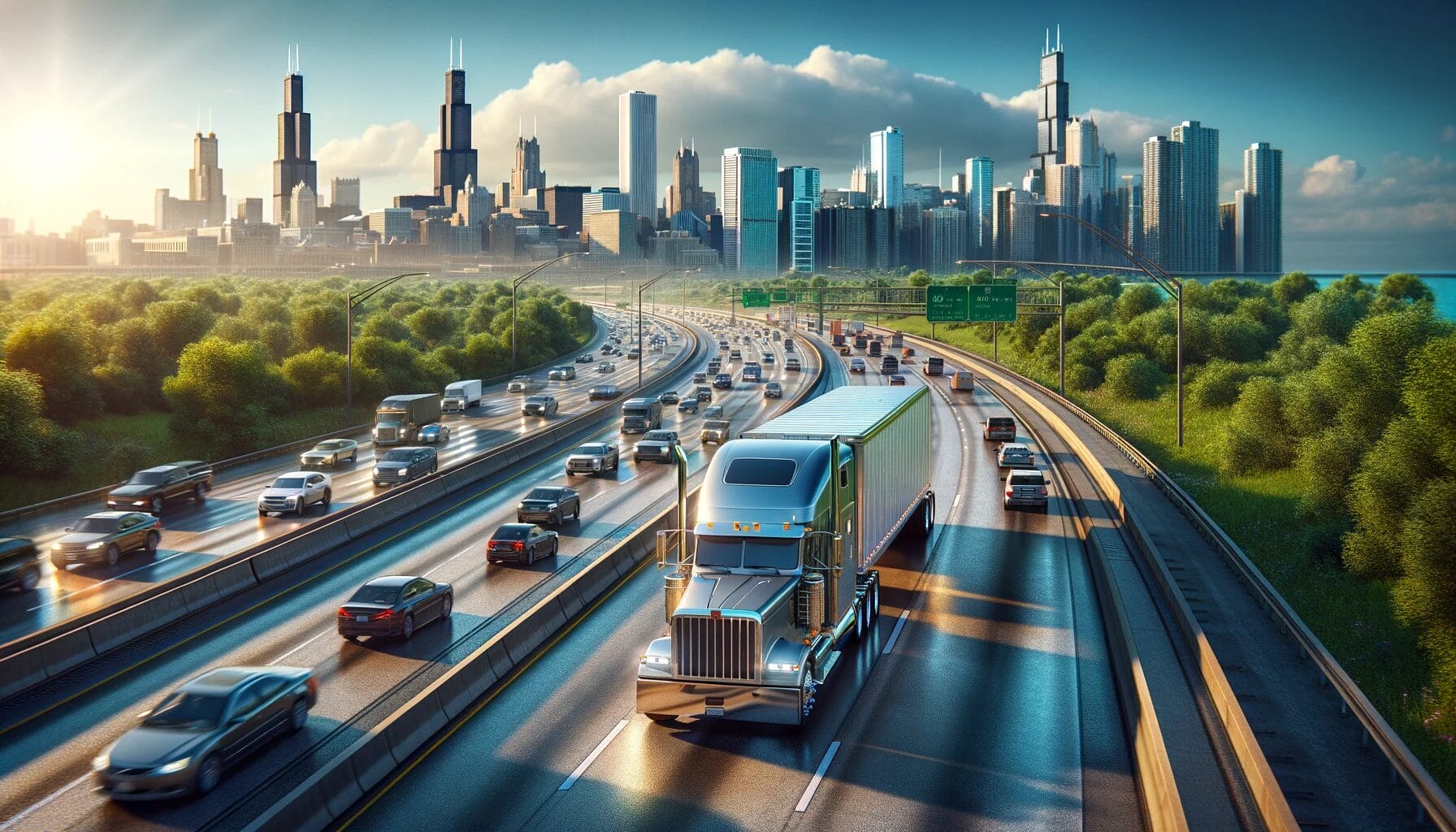
The explosion of online shopping has put more delivery trucks on Chicago’s streets than ever before. Amazon alone operates thousands of delivery vehicles across the Chicago metro area every single day. Add FedEx, UPS, DHL, and countless other delivery services, and it’s no surprise that accidents involving these vehicles have skyrocketed.
If you’ve been injured in an accident with a delivery truck, you’re facing a situation far more complex than a typical car accident. Multiple parties may be liable, insurance coverage can be confusing, and large corporations have teams of lawyers working to minimize your claim. At Phillips Law Offices, our Chicago truck accident attorneys have the experience and resources to take on these cases and fight for the compensation you deserve. For a broader look at this issue across the Chicago network, see our companion guide on Amazon, FedEx and UPS delivery truck crashes in Chicago.
The Rise of Delivery Truck Traffic in Chicago
The numbers tell the story:
- Amazon delivers over 10 million packages per day nationwide, with Chicago being one of its largest markets
- FedEx operates over 700 facilities in Illinois and delivers millions of packages weekly
- UPS runs massive distribution hubs in the Chicago area, including one of the largest in the country
- During peak seasons (holidays, Prime Day), delivery traffic increases by 30-50%
These vehicles are everywhere: residential neighborhoods, busy downtown streets, highways, and everything in between. The pressure to meet delivery quotas means drivers are often rushing, fatigued, or distracted.
Why Delivery Truck Accidents Are Different
Delivery truck accident cases differ from standard car accidents in several important ways:
1. Complex Liability Issues
Determining who is responsible for a delivery truck accident isn’t always straightforward. Potential liable parties include:
- The driver: If they were negligent, distracted, or violated traffic laws
- The delivery company: Amazon, FedEx, UPS, etc., may be vicariously liable for their drivers’ actions
- Third-party contractors: Many delivery drivers work for contracted delivery service partners (DSPs), not directly for Amazon
- Vehicle manufacturers: If a defect contributed to the accident
- Maintenance companies: If poor vehicle maintenance was a factor
2. The Independent Contractor Problem
This is critical: Many delivery drivers, especially those driving Amazon-branded vans, are not Amazon employees. They work for third-party “Delivery Service Partners” (DSPs). Amazon uses this structure intentionally to shield itself from liability.
When an accident occurs, Amazon often claims it’s not responsible because the driver wasn’t their employee. However, an experienced attorney can often pierce this corporate structure by showing:
- Amazon controls the routes, delivery schedules, and quotas
- Amazon provides the branded vehicles and uniforms
- Amazon’s app directs drivers’ every move
- Drivers have little actual independence despite being called “contractors”
3. Larger Insurance Policies
Commercial delivery vehicles typically carry much larger insurance policies than personal vehicles, often $1 million or more. While this means more potential compensation for serious injuries, it also means insurance companies fight harder to deny or minimize claims.
Common Causes of Delivery Truck Accidents
Our investigations have revealed consistent patterns in delivery truck accidents:
Unrealistic Delivery Quotas
Amazon drivers are expected to deliver 250-300 packages per day. FedEx Ground drivers face similar pressure. This creates dangerous incentives to:
- Speed through residential neighborhoods
- Run stop signs and red lights
- Double-park in traffic lanes
- Skip required rest breaks
Distracted Driving
Delivery drivers constantly interact with apps and devices to:
- Navigate to addresses
- Scan packages
- Take delivery photos
- Communicate with dispatchers
This technology-driven distraction is a major accident risk.
Driver Fatigue
Long shifts (often 10+ hours), physical demands of loading/unloading, and pressure to finish routes lead to exhausted drivers making dangerous mistakes.
Inadequate Training
Many delivery drivers receive minimal training before being put on the road. Unlike commercial truck drivers who need CDLs, most delivery van drivers only need a standard driver’s license.
Poor Vehicle Maintenance
Fleet vehicles that rack up hundreds of miles daily need rigorous maintenance. When companies cut corners, brake failures, tire blowouts, and other mechanical issues can cause serious accidents.
Types of Delivery Truck Accidents
We handle all types of delivery vehicle accidents, including:
- Intersection collisions: Drivers running lights or failing to yield
- Backing accidents: Common in driveways and parking lots
- Pedestrian accidents: Especially in residential areas
- Cyclist accidents: Delivery vehicles blocking bike lanes or failing to see cyclists
- Sideswipe accidents: Often caused by drivers rushing and not checking mirrors
- Rear-end collisions: Distracted drivers hitting stopped vehicles
- Accidents involving falling packages: Improperly secured cargo
Pedestrian and Cyclist Crashes With Delivery Vans
Delivery vans create a specific hazard for pedestrians and cyclists that a standard passenger-car crash doesn’t: frequent stopping, backing, and double-parking in travel lanes and bike lanes, often in residential blocks where people don’t expect commercial traffic.
A driver backing out of a driveway after a delivery, or pulling back into a bike lane after double-parking, is a common fact pattern in these cases. Illinois traffic law under 625 ILCS 5/11-1003.1 requires drivers to exercise due care to avoid colliding with a pedestrian, and a violation of that standard is itself evidence of negligence.
Injuries in these crashes tend to be more severe than vehicle-to-vehicle collisions, simply because a pedestrian or cyclist has no structure absorbing the impact. If you were hit while walking or biking near a delivery vehicle, get the van’s license plate and company markings before it leaves. DSP vans in particular can look similar to each other, and misidentifying the carrier can complicate a claim later.
Evidence We Gather in Delivery Truck Cases
Building a strong case requires obtaining evidence that delivery companies and their insurers don’t want to hand over. Our attorneys know how to get:
Driver Records
- Employment history and driving record
- Training records (or lack thereof)
- Hours worked on the day of the accident
- Previous complaints or accidents
Vehicle Data
- GPS and telematics data: Shows exact speed, location, and driving patterns
- Delivery app data: Records every stop, delivery time, and route
- Dashboard camera footage: Many delivery vehicles have cameras
- Maintenance records: Proving the vehicle was properly (or improperly) maintained
Company Policies
- Delivery quotas and expectations
- Safety protocols (and whether they were followed)
- Training programs
- Disciplinary policies
Important: This evidence can be deleted or overwritten quickly. If you’ve been in an accident with a delivery truck, contact an attorney immediately so we can send preservation letters demanding this evidence be saved.
A Typical DSP Delivery Crash, Start to Finish
Picture a delivery driver behind an Amazon-branded van, running behind on a 300-stop route with two hours of daylight left. At a four-way stop in a residential neighborhood near Midway, the driver rolls through without a full stop and strikes a car pulling out of a driveway.
The driver’s own insurance card, if they carry one at all, covers a fraction of what’s needed. The van, though, is covered by a commercial policy carrying a seven-figure limit, because Amazon requires its Delivery Service Partners to carry that coverage as a condition of the contract.
The DSP’s first move is usually to say the driver was an independent contractor working for a separate small business, not Amazon itself, and that Amazon bears no responsibility. What that argument leaves out: the delivery app assigned the route in real time, the DSP’s dispatcher was tracking the driver’s stop count throughout the shift, and Amazon’s own operating agreement with the DSP sets daily delivery targets that make rushing close to unavoidable.
None of that shows up on the police report. It shows up in the DSP’s internal telematics data, the Amazon Flex or DSP scheduling logs, and the driver’s own device, all of which can be gone within days unless someone sends a preservation letter demanding the company hold onto it.
This scenario is illustrative, not a specific past result. Every case turns on its own facts, and outcomes are never guaranteed.
Injuries in Delivery Truck Accidents
While most delivery vehicles are smaller than semi-trucks, they’re still much larger and heavier than passenger cars. Victims often suffer serious injuries including:
- Traumatic brain injuries
- Spinal cord injuries and paralysis
- Broken bones and fractures
- Internal organ damage
- Soft tissue injuries (whiplash, herniated discs)
- Burns (if fire is involved)
- Wrongful death
What Compensation Is Available?
Victims of delivery truck accidents may recover compensation for:
- Medical expenses: Emergency care, surgeries, rehabilitation, ongoing treatment
- Lost wages: Time missed from work during recovery
- Lost earning capacity: If injuries prevent you from returning to your job
- Pain and suffering: Physical pain and emotional distress
- Property damage: Vehicle repair or replacement
- Loss of enjoyment of life: Inability to participate in activities you once enjoyed
Illinois Laws That Apply to Delivery Truck Accidents
Several Illinois laws and federal regulations govern delivery truck accident cases:
Illinois Statute of Limitations
Under 735 ILCS 5/13-202, you have 2 years from the date of the accident to file a personal injury lawsuit in Illinois. Missing this deadline typically bars your claim forever.
Illinois Comparative Negligence
Illinois follows a modified comparative negligence rule under 735 ILCS 5/2-1116. You can recover damages as long as you’re not more than 50% at fault for the accident. However, your recovery is reduced by your percentage of fault.
Vicarious Liability (Respondeat Superior)
Under Illinois common law, employers can be held liable for employees’ negligent actions performed within the scope of employment. This is critical for holding delivery companies accountable for their drivers’ negligence.
Federal Motor Carrier Safety Regulations
For larger delivery vehicles (over 10,001 lbs), federal FMCSA regulations apply, including:
- 49 CFR Part 395 – Hours of Service regulations limiting driving time
- 49 CFR Part 396 – Inspection, repair, and maintenance requirements
Why the Graves Amendment Rarely Helps the Defense
Some delivery fleets lease their vans rather than buy them outright. When that happens, defense attorneys sometimes reach for the Graves Amendment, a federal law that shields vehicle leasing companies from vicarious liability for a lessee’s negligence.
It rarely helps them here. The Graves Amendment protects the company that owns and rents out the vehicle, not the delivery company operating it, and not the driver. Amazon and its DSPs are running the vehicles as part of their own delivery operation, not simply renting a van and walking away. Courts have consistently declined to extend Graves Amendment protection to a fleet operator who trains the driver, sets the route, and directs the delivery schedule, even if a leasing company technically holds title to the vehicle. If a defense team raises this argument, it typically signals they don’t have a better one.
Company-Owned FedEx Express and UPS Trucks Are a Different Case
Not every delivery crash involves the contractor structure above. FedEx Express (as opposed to FedEx Ground, which uses independent contractors) and UPS mostly employ their own drivers directly and own the trucks outright. That distinction actually helps an injury claim.
When the driver is a genuine employee behind the wheel of a company-owned truck, the vicarious-liability fight over “who’s really responsible” that dominates Amazon DSP cases mostly disappears. The employer is on the hook under respondeat superior without needing to prove app-control or route-assignment facts. What replaces that fight is usually a dispute over the value of the claim, not who has to pay it, since UPS and FedEx Express typically carry substantial self-insured retention layers and in-house claims teams that negotiate hard on damages even when liability isn’t seriously contested.
Frequently Asked Questions
Is Amazon actually responsible if their driver isn’t an employee?
Sometimes, yes. Courts look past the contractor label to how much control the company actually exercises. Routes, quotas, uniforms, vehicles, and real-time tracking through an app can all point toward liability even when the paperwork says “independent contractor.”
What if the delivery company says its insurance doesn’t cover the crash?
That’s a starting position, not a final answer. Commercial delivery contracts typically require specific coverage levels as a condition of doing business with Amazon, FedEx, or UPS. An attorney can request the actual policy and contract terms rather than accept a denial letter at face value.
How long do I have to bring a claim in Illinois?
Two years from the date of the crash under 735 ILCS 5/13-202, with limited exceptions. Waiting to see how your recovery goes before contacting anyone risks losing evidence that won’t be recoverable later.
Will my case settle, or does it go to trial?
Most delivery-truck claims settle once liability and damages are documented. That leverage exists because the case is genuinely prepared to go to trial if the insurer won’t offer fair value. A firm that isn’t prepared to litigate has less room to negotiate.
Do I still have a claim if I was partly at fault?
Under Illinois’s modified comparative negligence rule, you can still recover as long as you’re found less than 50% at fault. Your award is reduced by your percentage of fault, not eliminated.
Related Truck Accident Resources
Learn more about truck accident cases and your legal options:
- I-94 & I-90 Truck Accident Hotspots in Chicago
- Truck Black Box Evidence: How ELD and EDR Data Proves Fault
How Phillips Law Offices Handles These Cases
Our approach to delivery truck accident cases includes:
- Immediate investigation: We act quickly to preserve evidence before it’s destroyed
- Identifying all liable parties: We dig deep to find everyone who may be responsible
- Expert consultation: We work with accident reconstruction experts, medical specialists, and economists
- Aggressive negotiation: We don’t accept lowball offers from insurance companies
- Trial preparation: We prepare every case as if it’s going to trial, and we’re not afraid to go there
What To Do After a Delivery Truck Accident
If you’ve been hit by a delivery truck:
- Call 911: Get police and medical help to the scene
- Document the vehicle: Take photos of the delivery truck, including any company logos, license plates, and vehicle numbers
- Get the driver’s information: Name, employer, insurance information
- Take photos: Document the accident scene, vehicle damage, and your injuries
- Get witness information: Names and phone numbers of anyone who saw what happened
- Seek medical attention: Even if you feel okay, get checked out, some injuries aren’t immediately apparent
- Don’t give recorded statements: The delivery company’s insurance will call. Don’t give them a statement without an attorney
- Contact a truck accident lawyer: The sooner, the better for preserving evidence
Free Consultation: We’re Here to Help
If you or a loved one has been injured in an accident with an Amazon, FedEx, UPS, or other delivery truck in Chicago, contact Phillips Law Offices today.
We offer free consultations and work on contingency, you pay nothing unless we recover compensation for you. Call (312) 346-4262 or contact us online to speak with an experienced Chicago truck accident lawyer.
Phillips Law Offices represents delivery truck accident victims throughout Chicago, Cook County, DuPage County, Lake County, and all of Illinois.
Attorney Advertising. This page provides general information about Illinois law and is not legal advice. Reading it does not create an attorney-client relationship. Deadlines and outcomes depend on the specific facts of your case — speak to a licensed Illinois attorney about your situation. Prior results do not guarantee a similar outcome; every case is decided on its own facts. Contingency fees cover legal fees only. Clients may remain responsible for case costs and expenses such as filing fees, expert witnesses, and medical records.
Leave a Reply