Tag: FMCSA violations

  • FMCSA Violations: How Trucking Regulation Breaches Prove Negligence

    FMCSA Violations: How Trucking Regulation Breaches Prove Negligence

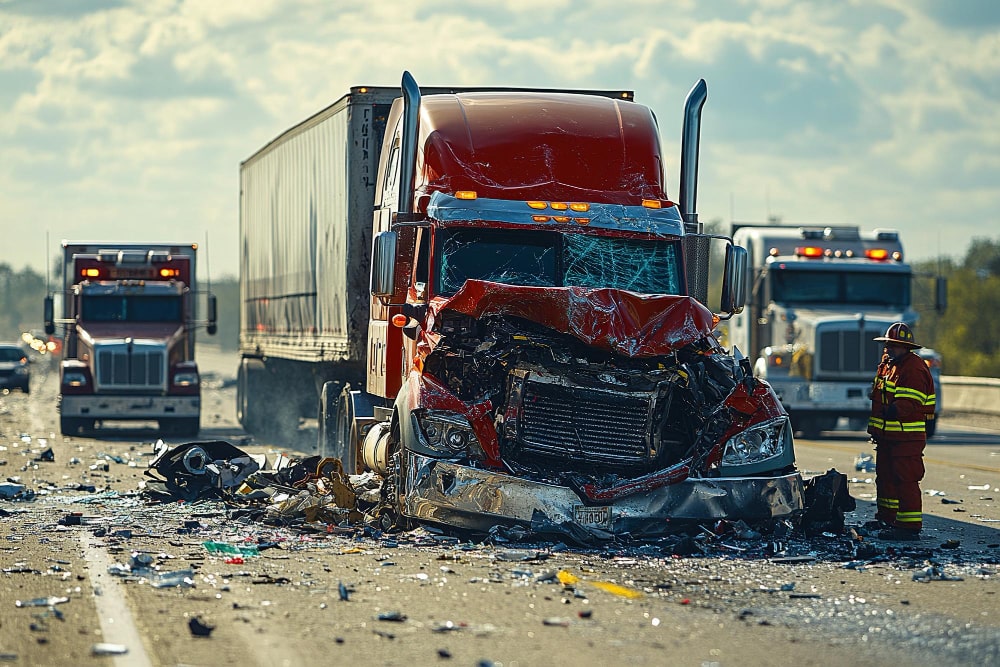
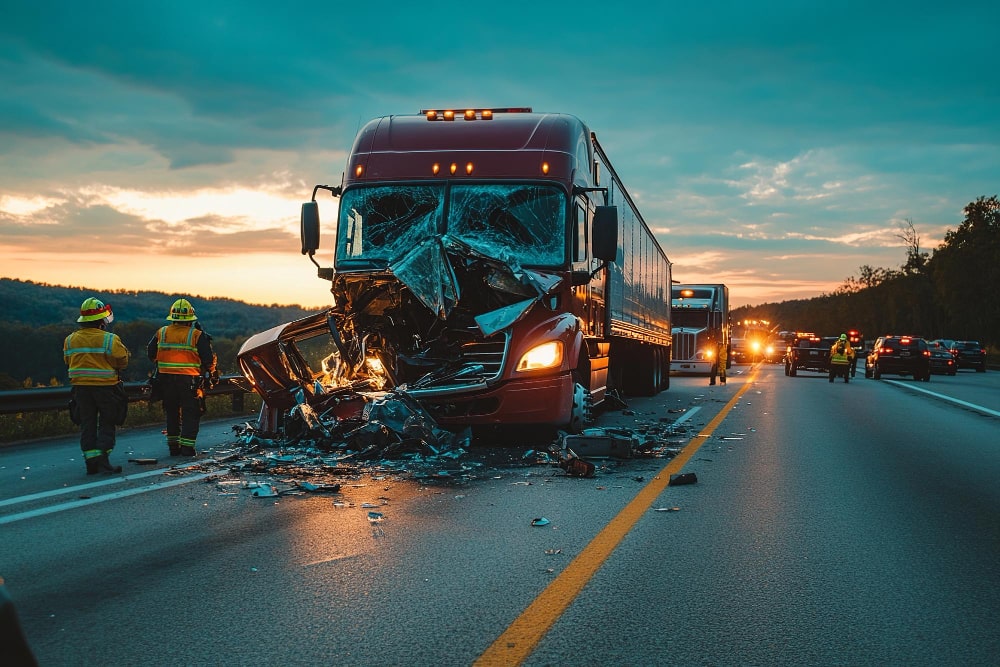
    When a commercial truck causes a crash, the trucking company’s own compliance record often becomes the strongest evidence in the case. The Federal Motor Carrier Safety Administration writes the rules that govern how a truck driver’s day is supposed to work, from the hours behind the wheel to the condition of the brakes. When a carrier breaks those rules, the violation doesn’t just sit quietly in a file somewhere. It becomes evidence.

    A regulation violation by itself doesn’t win a case. What wins a case is turning that violation into proof that the carrier failed to act the way a reasonably careful trucking company would have acted. That’s the bridge we build in every FMCSA violation case we take on.

    The Regulatory Framework Behind Every Trucking Case

    The Federal Motor Carrier Safety Regulations (49 CFR Parts 350-399) cover nearly every operational decision a carrier makes: how long a driver can stay on the road, how often a truck gets inspected, who gets hired to drive it, and how cargo gets tied down. Each rule addresses one specific risk on its own. Together, they form a single evidentiary framework we draw from when building a negligence case.

    We treat these violation categories as connected, not separate. A driver logbook that doesn’t match GPS data, a brake system flagged twice in six months, a driver file missing a required background check, none of these are isolated incidents. They’re threads in the same argument: this carrier operated with disregard for the rules meant to keep other drivers safe.

    That overlap is often where a case gets stronger, not weaker. A carrier that skips brake inspections is frequently the same carrier that pushes drivers past their HOS limits to hit a delivery window, because both violations come from the same underlying decision to prioritize schedule over safety. Once we see one category of violation, we go looking for the others.

    Hours of Service Violations (49 CFR Part 395)

    Fatigued driving remains one of the leading causes of serious truck crashes. The Hours of Service (HOS) regulations set hard limits on how long a driver can be behind the wheel:

    • 11-Hour Driving Limit: Drivers may drive a maximum of 11 hours after 10 consecutive hours off duty
    • 14-Hour Window: All driving must occur within 14 hours of coming on duty
    • 60/70-Hour Limit: No driving after 60/70 hours on duty in 7/8 consecutive days
    • 30-Minute Break: Required after 8 cumulative hours of driving

    Electronic Logging Devices, mandatory under 49 CFR 395.8, create a digital, time-stamped record of a driver’s hours, which makes HOS violations some of the easiest FMCSA violations to prove. We cover the mechanics of that data, and how it holds up in court, in our guides on Electronic Logging Device data and truck driver fatigue. Here, the point that matters is simpler: an HOS violation before a crash is direct evidence the driver, and often the carrier that scheduled him, ignored a known safety limit.

    Vehicle Maintenance Violations (49 CFR Part 396)

    The vehicle maintenance regulations require carriers to systematically inspect, repair, and document the condition of every commercial vehicle in the fleet:

    • Pre-Trip Inspections (396.13): Drivers must inspect vehicles before each trip
    • Post-Trip Reports (396.11): Written reports required for any defects
    • Periodic Inspections (396.17): Annual inspections by qualified inspectors
    • Brake Systems (396.3): Specific requirements for brake maintenance and adjustment

    Brake failures, tire blowouts, lighting defects, and steering problems account for a large share of maintenance-related crashes. Under 49 CFR 396.3(b), a carrier has to keep those maintenance records for as long as the vehicle stays under its control, plus one more year after it leaves the fleet. If a carrier can’t produce them when we ask, that gap tells its own story about how the company was run.

    Driver Qualification Violations (49 CFR Part 391)

    The driver qualification standards exist to keep unqualified drivers out of the cab in the first place:

    • Medical Certification (391.41-391.49): Drivers must pass DOT physical exams
    • Drug & Alcohol Testing (391.81-391.87): Pre-employment and random testing required
    • Background Checks (391.23): Carriers must investigate driver history
    • Road Tests (391.31): Required before hiring

    If a carrier put a driver with a history of DUIs, license suspensions, or prior crashes behind the wheel, the company can be liable for negligent hiring, a claim that stands on its own regardless of whether the driver was also negligent that day.

    Drug and Alcohol Testing Violations (49 CFR Part 382)

    Federal rules require carriers to test drivers for drugs and alcohol before hiring them and at random throughout their employment. Under 49 CFR 382.303, post-accident testing is also mandatory when a crash involves a fatality, or when the driver is cited for a moving violation and the crash caused an injury requiring treatment away from the scene or damage serious enough to require a tow-away.

    Carriers also have to check the FMCSA Drug and Alcohol Clearinghouse, a national database of commercial drivers who’ve failed a test or refused one, before putting a driver on the road and again once a year after that. A driver who shows up in the Clearinghouse with an unresolved violation shouldn’t be driving at all. If a carrier put that driver behind the wheel anyway, that’s about as direct a link to negligence as this area of law gets. We go deeper on impaired driving cases specifically in our guide on drunk and drugged truck drivers.

    Cargo Securement Violations (49 CFR Part 393)

    The cargo securement rules (49 CFR 393 Subpart I) exist to keep loads from shifting or falling off a moving truck:

    • Working Load Limits: Tie-downs must have adequate strength for cargo weight
    • Number of Tie-Downs: Minimum requirements based on cargo length
    • Commodity-Specific Rules: Special requirements for logs, metal coils, heavy equipment

    Improperly secured cargo can shift during turns or hard braking, causing rollovers or spilled loads that create hazards for everyone else on the road. A citation for a securement violation, even one issued weeks before the crash we’re investigating, can show the carrier had a habit of cutting corners on load safety.

    From Violation to Verdict: Building the Evidentiary Bridge

    FMCSA doesn’t just write the rules, it tracks compliance with them. Every roadside inspection, whether it results in a citation or a clean pass, becomes part of a carrier’s record.

    That record feeds FMCSA’s Safety Measurement System (SMS), which groups a carrier’s violation and crash history into safety categories covering things like unsafe driving, hours-of-service compliance, vehicle maintenance, and driver fitness. Carriers with weak scores in these categories tend to draw more roadside stops and more regulatory scrutiny, and that history is exactly what we go looking for once we take on a new case.

    Some of this data is public, and we pull it before we ever file suit. The rest, internal safety audits, driver coaching files, and any DataQs challenges the carrier filed to dispute a violation on its record, comes out through discovery once litigation starts. A carrier that fought to have a violation removed from its record is effectively telling us it knew about the problem at the time.

    One Violation vs. a Pattern: Why Repeat Offenders Face Bigger Exposure

    A single missed inspection might be an oversight. Ten missed inspections across eighteen months is a business decision.

    Illinois allows punitive damages against a trucking company when its conduct rises to willful and wanton misconduct, not ordinary carelessness, but a conscious disregard for the safety of others. A pattern of FMCSA violations the company knew about and didn’t fix is often exactly the kind of proof that gets a case there. Our guide on punitive damages against trucking companies walks through how that standard plays out in Illinois courts.

    The difference between a single violation and a pattern matters practically, too. A one-off HOS violation is evidence a driver made a bad choice on a given day. A pattern of HOS violations across multiple drivers is evidence the company’s dispatch schedules made compliance nearly impossible, which shifts the negligence conversation from the driver to the carrier that built the schedule.

    A pattern also changes how the case moves. Insurance adjusters value a claim differently once they see a driver’s HOS violation sitting next to three prior citations for the same thing, or a maintenance defect that mirrors a complaint the carrier settled the year before. A jury reacts the same way: one bad day invites sympathy for the driver, a documented pattern invites accountability for the company that let it keep happening.

    How Illinois Courts Treat FMCSA Violations

    Illinois doesn’t require us to prove what a “reasonable” trucking company would have done once we show a federal regulation was violated and that the violation contributed to the crash. The violation itself is powerful evidence that the carrier failed to meet the standard of care owed to everyone else on the road.

    That evidence still has to work within Illinois’s comparative fault rules. Under 735 ILCS 5/2-1116, you can recover damages even if you were partly at fault for the crash, as long as your share of fault is 50% or less; your recovery is reduced by your percentage of fault. If you’re found more than half responsible, you can’t recover at all. Our guide on Illinois’s 51 percent rule walks through how that math plays out in real cases.

    Illinois also protects your medical expenses specifically. Under 735 ILCS 5/2-1117, your medical bills are fully recoverable regardless of your fault percentage, while the 25% fault threshold in that same statute determines whether the carrier is on the hook for the full judgment or only its own share when it comes to other categories of damages.

    Preserving FMCSA Violation Evidence

    Critical evidence in FMCSA violation cases includes:

    • ELD/Log Book Data: Electronic records of driving hours
    • Driver Qualification Files: Training, medical certs, background checks
    • Maintenance Records: Inspection reports and repair orders
    • Carrier Safety Ratings: FMCSA’s Safety Measurement System (SMS) data
    • Post-Accident Drug Tests: Required under 49 CFR 382.303

    Carriers aren’t required to hold onto all of this forever, and some records can legally be destroyed on a routine schedule if nobody stops it. Illinois treats spoliation, the destruction of evidence a party knew or should have known was relevant to a claim, as a form of negligence rather than a separate claim of its own, following Boyd v. Travelers Insurance Co., 166 Ill. 2d 188 (1995). In practice, that means the sooner we send a spoliation letter demanding preservation, the stronger our position if records go missing later.

    Illinois Statute of Limitations

    Under 735 ILCS 5/13-202, you generally have two years from the date of the crash to file a personal injury lawsuit in Illinois. For a deeper overview of deadlines, see our guide to the Illinois statute of limitations for personal injury. Investigating FMCSA violations, pulling inspection records, requesting Clearinghouse data, tracking down maintenance logs, takes real time, so the earlier we start, the more evidence we can lock down before it disappears.

    Contact a Chicago Truck Accident Attorney

    FMCSA violations can significantly strengthen your truck accident case, but proving them takes legal experience and fast evidence preservation. Contact our office for a free consultation to talk about how federal trucking regulations may apply to your case.

  • Truck Black Box Evidence: How ELD and EDR Data Proves Fault in Chicago Truck Accidents

    Truck Black Box Evidence: How ELD and EDR Data Proves Fault in Chicago Truck Accidents

    Modern commercial trucks carry two very different kinds of “black box” data. One system, the Electronic Logging Device, tracks whether the driver was legally allowed to be on the road. The other, the Event Data Recorder, captures exactly what the truck itself was doing in the seconds before a crash: speed, braking, steering input, airbag deployment. This page is the deep dive on EDR evidence and how it proves fault in a Chicago truck accident. Both types of data can be overwritten or destroyed if nobody acts fast.

    What Are Truck Black Boxes?

    “Black box” is trucking industry shorthand, not a single device. It usually refers to two separate systems that live in different parts of the truck and record entirely different information.

    Electronic Logging Devices (ELDs)

    The FMCSA’s ELD mandate required initial compliance starting in December 2017, and full enforcement arrived in December 2019 once the older AOBRD systems were phased out. Under 49 CFR Part 395, Subpart B, an ELD tracks a driver’s duty status, not the vehicle’s crash dynamics.

    ELD data answers a specific question: was this driver legally allowed to be behind the wheel at the moment of the crash? We cover the hours-of-service limits, how ELD records expose fatigue-related violations, and how those records get subpoenaed in our companion article, Electronic Logging Device (ELD) Data: Proving Trucker Hours Violations. The rest of this page focuses on the other half of the black box: the Event Data Recorder.

    Event Data Recorders (EDRs)

    An EDR is a separate recording function, usually built into the airbag control module or the engine control module, that exists for one purpose: to freeze a snapshot of vehicle performance data around a crash event.

    Unlike an ELD, an EDR does not track duty status or hours behind the wheel. It tracks physics: how fast the truck was going, whether the brakes were applied, how the driver moved the steering wheel, and whether the airbags fired. That data can contradict a trucking company’s version of events in ways eyewitness testimony never can.

    Not every mile a truck drives gets recorded. Most EDRs only lock in data once a triggering event occurs, something close to airbag deployment or an impact hard enough to cross the module’s programmed threshold. A minor fender bender that never crosses that threshold may leave nothing to download at all.

    What an EDR Actually Records

    Every EDR varies somewhat by truck manufacturer and module, but most capture some combination of the following in the seconds before and during a collision:

    • Vehicle speed in the seconds leading up to the crash
    • Accelerator pedal and throttle position
    • Brake switch status, including whether and when the brakes were applied
    • Steering input and steering angle
    • Change in velocity (delta-V) during the crash event
    • Antilock brake system and stability control activation
    • Seatbelt status for the driver
    • Airbag deployment timing and any pre-crash warning signals
    • Engine RPM and cruise control status
    • Time stamps tied to the ignition cycle

    Taken together, that data can rebuild the last several seconds before impact more precisely than any witness statement. A driver who claims he braked hard well before the crash either has the delta-V and brake switch data to back that up, or he does not.

    Which of these fields a given EDR actually stores depends on the truck’s make, model year, and which electronic modules are installed. A newer tractor with driver assistance features may also log whether automatic emergency braking or lane departure warnings activated in the moments before impact. An older truck may record only the basics: speed, brake status, and delta-V.

    How EDR Data Gets Extracted From the Truck

    EDR data does not sit on a screen waiting to be read. Pulling it off the module takes specialized equipment, typically a crash data retrieval tool such as the Bosch CDR system, connected directly to the vehicle’s diagnostic port or the module itself.

    Heavy trucks complicate this further. Many commercial engines store crash-relevant data inside the engine control module, and reading that data can require software specific to that engine manufacturer rather than a standard passenger-vehicle tool. The right technician has to use the right tool on the right module, and getting it wrong can corrupt or wipe the data entirely.

    Extraction also requires access. Someone has to physically connect to the truck, and in a contested case that access has to be authorized, whether through the trucking company’s cooperation, a preservation agreement, or a court order. We do not wait for the trucking company to volunteer this data. We move to secure physical and legal access before the truck goes back into service or gets sold off.

    Extraction is not something we handle from a distance. It means coordinating with an accident reconstruction expert, scheduling access to the vehicle, and downloading the data before repairs, an insurance total-loss sale, or salvage processing puts the module out of reach for good.

    Why the Clock Is Running on EDR Evidence

    EDR data typically captures only a short window before the crash, and that window can be overwritten by a later triggering event. A second hard-braking event, another minor collision, or even continued operation of the truck can push the original crash data out of memory before anyone downloads it.

    ELD records have a regulatory floor. Under 49 CFR 395.8(k)(1), ELD data has to be retained for six months from the date it was generated. EDR data carries no equivalent guarantee. If the trucking company keeps driving that truck, the evidence you need may already be gone by the time a claim gets filed.

    Large trucking companies often have rapid response teams at the scene within hours of a serious crash, working to protect the company’s interests before you have even left the hospital. That head start is exactly why we treat EDR preservation as an emergency rather than a formality.

    That is why we send a spoliation letter immediately, putting the trucking company and its insurer on formal notice to preserve the truck, the module, and every related record. Illinois treats the destruction of evidence a party had a duty to preserve as a form of negligence, under the doctrine set out in Boyd v. Travelers Insurance Co., 166 Ill. 2d 188 (1995). We walk through exactly what a preservation letter needs to say and how fast it needs to go out in Preserving Critical Evidence After a Truck Accident: Time-Sensitive Steps.

    Getting EDR Data Admitted in an Illinois Courtroom

    Pulling the data off the module is only half the job. Getting it in front of a jury means clearing foundational hurdles first.

    The party offering EDR data generally needs a witness, often the technician who performed the extraction, who can testify to how the download was done and that the tool and process were reliable. Chain of custody matters too. If there is a gap between the crash and the extraction where the truck was accessible to someone else, expect that gap to get challenged.

    From there, EDR reports are typically treated like other business and technical records, authenticated through testimony and often explained to the jury by an accident reconstruction expert who can translate raw data fields into a narrative of what the truck was actually doing. Without that expert framing, a printout of delta-V and brake switch values means little to a jury on its own.

    Trucking companies and their insurers often have their own accident reconstruction teams reviewing this data before a lawsuit is even filed. That is one more reason we move quickly to get independent access, rather than relying on the trucking company’s summary of what its own module supposedly shows.

    How Black Box Data Proves Fault

    EDR and ELD data do different jobs, but together they build a fuller picture of what went wrong.

    Say a truck rear-ends a stopped vehicle on I-90. The EDR can show the truck was traveling well above a safe following speed and that the brakes were not applied until less than a second before impact. That alone establishes a following-too-close violation. If the ELD data from the same trip shows the driver was in hour thirteen of a fourteen-hour duty window, the case for fatigue gets stronger without needing an admission from anyone.

    We also gather the physical evidence around the crash itself, including weight tickets, dash cam footage, maintenance logs, and dispatch records, alongside the black box data. Our companion guide on evidence to gather after a truck accident in Chicago covers what else we collect and why timing matters for each piece.

    What EDR Data Commonly Reveals

    The value of EDR evidence becomes clearest when you look at how it plays out in specific crash patterns.

    In a jackknife crash, steering and stability control data can show whether the driver overcorrected or whether the trailer began sliding before any steering input at all, a distinction that often separates driver error from a mechanical or load-related cause.

    In an underride crash, where a passenger vehicle slides beneath the trailer, speed and brake timing data can establish whether the truck driver had any real opportunity to stop or slow before impact.

    In a lane-change or sideswipe crash, steering angle data can show whether the truck drifted gradually, consistent with driver inattention, or moved abruptly, consistent with an evasive maneuver.

    None of these findings mean much in isolation. They matter because they either confirm or contradict what the trucking company’s driver and investigators say happened, and that gap is often where a case gets won.

    Illinois Laws Governing Truck Accident Claims

    Statute of Limitations

    Under 735 ILCS 5/13-202, you have 2 years from the date of the accident to file a personal injury lawsuit. For a deeper look at filing deadlines, see our overview of the Illinois statute of limitations for personal injury.

    Modified Comparative Negligence

    Under 735 ILCS 5/2-1116, you can recover damages as long as you are less than 50% at fault.

    EDR data plays directly into this fight. If the trucking company’s insurer argues you contributed to the crash, precise speed, braking, and steering data can either support or dismantle that argument long before a jury ever hears from an accident reconstructionist.

    Related Truck Accident Resources

    Free Consultation: Time Is Critical

    If you or a loved one was injured in a truck accident, contact Phillips Law Offices immediately. The sooner we can send preservation letters and begin evidence collection, the better your chances of securing the black box data that could prove your case.

    Call Phillips Law Offices at (312) 346-4262 today. Don’t let critical evidence disappear.

  • I-94 & I-90 Truck Accident Hotspots in Chicago

    I-94 & I-90 Truck Accident Hotspots in Chicago

    Chicago’s highways are among the most dangerous in the nation for truck accidents. The city sits at the crossroads of America’s freight network, with Interstates 94, 90, 290, and 55 carrying a staggering volume of commercial truck traffic every day. When 80,000-pound semi-trucks travel these congested corridors alongside passenger vehicles, the results can be catastrophic.

    At Phillips Law Offices, our Chicago truck accident attorneys have investigated crashes throughout the Chicago highway system. Understanding where and why truck accidents happen most frequently can help you stay safe, and helps us build stronger cases when crashes occur.

    Why Chicago’s Highways Are Truck Accident Hotspots

    Several factors combine to make the Chicago area particularly dangerous for truck-related crashes:

    • Freight hub status: Chicago is the largest freight rail hub in North America and a major trucking crossroads
    • Traffic volume: The Chicago area has some of the highest average daily traffic counts in the country
    • Aging infrastructure: Many highway segments were designed decades ago for lighter traffic
    • Complex interchanges: The “Spaghetti Bowl” and other complex merging zones create confusion
    • Weather extremes: Illinois winters bring ice, snow, and reduced visibility
    • Construction zones: Ongoing road work narrows lanes and creates hazards

    Interstate 94 (Dan Ryan & Kennedy Expressways)

    I-94 runs through the heart of Chicago and is one of the most truck-heavy corridors in the region.

    Dangerous Segments

    Dan Ryan Expressway (South Side):

    • The stretch from the Stevenson (I-55) interchange south to the Bishop Ford (I-94/I-57) split sees extremely heavy truck traffic
    • Frequent lane changes between truck-heavy outer lanes and HOV lanes cause conflicts
    • The 63rd Street and 95th Street exits experience high crash rates

    Kennedy Expressway (Northwest Side):

    • The I-90/94 split near Ohio Street confuses drivers and leads to sudden lane changes
    • The merge with I-290 (Eisenhower) creates dangerous weaving patterns
    • Heavy O’Hare-bound traffic mixes with freight traffic heading to suburbs

    Common Causes of Highway Truck Crashes

    Driver Fatigue and Hours of Service Violations

    Federal Hours of Service regulations under 49 CFR Part 395 limit how long truckers can drive:

    • 11-hour driving limit after 10 consecutive hours off duty
    • 14-hour on-duty window after coming on duty
    • 30-minute break required after 8 hours of driving
    • 60/70-hour weekly limits over 7/8 consecutive days

    Inadequate Maintenance

    Under 49 CFR Part 396, motor carriers must systematically inspect, repair, and maintain all motor vehicles. Violations cause brake failures, tire blowouts, and loss-of-control accidents.

    Illinois Laws Governing Truck Accidents

    Statute of Limitations

    Under 735 ILCS 5/13-202, you have 2 years from the date of the accident to file a personal injury lawsuit.

    Comparative Negligence

    Illinois follows modified comparative negligence under 735 ILCS 5/2-1116. You can recover damages as long as you’re less than 50% at fault.

    Related Truck Accident Resources

    Free Consultation

    If you or a loved one has been injured in a truck accident on I-94, I-90, I-290, I-55, or any Chicago-area highway, contact Phillips Law Offices today.

    Call (312) 346-4262 for a free consultation. We work on contingency, you pay nothing unless we recover compensation for you.

    Phillips Law Offices represents truck accident victims throughout Chicago and Illinois.

  • Amazon & FedEx Delivery Truck Accidents in Chicago: Your Rights

    Amazon & FedEx Delivery Truck Accidents in Chicago: Your Rights

    The explosion of online shopping has put more delivery trucks on Chicago’s streets than ever before. Amazon alone operates thousands of delivery vehicles across the Chicago metro area every single day. Add FedEx, UPS, DHL, and countless other delivery services, and it’s no surprise that accidents involving these vehicles have skyrocketed.

    If you’ve been injured in an accident with a delivery truck, you’re facing a situation far more complex than a typical car accident. Multiple parties may be liable, insurance coverage can be confusing, and large corporations have teams of lawyers working to minimize your claim. At Phillips Law Offices, our Chicago truck accident attorneys have the experience and resources to take on these cases and fight for the compensation you deserve. For a broader look at this issue across the Chicago network, see our companion guide on Amazon, FedEx and UPS delivery truck crashes in Chicago.

    The Rise of Delivery Truck Traffic in Chicago

    The numbers tell the story:

    • Amazon delivers over 10 million packages per day nationwide, with Chicago being one of its largest markets
    • FedEx operates over 700 facilities in Illinois and delivers millions of packages weekly
    • UPS runs massive distribution hubs in the Chicago area, including one of the largest in the country
    • During peak seasons (holidays, Prime Day), delivery traffic increases by 30-50%

    These vehicles are everywhere: residential neighborhoods, busy downtown streets, highways, and everything in between. The pressure to meet delivery quotas means drivers are often rushing, fatigued, or distracted.

    Why Delivery Truck Accidents Are Different

    Delivery truck accident cases differ from standard car accidents in several important ways:

    1. Complex Liability Issues

    Determining who is responsible for a delivery truck accident isn’t always straightforward. Potential liable parties include:

    • The driver: If they were negligent, distracted, or violated traffic laws
    • The delivery company: Amazon, FedEx, UPS, etc., may be vicariously liable for their drivers’ actions
    • Third-party contractors: Many delivery drivers work for contracted delivery service partners (DSPs), not directly for Amazon
    • Vehicle manufacturers: If a defect contributed to the accident
    • Maintenance companies: If poor vehicle maintenance was a factor

    2. The Independent Contractor Problem

    This is critical: Many delivery drivers, especially those driving Amazon-branded vans, are not Amazon employees. They work for third-party “Delivery Service Partners” (DSPs). Amazon uses this structure intentionally to shield itself from liability.

    When an accident occurs, Amazon often claims it’s not responsible because the driver wasn’t their employee. However, an experienced attorney can often pierce this corporate structure by showing:

    • Amazon controls the routes, delivery schedules, and quotas
    • Amazon provides the branded vehicles and uniforms
    • Amazon’s app directs drivers’ every move
    • Drivers have little actual independence despite being called “contractors”

    3. Larger Insurance Policies

    Commercial delivery vehicles typically carry much larger insurance policies than personal vehicles, often $1 million or more. While this means more potential compensation for serious injuries, it also means insurance companies fight harder to deny or minimize claims.

    Common Causes of Delivery Truck Accidents

    Our investigations have revealed consistent patterns in delivery truck accidents:

    Unrealistic Delivery Quotas

    Amazon drivers are expected to deliver 250-300 packages per day. FedEx Ground drivers face similar pressure. This creates dangerous incentives to:

    • Speed through residential neighborhoods
    • Run stop signs and red lights
    • Double-park in traffic lanes
    • Skip required rest breaks

    Distracted Driving

    Delivery drivers constantly interact with apps and devices to:

    • Navigate to addresses
    • Scan packages
    • Take delivery photos
    • Communicate with dispatchers

    This technology-driven distraction is a major accident risk.

    Driver Fatigue

    Long shifts (often 10+ hours), physical demands of loading/unloading, and pressure to finish routes lead to exhausted drivers making dangerous mistakes.

    Inadequate Training

    Many delivery drivers receive minimal training before being put on the road. Unlike commercial truck drivers who need CDLs, most delivery van drivers only need a standard driver’s license.

    Poor Vehicle Maintenance

    Fleet vehicles that rack up hundreds of miles daily need rigorous maintenance. When companies cut corners, brake failures, tire blowouts, and other mechanical issues can cause serious accidents.

    Types of Delivery Truck Accidents

    We handle all types of delivery vehicle accidents, including:

    • Intersection collisions: Drivers running lights or failing to yield
    • Backing accidents: Common in driveways and parking lots
    • Pedestrian accidents: Especially in residential areas
    • Cyclist accidents: Delivery vehicles blocking bike lanes or failing to see cyclists
    • Sideswipe accidents: Often caused by drivers rushing and not checking mirrors
    • Rear-end collisions: Distracted drivers hitting stopped vehicles
    • Accidents involving falling packages: Improperly secured cargo

    Evidence We Gather in Delivery Truck Cases

    Building a strong case requires obtaining evidence that delivery companies and their insurers don’t want to hand over. Our attorneys know how to get:

    Driver Records

    • Employment history and driving record
    • Training records (or lack thereof)
    • Hours worked on the day of the accident
    • Previous complaints or accidents

    Vehicle Data

    • GPS and telematics data: Shows exact speed, location, and driving patterns
    • Delivery app data: Records every stop, delivery time, and route
    • Dashboard camera footage: Many delivery vehicles have cameras
    • Maintenance records: Proving the vehicle was properly (or improperly) maintained

    Company Policies

    • Delivery quotas and expectations
    • Safety protocols (and whether they were followed)
    • Training programs
    • Disciplinary policies

    Important: This evidence can be deleted or overwritten quickly. If you’ve been in an accident with a delivery truck, contact an attorney immediately so we can send preservation letters demanding this evidence be saved.

    Injuries in Delivery Truck Accidents

    While most delivery vehicles are smaller than semi-trucks, they’re still much larger and heavier than passenger cars. Victims often suffer serious injuries including:

    • Traumatic brain injuries
    • Spinal cord injuries and paralysis
    • Broken bones and fractures
    • Internal organ damage
    • Soft tissue injuries (whiplash, herniated discs)
    • Burns (if fire is involved)
    • Wrongful death

    What Compensation Is Available?

    Victims of delivery truck accidents may recover compensation for:

    • Medical expenses: Emergency care, surgeries, rehabilitation, ongoing treatment
    • Lost wages: Time missed from work during recovery
    • Lost earning capacity: If injuries prevent you from returning to your job
    • Pain and suffering: Physical pain and emotional distress
    • Property damage: Vehicle repair or replacement
    • Loss of enjoyment of life: Inability to participate in activities you once enjoyed

    Illinois Laws That Apply to Delivery Truck Accidents

    Several Illinois laws and federal regulations govern delivery truck accident cases:

    Illinois Statute of Limitations

    Under 735 ILCS 5/13-202, you have 2 years from the date of the accident to file a personal injury lawsuit in Illinois. Missing this deadline typically bars your claim forever.

    Illinois Comparative Negligence

    Illinois follows a modified comparative negligence rule under 735 ILCS 5/2-1116. You can recover damages as long as you’re less than 50% at fault for the accident. However, your recovery is reduced by your percentage of fault.

    Vicarious Liability (Respondeat Superior)

    Under Illinois common law, employers can be held liable for employees’ negligent actions performed within the scope of employment. This is critical for holding delivery companies accountable for their drivers’ negligence.

    Federal Motor Carrier Safety Regulations

    For larger delivery vehicles (over 10,001 lbs), federal FMCSA regulations apply, including:

    Related Truck Accident Resources

    Learn more about truck accident cases and your legal options:

    How Phillips Law Offices Handles These Cases

    Our approach to delivery truck accident cases includes:

    1. Immediate investigation: We act quickly to preserve evidence before it’s destroyed
    2. Identifying all liable parties: We dig deep to find everyone who may be responsible
    3. Expert consultation: We work with accident reconstruction experts, medical specialists, and economists
    4. Aggressive negotiation: We don’t accept lowball offers from insurance companies
    5. Trial preparation: We prepare every case as if it’s going to trial, and we’re not afraid to go there

    What To Do After a Delivery Truck Accident

    If you’ve been hit by a delivery truck:

    1. Call 911: Get police and medical help to the scene
    2. Document the vehicle: Take photos of the delivery truck, including any company logos, license plates, and vehicle numbers
    3. Get the driver’s information: Name, employer, insurance information
    4. Take photos: Document the accident scene, vehicle damage, and your injuries
    5. Get witness information: Names and phone numbers of anyone who saw what happened
    6. Seek medical attention: Even if you feel okay, get checked out, some injuries aren’t immediately apparent
    7. Don’t give recorded statements: The delivery company’s insurance will call. Don’t give them a statement without an attorney
    8. Contact a truck accident lawyer: The sooner, the better for preserving evidence

    Free Consultation: We’re Here to Help

    If you or a loved one has been injured in an accident with an Amazon, FedEx, UPS, or other delivery truck in Chicago, contact Phillips Law Offices today.

    We offer free consultations and work on contingency, you pay nothing unless we recover compensation for you. Call (312) 346-4262 or contact us online to speak with an experienced Chicago truck accident lawyer.

    Phillips Law Offices represents delivery truck accident victims throughout Chicago, Cook County, DuPage County, Lake County, and all of Illinois.