Category: Truck Types & Crash Scenarios

  • Work Zone Truck Accidents in Illinois: Why Trucks Are Overrepresented in Fatal Crashes

    Work Zone Truck Accidents in Illinois: Why Trucks Are Overrepresented in Fatal Crashes

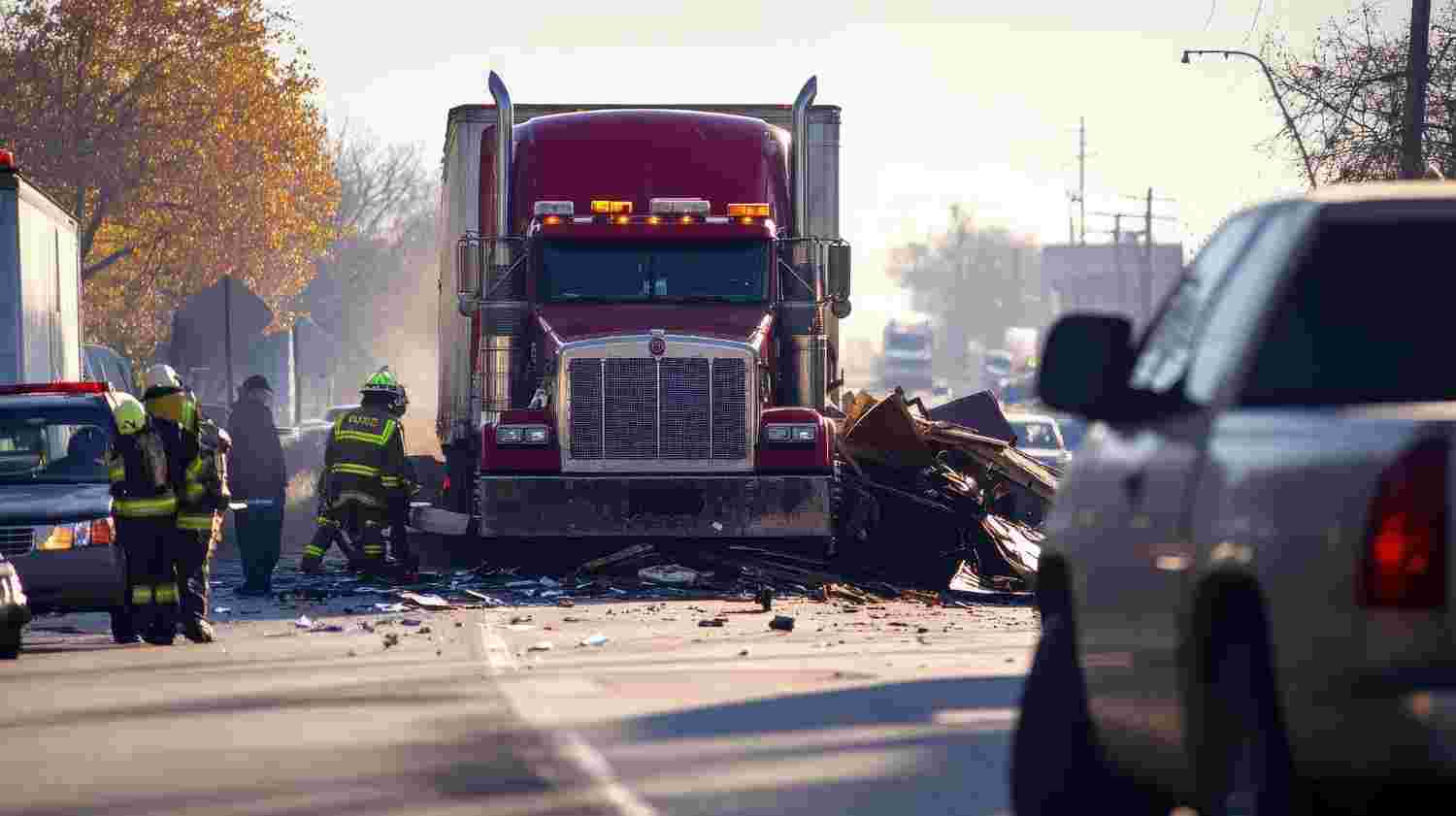
    Trucks are involved in a disproportionate share of the fatal crashes that happen in Illinois work zones. A state-commissioned study of Illinois crash data found large trucks involved in nearly half of all fatal work zone collisions, even though trucks make up a much smaller share of the vehicles on the road. When an 80,000-pound semi enters a construction zone with narrowed lanes, reduced speeds, and stop-and-go traffic, there is very little room for a driver to correct a mistake.

    We are Phillips Law Offices, and we have watched this pattern play out in case after case. A work zone slows everyone down. A truck that does not slow down with it turns a construction backup into a catastrophe.

    The Deadly Reality of Work Zone Truck Crashes

    Illinois sees hundreds of work zone crashes involving commercial trucks every year. Looking at Illinois Department of Transportation (IDOT) data alongside national work zone research, a few patterns hold up year after year:

    • Work zone crashes involving large trucks tend to be more severe than work zone crashes overall
    • Trucks are consistently overrepresented in fatal work zone crashes compared to their share of total traffic
    • Most people killed in work zones are drivers and passengers, not the construction workers the zone was built to protect
    • Rear-end collisions are the most common way a truck crash in a work zone starts
    • Crash volume climbs every spring and peaks during the summer construction season, when the most lane closures are active

    None of this is surprising once you picture the physics. A loaded semi weighs twenty to thirty times what a passenger car weighs. When that much mass meets a line of stopped traffic, the car almost always loses.

    Why Work Zones Are So Dangerous for Trucks

    Several factors stack on top of each other in a construction zone, and each one narrows the margin a truck driver has to work with.

    Reduced Stopping Distance

    A fully loaded semi-truck traveling at 65 mph needs roughly 525 feet to come to a complete stop, close to the length of two football fields. In a work zone, traffic can go from highway speed to a dead stop in seconds. A truck simply cannot always close that gap in time.

    Narrow Lanes

    Work zones frequently narrow lanes to 10 or 11 feet, while a standard semi-truck runs 8.5 feet wide. That leaves a driver only a foot or two of clearance on either side. Clip a barrier, a shoulder, or a neighboring vehicle at highway speed and the outcome is rarely minor.

    Lane Shifts and Crossovers

    When traffic gets pushed across a median or into a contraflow pattern, trucks have to navigate a layout they were not built for. A curve or transition that a sedan takes without thinking can put a fully loaded trailer into a jackknife or a rollover.

    Speed Differential

    Work zones often cut posted speed limits from 70 mph down to 45 mph or lower. Plenty of truck drivers do not slow down enough, or slow down late. The gap between a truck still moving at highway speed and traffic that has already stopped is where the worst crashes happen.

    Driver Distraction

    A work zone demands full attention: shifting lane markings, workers near the roadway, equipment entering and exiting traffic. A driver glancing at a phone, a dispatch tablet, or a GPS unit may not look up until the vehicles ahead are already stopped.

    Every one of these problems is foreseeable. That is exactly why Illinois requires specific traffic control measures before a single lane can be closed for construction.

    How Illinois Work Zones Are Supposed to Protect You

    Work zones are not supposed to be a surprise. Illinois follows the national Manual on Uniform Traffic Control Devices, along with an Illinois-specific supplement, to set standards for how a construction zone gets signed, marked, and staffed before traffic is ever routed through it.

    In practice, that means advance warning signs placed well before the first lane closure, clearly marked tapers guiding vehicles out of a closed lane, and reduced speed limit signage posted far enough ahead that a loaded truck has a real chance to slow down. Where a flagger is directing traffic by hand, that person is supposed to be trained for the role and visible from a safe distance, not standing in a blind spot created by the truck’s own trailer.

    Every IDOT construction project is required to operate under a traffic control plan that lays out exactly how the work zone should be signed and staffed. When a contractor skips a step in that plan, whether that is a missing warning sign, a taper that is too short, or a flagger position that puts workers at risk, that gap becomes part of the case. We come back to how that plays into liability further down.

    Illinois Work Zone Laws and Penalties

    Illinois has written specific laws to protect workers and motorists in construction zones, and the penalties get significantly worse once a truck driver crosses from a traffic violation into something that hurts or kills someone.

    Scott’s Law and Work Zone Safety

    Under 625 ILCS 5/11-907 (Scott’s Law), drivers approaching a construction or maintenance vehicle with warning lights activated have to move over a lane if it is safe to do so. If changing lanes is not possible, the driver still has to slow down and be ready to stop.

    Scott’s Law was written with emergency vehicles in mind, but it applies just as directly to a truck approaching a work zone marked with flashing arrow boards or attenuator trucks. A truck driver who blows past a work zone without slowing or moving over is not just careless. That driver is violating a specific statute, and a violation that causes an injury is a Class 4 felony in Illinois.

    Work Zone Speed Limits

    Speeding fines double in Illinois work zones once posted signage is in place, whether or not workers happen to be present at that moment. For any driver, including a commercial truck driver, a work zone speeding violation can mean:

    • A mandatory fine of $375 for a first offense
    • A $1,000 fine and license suspension for a second offense within two years
    • Criminal exposure if the speeding causes injury or death

    Reckless Homicide

    Truck drivers who cause fatal work zone crashes can face reckless homicide charges under 720 ILCS 5/9-3, particularly when the evidence shows they were distracted, fatigued, or driving recklessly for the conditions. A criminal charge does not replace a civil claim. It runs alongside one, and the evidence gathered for a criminal case often strengthens the civil case too.

    Fatigue, Hours of Service, and Reaction Time in a Work Zone

    A work zone punishes slow reactions more than almost any other stretch of highway. Traffic can stop with no warning, lanes shift without much notice, and a driver who is even a second slow to react closes the gap fast.

    Federal Motor Carrier Safety Administration (FMCSA) rules exist because fatigue erodes exactly that kind of reaction time. Under the hours-of-service regulations at 49 CFR Part 395, a commercial driver generally cannot drive more than 11 hours within a 14-hour on-duty window after 10 consecutive hours off duty, and has to take a 30-minute break after 8 cumulative hours behind the wheel. Weekly driving is capped at 60 hours over 7 days or 70 hours over 8 days.

    Those limits exist because a tired driver processes a sudden work zone slowdown more slowly than an alert one. When a carrier pressures a driver to keep running behind schedule, or a driver falsifies logs to squeeze in more hours, that fatigue shows up exactly where it is most dangerous: the moment traffic ahead comes to a stop. We look closely at how hours-of-service violations cause fatal crashes in a separate guide, and the pattern shows up constantly in work zone cases specifically.

    Common Types of Work Zone Truck Accidents

    Our investigations into work zone truck crashes keep turning up the same patterns.

    Rear-End Collisions

    This is the most common and often the most deadly pattern: a truck plowing into stopped or slow traffic at the back of a work zone backup. These crashes frequently involve multiple vehicles, as the truck pushes one car into the next.

    Sideswipe Accidents

    Narrow lanes and concrete barriers leave no room for drift. When a truck strays even slightly, it can sideswipe a vehicle in the next lane or clip a barrier hard enough to lose control entirely.

    Rollover Crashes

    Sharp curves and lane shifts built for passenger cars can roll a top-heavy truck, especially one that enters the curve too fast for the load it is carrying.

    Underride Accidents

    When a car gets pushed underneath a trailer during a work zone crash, survival odds drop fast. Stop-and-go work zone traffic raises the risk of exactly this kind of collision, and we go into the mechanics of why in our guide to underride truck accidents.

    Liability in Work Zone Truck Accidents

    Work zone truck crashes rarely come down to one person’s mistake. Several parties can share responsibility, and figuring out who carries how much of it is a big part of building the case.

    The Truck Driver

    A driver who fails to slow down, loses focus, or does not adjust for the conditions ahead is directly liable for the crash that follows.

    The Trucking Company

    A carrier that pressures drivers to hold a schedule despite known work zone delays, or that fails to train drivers on work zone safety, can be held liable for the crashes that result.

    Construction Contractors

    A contractor responsible for setting up the work zone can be liable if missing signage, a poorly designed lane shift, or insufficient advance warning contributed to the crash. This is where the traffic control plan we described earlier becomes central evidence.

    Government Entities

    IDOT or a local agency can share liability if the underlying work zone design was defective or fell short of the safety standards it was supposed to meet.

    Comparative Fault When Multiple Parties Share the Blame

    Illinois does not require one single party to be entirely at fault before you can recover compensation. Under the state’s modified comparative negligence rule, codified at 735 ILCS 5/2-1116, an injured motorist can still recover damages as long as they were 50 percent or less at fault for the crash. Go over that line and recovery is barred entirely. Our detailed breakdown of the Illinois 51 percent rule walks through exactly how that math works.

    Work zones are where this rule gets tested constantly, because there are often more parties in the mix than just two drivers. A trucking company’s insurer will look for any argument that the injured driver followed too closely, merged late, or was distracted, and will look just as hard at whether the contractor’s signage or the worker’s own positioning played a role. None of that changes the truck driver’s own negligence. It just means fault gets divided, and every percentage point matters to the final number.

    Proving Work Zone Truck Accident Claims

    Building a strong work zone truck accident case takes specific evidence, gathered quickly before it disappears:

    • Electronic logging device (ELD) data – shows the driver’s hours and whether fatigue was a factor
    • Speed data from the truck’s black box – shows whether the truck was speeding for the posted work zone limit
    • Dashcam or traffic camera footage – documents exactly how the crash unfolded
    • Work zone traffic control plans – shows whether the required warnings and signage were actually in place
    • Driver cell phone records – can establish distraction at the moment of the crash
    • Police crash reports – documents citations issued and initial findings
    • Expert accident reconstruction – analyzes speed, reaction time, and stopping distance against what the work zone required

    Damages in Work Zone Truck Accident Cases

    Victims of work zone truck crashes can recover substantial compensation, including:

    • Medical expenses including emergency care, surgeries, and rehabilitation
    • Lost wages and reduced future earning capacity
    • Pain and suffering
    • Permanent disability and disfigurement
    • Wrongful death damages for surviving family members
    • Punitive damages – when a truck driver showed conscious disregard for work zone safety

    Evidence of speeding through a work zone, distracted driving, or falsified logs can support a punitive damages claim on top of compensatory damages. For fatal crashes, see our guide to wrongful death and survival actions in Illinois.

    Contact Phillips Law Offices After a Work Zone Truck Accident

    Work zone truck accidents are among the most devastating crashes on Illinois roads. If you or a loved one was injured in a construction zone truck crash, you need attorneys who understand trucking regulations and know how to hold negligent drivers and companies accountable.

    Contact Phillips Law Offices today for a free consultation. Time is critical in these cases, evidence must be preserved quickly, and Illinois work zone laws provide specific protections for accident victims. Let us fight for the compensation you deserve.

  • Amazon, FedEx & Delivery Truck Accidents: Who’s Liable?

    Amazon, FedEx & Delivery Truck Accidents: Who’s Liable?

    Amazon vans, FedEx trucks, and UPS trucks are everywhere on Chicago streets now. When one of them causes a crash, figuring out who pays gets complicated fast, and that complication is often by design.

    We’ve handled these cases long enough at Phillips Law Offices to know how the corporate structures work, and how to get past them. Knowing who’s actually responsible is where every case starts.

    For a broader look at this issue across the Chicago area, see our companion guide on Amazon, FedEx and UPS delivery truck crashes in Chicago.

    The Rise of Delivery Truck Accidents

    Delivery truck accidents have climbed fast, and it’s not one single cause.

    • E-commerce growth has put more delivery vehicles on the road than ever before
    • Pressure for same-day and next-day delivery creates rushed, fatigued drivers
    • Many delivery drivers are inadequately trained or inexperienced
    • Drivers face unrealistic delivery quotas that encourage unsafe driving
    • Frequent stops and residential neighborhood driving increase accident exposure

    Amazon alone delivers billions of packages a year, with thousands of vans working Chicago-area streets on any given day.

    Here’s something worth understanding early: these vans and box trucks aren’t regulated like the semis you see on I-90 or I-294. Federal trucking rules, including the Hours of Service limits we cover in our guide to FMCSA violations and trucking negligence, generally apply based on a vehicle’s weight class.

    A lot of delivery vans fall under those weight thresholds, which pulls them out of some federal safety rules that apply to heavier trucks. That doesn’t give these companies a free pass. It just means the negligence case usually has to be built on company policy and Illinois law instead of a federal violation.

    Amazon Delivery Service Partner (DSP) Liability

    Amazon built its delivery network to keep itself a step removed from liability, and the structure is worth understanding before you assume who’s on the hook. The company contracts with Delivery Service Partners, or DSPs: independently owned companies that Amazon selects, trains, and monitors to hire drivers and run routes under the Amazon brand.

    When one of those Amazon-branded vans causes a crash, Amazon’s first move is usually the same. The company points to the DSP:

    • The driver was employed by the DSP, not Amazon
    • Amazon doesn’t control daily operations or driver conduct
    • The DSP is solely responsible for any negligence

    That shield has cracks in it. Depending on the facts, Amazon can end up on the hook anyway, through a few different legal theories.

    How the DSP Model Actually Works

    DSPs are not the same thing as Amazon Flex. Flex is the program where individual drivers use their own vehicles and sign up for delivery blocks through an app, working as independent contractors in the traditional gig-economy sense.

    DSP drivers are different. They’re employees of a third-party company that Amazon approved to operate, one that runs Amazon-branded vans almost entirely inside guardrails Amazon sets.

    Amazon determines the routes, the delivery windows, the uniform, and often the performance scorecard that decides whether the DSP keeps its contract at all. That distinction between Flex and DSP matters in a lawsuit, since both types of vehicles can say “Amazon” on the side but raise very different liability arguments.

    Actual Control Over Operations

    Amazon’s routing and scanning technology tells DSP drivers exactly what to deliver, in what order, and by when. DSPs that fall short on Amazon’s performance metrics can lose the contract entirely.

    That level of day-to-day control is the same kind of evidence courts look at anywhere they’re deciding whether a “contractor” is really an employee in substance, regardless of what the paperwork says.

    We’ve made a similar argument on this site around owner-operators and the trucking industry’s independent contractor defense, where federal regulation can make a motor carrier the statutory employer of a driver it technically doesn’t employ. That specific rule, found at 49 CFR 376.12(c)(1), was written for motor carriers operating under federal trucking authority.

    Amazon’s DSP network isn’t that. It’s a genuinely different legal relationship, and no court has settled whether that statutory framework carries over to Amazon’s delivery operation. What does carry over is the underlying idea: control matters more than the label on the contract.

    Negligent Selection of DSPs

    Amazon can also be liable directly, not through the driver at all, if it kept working with a DSP it knew or should have known had a poor safety record. Choosing to keep sending routes to a DSP with a pattern of accidents or skipped training is its own kind of negligence.

    Agency Theory

    There’s also agency theory. When a driver wears the Amazon uniform, drives an Amazon-branded van, and is delivering an Amazon package to an Amazon customer, a person on the street has no way of knowing the driver technically works for someone else.

    Some courts treat that appearance of authority as enough to make Amazon answer for the driver’s conduct.

    FedEx Ground Contractor Liability

    FedEx Ground runs on a similar independent contractor model, and it’s been fighting over that classification in court for years. Some rulings have gone against the company, and others haven’t.

    The outcome tends to turn on how much control FedEx actually exercised over the specific driver in the specific case in front of the court.

    The Misclassification Litigation History

    FedEx Ground’s contractor model has drawn sustained legal challenges over the years, mostly around whether the “independent contractor” label matches how the company actually runs its operation.

    Contractors who wear the uniform, drive a company-specified vehicle, follow a company route, and answer to company performance standards have argued in various states that they were misclassified. The results have not been uniform, with some jurisdictions siding with drivers and others upholding the contractor structure.

    We won’t cite you specific case outcomes here, because the law in this area keeps moving and the facts of each dispute matter. What matters for your case is that this litigation history exists, and it gives your attorney real legal ground to stand on when FedEx tries to hide behind the contractor label.

    FedEx Ground vs. FedEx Express

    Not all FedEx drivers operate under the same model. FedEx Express, the division that handles overnight and time-sensitive shipments, has historically relied on direct employee drivers.

    FedEx Ground, which handles standard ground shipping, relies on the contractor network described above. Figuring out which FedEx entity the driver actually worked for, and under which model, shapes the entire liability theory from the start of a case.

    Key factors courts consider when determining FedEx liability include:

    • Vehicle requirements – FedEx dictates vehicle specifications, appearance, and maintenance standards
    • Route control – Contractors must service assigned routes according to FedEx schedules
    • Uniform requirements – Drivers must wear FedEx uniforms and follow appearance guidelines
    • Training programs – FedEx provides mandatory training that contractors must complete
    • Termination authority – FedEx can terminate contractors for performance or safety issues

    The more control FedEx keeps for itself, the weaker its case for avoiding vicarious liability, the legal principle that can make a company answer for the negligent acts of the people working under it.

    UPS Employee Liability

    UPS runs differently. Most UPS drivers are direct employees, not contractors, and many are represented by the Teamsters union under a collectively bargained contract.

    That employment relationship simplifies the liability question considerably. When a UPS driver causes a crash while doing their job, the company is typically liable under a doctrine called respondeat superior, Latin for “let the master answer.”

    In plain terms: an employer is responsible for the negligent acts its employees commit while working within the scope of their job.

    Straightforward doesn’t mean easy. UPS still fights these claims hard, and it has the legal resources to do it.

    Types of Delivery Truck Accidents

    Delivery trucks crash differently than long-haul semis do, because they work differently.

    • Backing accidents – Frequent stops require constant reversing in driveways and parking areas
    • Door zone collisions – Drivers opening doors into traffic or pedestrians
    • Double-parking crashes – Blocking traffic lanes creates hazards for passing vehicles
    • Pedestrian strikes – Rushing between stops in residential areas with foot traffic
    • Intersection collisions – Running red lights or stop signs to meet delivery quotas
    • Distracted driving – Using delivery apps and GPS while operating vehicles

    Proving Delivery Company Negligence

    A strong case against a delivery company usually rests on a handful of things we go looking for right away.

    Unrealistic Delivery Quotas

    When a company’s quotas force drivers to speed, skip breaks, or cut corners just to keep the job, that company shares in the liability when someone gets hurt as a result.

    Inadequate Training

    Delivery companies are supposed to train drivers on defensive driving and safe vehicle operation before putting them on the road. Rushing that process just to fill a route faster creates liability when a poorly trained driver causes a wreck.

    Negligent Hiring

    Companies are expected to run real background checks before putting someone behind the wheel. A driver with a history of DUIs or repeated accidents on their record is a red flag a company can’t just ignore.

    Hours and Fatigue Issues

    Smaller delivery vehicles often fall outside the federal Hours of Service rules that govern big rigs, since those rules are generally tied to a vehicle’s weight class. That doesn’t get the company off the hook.

    A company that pushes drivers into excessive hours and predictable fatigue is still liable under ordinary negligence principles, federal exemption or not.

    Telematics, Cameras, and Digital Evidence

    Modern delivery vehicles generate a lot of data. Many run GPS telematics and in-cab monitoring systems that can capture a driver’s speed, braking, and route in the moments before a crash.

    That data can make or break a case, and it usually needs to be requested and preserved quickly before it’s overwritten or discarded under a routine retention policy.

    We cover how this kind of digital evidence gets used to prove fault in our guide to truck black box and ELD evidence. The same principles apply here, even though these vehicles are smaller than the semis that guide focuses on.

    If you’ve been hit by one of these vans or trucks, getting a preservation request out fast is one of the more consequential things your attorney can do in the first days of your case.

    Insurance Coverage in Delivery Truck Accidents

    How much insurance is actually available depends heavily on which company’s vehicle hit you, and how that company is structured.

    • Amazon DSPs – Required to carry minimum liability coverage, but Amazon also maintains umbrella policies
    • FedEx contractors – Must carry specified insurance minimums, with FedEx maintaining excess coverage
    • UPS – Self-insured with substantial resources to pay claims
    • Independent gig drivers – May have only personal auto insurance with commercial exclusions

    Finding every layer of available coverage, not just the obvious one, is often what separates an adequate settlement from a real one.

    The Independent Contractor Defense

    This defense shows up in nearly every one of these cases: the company says the driver was an independent contractor, so vicarious liability doesn’t apply.

    Beating that argument means showing the relationship looked a lot more like employment than the paperwork admits:

    • The company controls how work is performed, not just results
    • Drivers must follow company procedures and guidelines
    • The company provides equipment, uniforms, or supplies
    • Drivers cannot work for competitors or set their own schedules
    • The company can terminate the relationship at will

    Illinois courts look at how the relationship actually functions, not just what the contract calls it, when they decide worker classification questions like this one.

    Damages in Delivery Truck Accident Cases

    If you’ve been hurt in one of these crashes, compensation isn’t limited to your medical bills.

    • Medical expenses and ongoing treatment costs
    • Lost wages and reduced earning capacity
    • Pain and suffering
    • Property damage
    • Permanent injuries or disabilities
    • Wrongful death damages

    When the evidence shows a company chose profit over safety and someone got hurt because of it, punitive damages can come into play to punish that choice specifically.

    Contact Phillips Law Offices After a Delivery Truck Accident

    These cases require attorneys who understand the corporate structures these companies build specifically to complicate your claim. At Phillips Law Offices, we’ve built the experience to take on Amazon, FedEx, and other major delivery companies directly.

    Contact us for a free consultation. We’ll investigate what happened and identify everyone who’s legally responsible.

    Then we fight to hold them accountable, and we don’t let corporate legal tactics stand between you and the compensation you’re owed.

  • Tanker Truck & Hazmat Accidents: Unique Dangers & Claims

    Tanker Truck & Hazmat Accidents: Unique Dangers & Claims

    Not every truck accident is the same when the cargo is thousands of gallons of gasoline, sulfuric acid, or liquefied propane. Tanker truck and hazmat carrier accidents carry dangers that go well past a typical rear-end collision or jackknife. We’re talking explosions, chemical burns, toxic exposure, and environmental contamination that can reach far beyond the vehicles involved. If you or someone you love was hurt in one of these crashes, the regulations and the liability questions run deeper than a standard truck case, and getting them right matters for what you recover.

    Types of Tanker Truck Accidents in Illinois

    Fuel Tankers

    Gasoline and diesel tankers are the hazmat vehicles you pass every day without giving them a second thought. A fully loaded fuel tanker can carry up to 9,000 gallons of highly flammable liquid, moving down the same expressways as your daily commute. When one of these trucks crashes, the results tend to escalate fast:

    • Explosive fires reaching temperatures over 1,500°F
    • Third-degree burns and smoke inhalation injuries
    • Highway closures lasting hours or days
    • Environmental contamination of soil and groundwater

    Chemical Tankers

    Chicago’s highways move a steady stream of industrial chemicals most drivers never stop to think about. The categories break down like this:

    • Corrosives: Sulfuric acid, hydrochloric acid, sodium hydroxide
    • Toxic substances: Chlorine, ammonia, pesticides
    • Oxidizers: Hydrogen peroxide, ammonium nitrate
    • Reactive materials: Substances that can explode when mixed with water or air

    Liquefied Gas Carriers

    Propane, liquid natural gas (LNG), and other compressed gases bring their own explosion risk into the mix. When a propane tanker ruptures, the result can be a BLEVE, a Boiling Liquid Expanding Vapor Explosion, capable of throwing a fireball hundreds of feet across. It’s one of the few crash scenarios where first responders have to think about clearing the surrounding blocks before they can even approach the wreck.

    Unique Injuries from Hazmat Accidents

    Hazmat crashes leave a different injury profile than a standard truck wreck. Victims often carry damage that isn’t visible right away and won’t show up on the first hospital scan.

    Chemical Exposure Injuries

    • Chemical burns: From direct contact with corrosive materials
    • Respiratory damage: Inhalation of toxic fumes causing permanent lung damage
    • Eye injuries: Chemical exposure can cause blindness
    • Systemic poisoning: Absorption through skin or inhalation

    Thermal Injuries

    • Severe burns: Third and fourth-degree burns requiring skin grafts
    • Inhalation injuries: Superheated air damaging airways
    • Smoke inhalation: Carbon monoxide and toxic combustion products

    Long-Term Health Effects

    Some of the worst consequences don’t surface for years:

    • Cancer from carcinogenic chemical exposure
    • Chronic respiratory conditions
    • Neurological damage from toxic exposure
    • Immune system disorders

    Federal Hazmat Regulations

    Hazmat carriers answer to a regulatory system layered on top of standard FMCSA trucking rules. The Hazardous Materials Transportation Act and its implementing regulations, found at 49 CFR Parts 171-180, set requirements most standard freight carriers never have to think about. One piece worth knowing if you’re building a claim: federal rules also set minimum financial responsibility levels for hazmat carriers, and those minimums scale with what’s in the tank. Carriers hauling Division 1.1, 1.2, or 1.3 explosives, materials that pose a poison-inhalation hazard, or highway route-controlled quantities of radioactive material must carry $5 million in coverage. Other regulated hazmat categories carry a $1 million minimum. That’s five to ten times what a standard freight carrier is required to hold, and it matters when you’re negotiating a settlement large enough to cover a serious burn injury or a lifetime of respiratory damage. For the full breakdown of what trucking companies must carry by comparison, see our guide on trucking company insurance minimums.

    Driver Qualifications

    Before a driver ever gets behind the wheel of a tanker, federal law requires a hazmat endorsement on their commercial driver’s license, commonly called the H endorsement. Getting one isn’t just a matter of passing an extra test. Under 49 CFR 383.93, applicants must pass a written knowledge exam covering hazmat handling and emergency procedures, and separately, they have to clear a TSA background check that screens for disqualifying criminal history and security threat indicators. A driver with a disqualifying record on either front should never have been driving that truck. Training doesn’t stop at licensing, either. Carriers owe drivers initial and recurring training on the specific materials they haul, and certain high-risk cargo requires a written security plan. When a carrier skips or shortcuts any of this, that gap becomes part of your negligence case.

    • Hazmat endorsement: Requires TSA background check and special testing
    • Training requirements: Initial and recurrent training on specific materials
    • Security plans: For certain high-risk materials

    Vehicle Requirements

    The tank and trailer themselves carry their own set of federal requirements:

    • Tank specifications: DOT-rated tanks for specific materials
    • Inspection requirements: More frequent and detailed than standard trucks
    • Placarding: Diamond-shaped hazmat placards required under 49 CFR Part 172, Subpart F, so responders and other drivers know what they’re dealing with before they get close
    • Shipping papers: Detailed documentation of hazardous cargo

    Loading and Unloading

    Under 49 CFR Part 177, specific procedures govern what happens before the truck ever leaves the yard:

    • Proper loading techniques to prevent shifting
    • Compatibility of different materials
    • Attendance requirements during loading/unloading
    • Emergency response equipment requirements

    Common Causes of Hazmat Accidents

    Tanker Rollovers

    Tanker trucks roll over at a higher rate than almost any other type of commercial vehicle, and the physics explain why. A loaded tank sits several feet above the frame, higher than a standard dry van trailer, which raises the truck’s center of gravity and makes it inherently less stable through a turn. Then there’s liquid surge. Unlike a pallet of boxes, liquid cargo isn’t fixed in place. When the truck brakes or takes a curve, thousands of gallons shift and slosh inside the tank, and that moving mass keeps pushing in the direction of travel even after the truck itself starts to correct. Internal baffles, the partition walls built into some tanks, reduce this effect but don’t eliminate it. A tanker that’s only partially full is often the most dangerous configuration of all, because there’s more empty space for the liquid to gain momentum before it slams against the tank wall.

    • Liquid surge: Cargo shifting during turns or braking
    • High center of gravity: Especially with partially loaded tanks
    • Driver inexperience: Failure to adjust for liquid dynamics

    Equipment Failures

    • Tank valve failures releasing cargo
    • Corrosion causing tank ruptures
    • Brake failures from improper maintenance
    • Hose and fitting failures during transfer

    Regulatory Violations

    • Improper placarding hiding cargo dangers
    • Untrained or unqualified drivers
    • Overloading or improper loading
    • Falsified inspection records

    Multiple Liable Parties

    A hazmat crash tends to pull in more defendants than a typical truck case, because more parties touched that cargo before it ever reached the highway.

    Trucking Company

    The carrier answers for what happens on the road. That includes driver training and certification, vehicle maintenance and inspections, compliance with hazmat regulations, and route planning that keeps a tanker off roads where it doesn’t belong. If a carrier put an underqualified or improperly vetted driver behind the wheel of a hazmat load, that’s a hiring failure, not just a driving mistake, and it opens the door to a broader negligence claim against the company itself. We cover how those hiring failures play out in trucking cases generally in our piece on trucking company negligent hiring.

    • Proper driver training and certification
    • Vehicle maintenance and inspections
    • Compliance with hazmat regulations
    • Route planning avoiding prohibited areas

    Shipper

    The company that packed and shipped the hazmat cargo carries its own legal duties, separate from the carrier that drove it. Under federal hazmat rules, shippers are responsible for classifying the material correctly, packaging it in approved containers, and providing accurate shipping papers before the load ever leaves their facility. When a shipper mislabels a corrosive as something less dangerous, or ships a reactive chemical in packaging that can’t contain it, that failure can be the actual cause of the accident, not the driver who had no way of knowing what he was hauling. Shippers can also be held liable for handing a hazmat load to a carrier they knew or should have known wasn’t qualified to move it.

    • Improper packaging or containment
    • Failure to properly classify materials
    • Incomplete or inaccurate shipping papers
    • Selecting unqualified carriers

    Tank Manufacturer

    If a tank defect caused or worsened the accident, product liability claims may apply against manufacturers of:

    • Tanks and trailers
    • Valves, fittings, and safety devices
    • Loading and unloading equipment

    Maintenance Providers

    Third-party repair shops may be liable for:

    • Negligent repairs
    • Failure to identify dangerous conditions
    • Using improper parts or materials

    Illinois Law: Enhanced Damages

    Illinois law gives hazmat accident victims a couple of paths to damages that don’t come up in a routine truck crash claim.

    Punitive Damages

    When a company knowingly violates hazmat regulations to save money or move faster, Illinois courts can award punitive damages on top of your compensatory damages, specifically to punish that conduct and deter it going forward. Illinois requires proof of willful and wanton conduct, not ordinary negligence, so the bar sits higher than in a standard injury claim. It’s a fact-intensive showing that usually depends on documented safety violations the company knew about and ignored. We go deeper into how these claims work generally in our article on punitive damages against trucking companies in Illinois.

    Environmental Contamination Claims

    A hazmat spill rarely stays contained to the crash scene. Soil, groundwater, and nearby property can absorb contamination that outlasts the collision itself by months or years. Property owners near a spill site may have separate claims under the Illinois Environmental Protection Act for cleanup costs and diminished property values. That claim runs alongside an injury claim from the crash, not instead of it. If you were hurt in the accident and your property was also contaminated, you’re looking at two related but legally distinct claims that often benefit from coordinated legal representation, since the same investigation and the same at-fault parties usually touch both.

    Investigating Hazmat Accidents

    These cases don’t get solved with a police report and a couple of witness statements. They need investigation built for the complexity:

    • NTSB reports: Major hazmat incidents trigger federal investigations
    • EPA and OSHA records: Past violations by the carrier or shipper
    • Driver qualification files: Training records, endorsement history
    • Maintenance records: Tank inspection and repair history
    • Shipping documentation: Bills of lading, placarding records
    • Expert analysis: Chemical engineers, accident reconstructionists

    Statute of Limitations Considerations

    Under 735 ILCS 5/13-202, Illinois gives you 2 years from the date of injury to file a personal injury claim. For toxic exposure cases, though, symptoms don’t always show up on day one. Illness from a chemical exposure can take months or years to surface, and the discovery rule may push the filing deadline back to when the injury was discovered, or reasonably should have been discovered. See our overview of the Illinois statute of limitations for personal injury for more on how these deadlines work.

    Contact a Chicago Hazmat Accident Attorney

    If you or a loved one was hurt in a tanker truck or hazmat accident, you need attorneys who understand the regulatory complexity these cases bring. Our Chicago truck accident lawyers know the federal hazmat framework and work with the right investigators and experts to identify every liable party, not just the driver in front of you.

    Contact Phillips Law Offices today for a free consultation. We’ll investigate your hazmat accident claim and fight for full compensation for your injuries and losses.

  • Underride Truck Accidents: The Most Deadly Type of Crash

    Underride Truck Accidents: The Most Deadly Type of Crash

    An underride crash happens when a car slides beneath a semi-truck’s trailer instead of colliding with it the way two vehicles normally would. The results are often catastrophic: decapitation, crushed skulls, severed limbs. We’ve represented families through the worst version of this crash, and the pattern is always the same. The car looks survivable from the outside. It isn’t.

    This page explains what makes underride different from an ordinary collision, what federal law does and doesn’t require of trucking companies and trailer manufacturers, and how we build these cases in Illinois.

    What Is an Underride Accident?

    An underride accident occurs when a passenger vehicle slides under the trailer of a semi-truck instead of striking it front-to-front or bumper-to-bumper. Trailers sit high off the ground. A sedan or SUV can pass beneath one, which means the trailer makes contact at windshield or roof height rather than at bumper height, right where the occupants are sitting.

    Crash investigators and safety researchers generally group these crashes into three types, and the distinction matters because federal law treats them very differently.

    Rear Underride

    The most common version. A car strikes the back of a trailer, usually because the truck is stopped, parked, or moving much slower than the traffic around it. We cover the mechanics of these collisions in more depth in Rear-Ended by a Semi: Why These Claims Are Not Like Car Cases, but the short version is that a rear-end crash into a truck behaves nothing like a rear-end crash into a car. Rear underride typically shows up when:

    • A truck stops suddenly or is parked on the roadway
    • A truck’s rear lights are defective or obscured
    • Poor visibility (fog, rain, darkness) hides the trailer until it’s too late
    • The truck is traveling well below highway speed with no warning to drivers approaching from behind

    Side Underride

    Side underride happens when a car hits the length of a trailer rather than its back or front, usually while the truck is turning, crossing an intersection, or changing lanes. Common scenarios include:

    • Truck turns at intersections
    • Lane change accidents
    • Trucks crossing highways from a side road or ramp

    Side underride crashes are especially dangerous because, as we explain below, there is currently no federal requirement that trailers carry side guards at all. A trailer’s undercarriage is open air along most of its length, and a car that gets pulled into that gap has nothing engineered to stop it.

    Front Underride: The Overlooked Third Type

    Less discussed, but real. Front underride happens in the reverse direction: a heavy truck runs into the back of a smaller car and rides up over its trunk and rear seat. It’s the least common of the three, but it’s just as lethal when it happens, and it’s the one crash type where no federal standard, rear guard, side guard, or otherwise, applies at all. There is no equipment requirement governing what sits at the front of a semi to keep it from climbing over a car it hits from behind.

    Why Underride Accidents Are So Deadly

    Every modern car is built around a simple assumption: the thing it hits will make contact somewhere between the bumper and the hood. Crumple zones, airbags, and the safety cage are all engineered to activate against an impact at roughly that height. That assumption is what makes a 45 mph frontal collision survivable more often than not.

    A trailer breaks that assumption entirely. Its underside sits well above bumper height, often close to where a car’s windshield and roofline begin. So instead of the bumper and crumple zone absorbing the hit, the trailer bed catches the car above them, at the A-pillar, the windshield, sometimes the roof itself. None of the safety engineering built into the car ever gets a chance to work. The occupant compartment is what makes contact, not the structure designed to protect it.

    That’s the physics behind why underride injuries look the way they do: traumatic brain injury, skull fracture, decapitation in the worst cases. It isn’t that the crash forces are unusually extreme. It’s that the car’s safety systems never engage because the impact happens in the one place they weren’t built to handle.

    The Insurance Institute for Highway Safety (IIHS) has put the annual death toll from underride crashes above 400. We’d treat that as a floor, not a ceiling. Underride isn’t always coded consistently in police crash reports, and a crash gets labeled as an “underride” only when investigators specifically note it, so the true number is likely higher. For families dealing with a fatal outcome, our guide to wrongful death and survival actions in Illinois walks through the legal options available.

    Federal Underride Guard Requirements

    Rear Guards (49 CFR 571.224 and 49 CFR 393.86)

    Rear guards are the one piece of underride equipment federal law actually mandates, and it’s worth understanding how that mandate is split across two different regulations. 49 CFR 571.224 is a manufacturing standard: it requires most trailers with a gross vehicle weight rating of 10,000 pounds or more, built on or after January 26, 1998, to leave the factory with a rear impact guard. 49 CFR 393.86 is the companion in-use rule: it obligates the trucking company to keep that guard in safe, functioning condition for the life of the trailer, and rear impact guards must be checked as part of the trailer’s required annual inspection. A guard that was compliant on the day the trailer was built but has since rusted through, been bent in a loading-dock mishap, or removed and never replaced puts the carrier in violation regardless of what the guard looked like new.

    The strength standard behind these guards has also gotten tougher. For years, the underlying test was built around a roughly 30 mph benchmark impact. In 2022, NHTSA finalized an upgrade to FMVSS 223 and 224 that raises the bar to 56 km/h, about 35 mph, requiring guards on newly manufactured trailers to provide more strength and energy absorption than before. That rule took full effect for new trailer production in July 2024. It’s a real improvement, but it only reaches trailers built after that compliance date. Older trailers already on the road were never required to be retrofitted to the new standard, and a trailer manufactured decades ago may still be running on guard hardware that was minimally compliant even by the old rules.

    • The upgrade doesn’t reach the existing fleet: only newly built trailers have to meet the stronger 2022 standard
    • Guard positioning matters as much as guard strength: a guard mounted too high can let a car’s hood duck underneath it before the guard ever engages
    • Exemptions exist: certain specialized trailer types fall outside the equipment requirement entirely
    • Pre-1998 trailers: some older trailers still on the road predate the guard requirement altogether

    Side Guards

    There is currently no federal requirement that trailers carry side underride guards. NHTSA opened an advance notice of proposed rulemaking on the question in 2023 and, as of this writing, is still in the comment-review stage of that process, with no timeline for an actual proposed rule, let alone a final one. Congress has tried to force the issue: the Stop Underrides Act, which would mandate side guards, has been reintroduced in the Senate and House multiple times, most recently in 2026, without passing. None of that amounts to a legal requirement today. If a trucking company or trailer owner installs side guards, it’s doing so voluntarily or under a local rule, not because federal law makes them.

    That voluntary landscape is genuinely uneven. A handful of cities have required side guards on their own municipal fleets or on trucks working under city contracts, and some carriers install them on their own initiative, particularly for urban delivery routes where side-impact risk is higher. But “some cities require it on city trucks” is not the same thing as an industry-wide federal mandate, and we’d caution against any characterization of the law that blurs that line. The absence of a mandate is precisely why side underride crashes remain so lethal.

    Common Causes of Underride Accidents

    • Truck parked on the roadway without adequate warning triangles or hazard lights
    • Truck without functioning lights or reflective tape, especially at night
    • Inadequate or missing underride guards, whether by design gap or maintenance failure
    • Truck crossing a highway from a side road, exposing its full length to oncoming traffic
    • Truck driver misjudging the speed of oncoming or approaching traffic
    • Low visibility conditions such as darkness, fog, or heavy rain
    • Following too closely by the car driver, which shortens the reaction window to almost nothing

    Proving Liability in Underride Accidents

    Underride cases rarely have a single defendant. Because the crash sits at the intersection of driver conduct, carrier maintenance, and trailer engineering, the strongest cases usually name more than one party.

    The Truck Driver

    For negligent operation, improper parking, or failing to deploy the warning devices required by 49 CFR 392.22 when a truck is stopped on or near a roadway.

    The Trucking Company

    Carriers are vicariously liable for their drivers, but they also carry direct liability of their own for:

    • Failing to maintain lights and reflectors
    • Failing to maintain, inspect, or install an adequate underride guard as required by 49 CFR 393.86
    • Negligent training on safety procedures around parking, stopping, and turning

    Trailer Manufacturers

    For designing trailers without adequate guards, or with guards that fail to prevent underride in crashes that were reasonably foreseeable. This is a genuinely separate legal theory from a negligence claim against the carrier, and it’s worth understanding why.

    Guard Manufacturers

    If the underride guard itself was defectively designed or manufactured, separate from any fault on the part of the trailer builder or the carrier that installed it.

    Negligence vs. Product Liability: Two Different Theories

    A negligence claim against the trucking company asks whether the carrier acted reasonably: did it inspect the guard, maintain it, replace it when damaged. A products liability claim against the trailer or guard manufacturer asks a different question entirely: was the product itself defective, in its design, in how it was built, or in the warnings that came with it, regardless of how carefully the carrier maintained it.

    That distinction matters because meeting the federal minimum doesn’t automatically clear a manufacturer. A guard can comply with FMVSS 223 and still be the subject of a viable design defect claim if the evidence shows a safer, feasible alternative design existed and the manufacturer chose not to use it. Compliance with a minimum federal standard is a data point in that analysis. It isn’t a shield.

    Proving the Guard Failed You

    In practice, underride cases tend to fall into one of three fact patterns, and the litigation strategy shifts depending on which one we’re dealing with.

    The first is the guard that was never there. Removed, rusted away, or missing from a pre-1998 trailer that was never required to have one. That’s typically a maintenance and negligence case against the carrier, built on inspection records, maintenance logs, and roadside inspection history.

    The second is the guard that was present but inadequate, mounted too high, undersized, or bolted on in a way that let it tear loose on impact instead of absorbing the crash. That case usually points toward the trailer or guard manufacturer, and it requires an engineering analysis of how the guard should have performed against how it actually performed.

    The third, and the hardest to prove, is the guard that was present, compliant, and properly maintained, and still failed. Those cases live or die on accident reconstruction and metallurgical or structural analysis of the failed guard itself, and they’re exactly the kind of case where a design defect claim against the manufacturer can succeed even though the carrier did everything it was supposed to do.

    Illinois Law and Underride Accidents

    Illinois follows a modified comparative negligence rule (735 ILCS 5/2-1116). Even if the car driver shares some fault, following too closely or driving too fast for conditions, recovery is still possible as long as that driver’s share of fault doesn’t exceed 50 percent. We’ve written more on how that threshold actually plays out in the Illinois 51 percent rule, which is the more precise way to think about where the cutoff falls.

    The statute of limitations is two years under 735 ILCS 5/13-202, or two years for wrongful death claims under 735 ILCS 5/13-212. Given how many parties can be involved in an underride case, that two-year window fills up fast with investigation work. Waiting to call a lawyer costs you time you don’t have.

    Damages in Underride Accident Cases

    Because underride crashes cause such severe injuries or death, damages are typically substantial:

    • Medical expenses: emergency care, surgeries, rehabilitation
    • Future medical care: for survivors with permanent injuries
    • Lost wages and earning capacity
    • Pain and suffering
    • Disfigurement: underride crashes often cause visible, lasting injuries
    • Wrongful death damages: for surviving family members

    Critical Evidence in Underride Cases

    Underride cases are won or lost on physical evidence, and a lot of that evidence has a short shelf life. Trailers get repaired, guards get replaced, and inspection paperwork disappears into a carrier’s files where it’s a lot harder to get once litigation starts. We take steps early to preserve what matters, and our guide on preserving critical evidence after a truck accident covers the time-sensitive steps that apply broadly, on top of what’s specific to underride cases:

    • Underride guard inspection: was it properly installed, sized, and maintained
    • Lighting and reflector condition: were they functional at the time of the crash
    • Accident reconstruction: speed, angle, and point of impact
    • The truck’s location and reason for stopping, if it was stationary
    • Warning device deployment: did the driver set out triangles or flares

    Contact a Chicago Truck Accident Attorney

    Underride accidents require aggressive investigation to identify all liable parties and prove negligence. Contact our office for a free consultation if you or a loved one was injured or killed in an underride crash. We’ll fight to hold negligent trucking companies and manufacturers accountable.

  • Jackknife Truck Accidents: Causes, Injuries & Liability

    Jackknife Truck Accidents: Causes, Injuries & Liability

    A jackknifing semi-truck is one of the more frightening things you’ll ever see on I-90 or I-294. An 80,000-pound tractor-trailer folds in on itself like a closing pocket knife, and within a second or two it can occupy three lanes instead of one. If you or someone you love was hit by a jackknifed truck in Chicago, the physics of what happened matters almost as much as the injuries. It tells us who’s responsible.

    What Is a Jackknife Accident?

    A jackknife happens when the trailer swings out from behind the tractor cab until the two form a sharp angle, sometimes 90 degrees or more. The driver loses steering control over the trailer entirely, and the rig folds the way the pocket knife it’s named for does.

    Jackknifes are dangerous for reasons that go beyond the crash itself:

    • A jackknifed trailer can block every lane on the highway, not just the one the truck was driving in
    • Cars behind the truck often don’t have enough distance to stop before hitting it
    • The tractor or trailer can roll over mid-jackknife, adding a second collision to the first
    • Because the trailer spans multiple lanes, jackknife wrecks tend to pull in more vehicles than a typical rear-end or sideswipe crash

    Why Trailers Swing: The Fifth Wheel and Trailer Physics

    Every semi connects to its trailer through a fifth wheel, a flat steel coupling plate mounted over the tractor’s rear axle that lets the trailer pivot as the truck turns. That pivot point is also the rig’s weak spot.

    Under normal driving, the tractor pulls the trailer in a straight line, and momentum keeps both units tracking together. Brake hard, and that balance can break. If the tractor’s wheels grip the road better than the trailer’s, the trailer keeps moving forward at its original speed while the tractor slows down. It has nowhere to go but around the fifth wheel, and it swings.

    An empty or lightly loaded trailer is especially prone to this because there isn’t enough weight pressing the rear tires into the pavement to keep them gripping. A fully loaded trailer can jackknife too, but it usually takes harder braking or a bigger loss of traction to get there.

    Anti-lock braking systems (ABS) have been mandatory on tractors and trailers since the late 1990s, and they cut jackknife rates by preventing the wheel lockup that starts the swing in the first place. When a truck jackknifes anyway, one of the first questions we ask is whether the ABS was functioning, or whether it had been disabled, unrepaired, or bypassed.

    Common Causes of Jackknife Accidents

    Improper Braking

    Hard braking is the single biggest trigger for a jackknife. When a driver brakes too hard or too suddenly, the drive wheels can lock up while the trailer’s momentum keeps pushing forward, and that’s where the swing starts. It’s especially dangerous on:

    • Wet or icy pavement
    • Downhill grades
    • Sharp curves

    Brake imbalance between the tractor and the trailer often plays a role too, and it’s a big enough topic that we’ve covered it on its own. Our guide to truck brake failure accidents walks through the federal maintenance standards and how brake records become evidence in a case.

    Speeding

    Speed eats into the margin a driver needs to stop safely. A truck going too fast has to brake harder when something forces it to slow down, and harder braking is exactly what triggers a jackknife in the first place. Once the trailer starts to swing, higher speed also makes it much harder to correct.

    Weather, Road Conditions, and the Comparative-Fault Question

    Trucking companies love to blame the weather. Rain, snow, and ice do make jackknifes more likely, and their adjusters will often tell you the crash was simply unavoidable given the conditions.

    Federal rules don’t let a driver off that easily. Under 49 CFR 392.14, a driver facing rain, snow, ice, fog, or other conditions that hurt traction or visibility is required to reduce speed, and to stop driving altogether if conditions get bad enough.

    That rule is what turns a weather defense into a fact question instead of an automatic excuse. The issue isn’t whether the road was slick. It’s whether the driver adjusted speed and following distance enough to account for it.

    This is where Illinois’ comparative-fault system comes in. A driver doing the posted speed limit on an icy road can still be found negligent for failing to slow below it. The weather explains why the accident happened. It doesn’t excuse the choices that led up to it.

    Improper Loading

    An underloaded trailer is more prone to jackknifing because there’s less weight over the rear axles to maintain traction. Cargo that’s loaded unevenly, or secured poorly, can also shift during braking and destabilize the trailer. FMCSA cargo securement regulations (49 CFR 393 Subpart I) exist to prevent exactly this.

    Weight distribution problems like these often connect to axle weight violations under the Federal Bridge Formula, a topic we’ve covered in depth in our guide to overloaded and improperly loaded trucks.

    Brake System Failures

    Poorly maintained brakes are a recurring theme in jackknife cases, particularly when the trailer’s brakes are out of adjustment relative to the tractor’s. Trucking companies must maintain brake systems under 49 CFR Part 396, and we’ve dug into the regulatory detail and inspection requirements in the brake failure guide linked above. The short version: if a company skipped inspections or ignored a known brake problem, that’s evidence of negligence, not bad luck.

    Equipment Defects

    Defective anti-lock braking systems (ABS), worn fifth wheel plates, and faulty coupling mechanisms can all contribute to a jackknife, sometimes even when the driver did everything right. Coupling devices are subject to federal safety standards under 49 CFR 393.70, and a coupling that doesn’t meet those standards can turn a routine stop into a jackknife in the space of a second.

    When equipment failure is in the mix, liability can extend past the trucking company to the parts manufacturer or the shop that last serviced the truck.

    Driver Inexperience

    New drivers sometimes don’t recognize a jackknife starting until it’s too late to correct, or they overcorrect and make it worse. Proper training, required under 49 CFR Part 380, is supposed to cover jackknife prevention and recovery before a driver is ever put behind the wheel of a loaded rig.

    When a Jackknifed Trailer Blocks the Highway

    A jackknifed trailer rarely stays in one lane. Spun sideways across the highway, it can block three or four lanes at once, and traffic behind it often has only a few seconds to react.

    That creates a wave of secondary crashes: cars swerving to avoid the trailer, rear-end collisions from drivers who couldn’t stop in time, and pileups that grow by the minute in heavy traffic. Everyone hurt in that chain reaction has a potential claim, and the jackknifing truck is usually where it starts.

    Illinois handles multi-defendant crashes like this through 735 ILCS 5/2-1117. Your medical expenses stay fully recoverable from any defendant regardless of their fault share. For your other damages, a defendant found 25% or more at fault stays on the hook for the full award, not just their proportional slice. That distinction matters when the driver who caused the jackknife carries a state-minimum insurance policy and the trucking company that employed him carries a great deal more.

    Sorting out who caused what in a multi-vehicle jackknife pileup takes real reconstruction work. Skid marks, dashcam footage, and the truck’s own electronic data usually end up mattering more than any driver’s account of what happened.

    It also means the insurance picture gets complicated fast. A trucking company’s policy, the truck driver’s personal coverage, and the insurers for any following vehicles that rear-ended the wreckage can all end up in the same claim. Each carrier has an incentive to point at someone else, which is exactly why victims in these pileups benefit from an attorney who can sort out the coverage instead of accepting the first insurer’s version of who was at fault.

    Catastrophic Injuries from Jackknife Accidents

    Because jackknife accidents put the full weight of a loaded semi across multiple lanes of traffic, injuries tend to be severe by default, not by exception:

    • Traumatic brain injuries from head impacts
    • Spinal cord injuries causing paralysis
    • Crush injuries when vehicles are trapped under trailers
    • Multiple fractures and internal organ damage
    • Burn injuries if fuel ignites
    • Wrongful death in the most severe cases

    Recovery from injuries like these is rarely quick, and the pain doesn’t stop when the medical bills do. Illinois law recognizes that, and victims can pursue pain and suffering damages under Illinois law on top of medical costs and lost income.

    Who Is Liable for Jackknife Accidents?

    Multiple parties may share liability:

    The Truck Driver

    For speeding, braking too hard, following too closely, or driving too fast for conditions on the road that day.

    The Trucking Company

    Under vicarious liability, a legal rule that holds an employer responsible for an employee’s negligence on the job, plus direct liability of its own for:

    • Negligent hiring of unqualified drivers
    • Inadequate training
    • Failure to maintain vehicles
    • Pressuring drivers to meet unrealistic schedules

    The Loading Company

    If cargo was loaded too light over the rear axles, or secured poorly enough to shift under braking, the shipper or loading dock that packed the trailer can share in the liability.

    Equipment Manufacturers

    If defective brakes, ABS systems, or coupling equipment caused or contributed to the accident.

    Maintenance Providers

    If a shop’s sloppy work, or a trucking company’s decision to skip scheduled maintenance, let a mechanical problem go unfixed until it caused the crash.

    Illinois Law and Jackknife Accident Claims

    Illinois follows modified comparative negligence (735 ILCS 5/2-1116). In plain terms, you can still recover damages as long as your share of fault is 50% or less, though your award gets reduced by whatever percentage of fault is assigned to you.

    In a jackknife pileup with several vehicles involved, that fault gets divided among everyone who contributed: the truck driver, the trucking company, maybe a following driver who was tailgating. We’ve written a full breakdown of how that cutoff actually plays out in truck cases, including how insurers try to shift blame onto victims, in our guide to the Illinois 51 percent rule.

    You also don’t have unlimited time to bring a claim. Illinois’ statute of limitations under 735 ILCS 5/13-202 gives you two years from the date of the crash to file a lawsuit. Miss that window, and you likely lose the right to recover no matter how strong the case would have been.

    Critical Evidence in Jackknife Cases

    Preserving evidence quickly is essential:

    • Electronic data: ELD logs, ECM/EDR data, GPS tracking
    • Maintenance records: Brake inspections and repairs
    • Driver qualification files: Training records and history
    • Cargo documentation: Bills of lading, loading procedures
    • Accident reconstruction: Skid marks, gouge marks, final rest positions

    An immediate spoliation letter, a formal notice demanding the trucking company preserve its records, can keep this evidence from disappearing before your case even gets started.

    Contact a Chicago Truck Accident Attorney

    Jackknife accidents involve complex liability issues and catastrophic injuries. Contact our office for a free consultation to discuss your case with an experienced truck accident lawyer who understands FMCSA regulations and how to hold negligent trucking companies accountable.

  • Amazon & FedEx Delivery Truck Accidents in Chicago: Your Rights

    Amazon & FedEx Delivery Truck Accidents in Chicago: Your Rights

    The explosion of online shopping has put more delivery trucks on Chicago’s streets than ever before. Amazon alone operates thousands of delivery vehicles across the Chicago metro area every single day. Add FedEx, UPS, DHL, and countless other delivery services, and it’s no surprise that accidents involving these vehicles have skyrocketed.

    If you’ve been injured in an accident with a delivery truck, you’re facing a situation far more complex than a typical car accident. Multiple parties may be liable, insurance coverage can be confusing, and large corporations have teams of lawyers working to minimize your claim. At Phillips Law Offices, our Chicago truck accident attorneys have the experience and resources to take on these cases and fight for the compensation you deserve. For a broader look at this issue across the Chicago network, see our companion guide on Amazon, FedEx and UPS delivery truck crashes in Chicago.

    The Rise of Delivery Truck Traffic in Chicago

    The numbers tell the story:

    • Amazon delivers over 10 million packages per day nationwide, with Chicago being one of its largest markets
    • FedEx operates over 700 facilities in Illinois and delivers millions of packages weekly
    • UPS runs massive distribution hubs in the Chicago area, including one of the largest in the country
    • During peak seasons (holidays, Prime Day), delivery traffic increases by 30-50%

    These vehicles are everywhere: residential neighborhoods, busy downtown streets, highways, and everything in between. The pressure to meet delivery quotas means drivers are often rushing, fatigued, or distracted.

    Why Delivery Truck Accidents Are Different

    Delivery truck accident cases differ from standard car accidents in several important ways:

    1. Complex Liability Issues

    Determining who is responsible for a delivery truck accident isn’t always straightforward. Potential liable parties include:

    • The driver: If they were negligent, distracted, or violated traffic laws
    • The delivery company: Amazon, FedEx, UPS, etc., may be vicariously liable for their drivers’ actions
    • Third-party contractors: Many delivery drivers work for contracted delivery service partners (DSPs), not directly for Amazon
    • Vehicle manufacturers: If a defect contributed to the accident
    • Maintenance companies: If poor vehicle maintenance was a factor

    2. The Independent Contractor Problem

    This is critical: Many delivery drivers, especially those driving Amazon-branded vans, are not Amazon employees. They work for third-party “Delivery Service Partners” (DSPs). Amazon uses this structure intentionally to shield itself from liability.

    When an accident occurs, Amazon often claims it’s not responsible because the driver wasn’t their employee. However, an experienced attorney can often pierce this corporate structure by showing:

    • Amazon controls the routes, delivery schedules, and quotas
    • Amazon provides the branded vehicles and uniforms
    • Amazon’s app directs drivers’ every move
    • Drivers have little actual independence despite being called “contractors”

    3. Larger Insurance Policies

    Commercial delivery vehicles typically carry much larger insurance policies than personal vehicles, often $1 million or more. While this means more potential compensation for serious injuries, it also means insurance companies fight harder to deny or minimize claims.

    Common Causes of Delivery Truck Accidents

    Our investigations have revealed consistent patterns in delivery truck accidents:

    Unrealistic Delivery Quotas

    Amazon drivers are expected to deliver 250-300 packages per day. FedEx Ground drivers face similar pressure. This creates dangerous incentives to:

    • Speed through residential neighborhoods
    • Run stop signs and red lights
    • Double-park in traffic lanes
    • Skip required rest breaks

    Distracted Driving

    Delivery drivers constantly interact with apps and devices to:

    • Navigate to addresses
    • Scan packages
    • Take delivery photos
    • Communicate with dispatchers

    This technology-driven distraction is a major accident risk.

    Driver Fatigue

    Long shifts (often 10+ hours), physical demands of loading/unloading, and pressure to finish routes lead to exhausted drivers making dangerous mistakes.

    Inadequate Training

    Many delivery drivers receive minimal training before being put on the road. Unlike commercial truck drivers who need CDLs, most delivery van drivers only need a standard driver’s license.

    Poor Vehicle Maintenance

    Fleet vehicles that rack up hundreds of miles daily need rigorous maintenance. When companies cut corners, brake failures, tire blowouts, and other mechanical issues can cause serious accidents.

    Types of Delivery Truck Accidents

    We handle all types of delivery vehicle accidents, including:

    • Intersection collisions: Drivers running lights or failing to yield
    • Backing accidents: Common in driveways and parking lots
    • Pedestrian accidents: Especially in residential areas
    • Cyclist accidents: Delivery vehicles blocking bike lanes or failing to see cyclists
    • Sideswipe accidents: Often caused by drivers rushing and not checking mirrors
    • Rear-end collisions: Distracted drivers hitting stopped vehicles
    • Accidents involving falling packages: Improperly secured cargo

    Evidence We Gather in Delivery Truck Cases

    Building a strong case requires obtaining evidence that delivery companies and their insurers don’t want to hand over. Our attorneys know how to get:

    Driver Records

    • Employment history and driving record
    • Training records (or lack thereof)
    • Hours worked on the day of the accident
    • Previous complaints or accidents

    Vehicle Data

    • GPS and telematics data: Shows exact speed, location, and driving patterns
    • Delivery app data: Records every stop, delivery time, and route
    • Dashboard camera footage: Many delivery vehicles have cameras
    • Maintenance records: Proving the vehicle was properly (or improperly) maintained

    Company Policies

    • Delivery quotas and expectations
    • Safety protocols (and whether they were followed)
    • Training programs
    • Disciplinary policies

    Important: This evidence can be deleted or overwritten quickly. If you’ve been in an accident with a delivery truck, contact an attorney immediately so we can send preservation letters demanding this evidence be saved.

    Injuries in Delivery Truck Accidents

    While most delivery vehicles are smaller than semi-trucks, they’re still much larger and heavier than passenger cars. Victims often suffer serious injuries including:

    • Traumatic brain injuries
    • Spinal cord injuries and paralysis
    • Broken bones and fractures
    • Internal organ damage
    • Soft tissue injuries (whiplash, herniated discs)
    • Burns (if fire is involved)
    • Wrongful death

    What Compensation Is Available?

    Victims of delivery truck accidents may recover compensation for:

    • Medical expenses: Emergency care, surgeries, rehabilitation, ongoing treatment
    • Lost wages: Time missed from work during recovery
    • Lost earning capacity: If injuries prevent you from returning to your job
    • Pain and suffering: Physical pain and emotional distress
    • Property damage: Vehicle repair or replacement
    • Loss of enjoyment of life: Inability to participate in activities you once enjoyed

    Illinois Laws That Apply to Delivery Truck Accidents

    Several Illinois laws and federal regulations govern delivery truck accident cases:

    Illinois Statute of Limitations

    Under 735 ILCS 5/13-202, you have 2 years from the date of the accident to file a personal injury lawsuit in Illinois. Missing this deadline typically bars your claim forever.

    Illinois Comparative Negligence

    Illinois follows a modified comparative negligence rule under 735 ILCS 5/2-1116. You can recover damages as long as you’re less than 50% at fault for the accident. However, your recovery is reduced by your percentage of fault.

    Vicarious Liability (Respondeat Superior)

    Under Illinois common law, employers can be held liable for employees’ negligent actions performed within the scope of employment. This is critical for holding delivery companies accountable for their drivers’ negligence.

    Federal Motor Carrier Safety Regulations

    For larger delivery vehicles (over 10,001 lbs), federal FMCSA regulations apply, including:

    Related Truck Accident Resources

    Learn more about truck accident cases and your legal options:

    How Phillips Law Offices Handles These Cases

    Our approach to delivery truck accident cases includes:

    1. Immediate investigation: We act quickly to preserve evidence before it’s destroyed
    2. Identifying all liable parties: We dig deep to find everyone who may be responsible
    3. Expert consultation: We work with accident reconstruction experts, medical specialists, and economists
    4. Aggressive negotiation: We don’t accept lowball offers from insurance companies
    5. Trial preparation: We prepare every case as if it’s going to trial, and we’re not afraid to go there

    What To Do After a Delivery Truck Accident

    If you’ve been hit by a delivery truck:

    1. Call 911: Get police and medical help to the scene
    2. Document the vehicle: Take photos of the delivery truck, including any company logos, license plates, and vehicle numbers
    3. Get the driver’s information: Name, employer, insurance information
    4. Take photos: Document the accident scene, vehicle damage, and your injuries
    5. Get witness information: Names and phone numbers of anyone who saw what happened
    6. Seek medical attention: Even if you feel okay, get checked out, some injuries aren’t immediately apparent
    7. Don’t give recorded statements: The delivery company’s insurance will call. Don’t give them a statement without an attorney
    8. Contact a truck accident lawyer: The sooner, the better for preserving evidence

    Free Consultation: We’re Here to Help

    If you or a loved one has been injured in an accident with an Amazon, FedEx, UPS, or other delivery truck in Chicago, contact Phillips Law Offices today.

    We offer free consultations and work on contingency, you pay nothing unless we recover compensation for you. Call (312) 346-4262 or contact us online to speak with an experienced Chicago truck accident lawyer.

    Phillips Law Offices represents delivery truck accident victims throughout Chicago, Cook County, DuPage County, Lake County, and all of Illinois.