
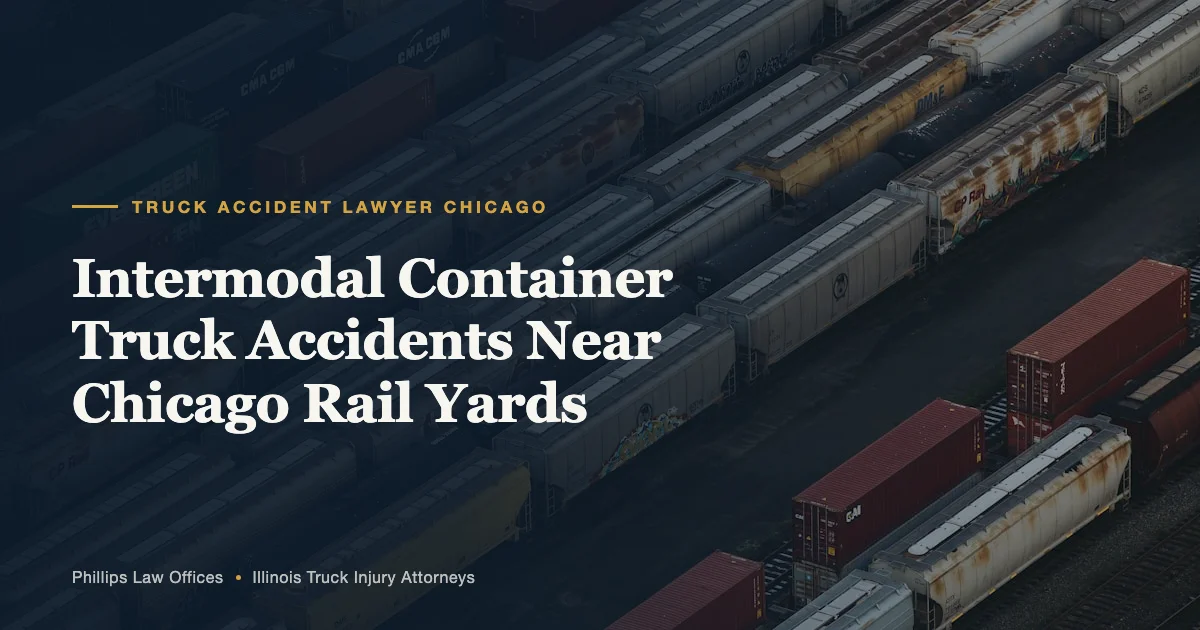
Chicago is North America’s largest inland port hub, with major intermodal facilities in Bedford Park, Cicero, and the Joliet corridor processing millions of container moves each year. That volume puts a steady stream of intermodal container trucks on Chicago-area roads every hour. After an intermodal truck accident in Chicago, working out who is legally responsible is harder than in a standard commercial trucking case. Multiple companies share responsibility for the same vehicle, and that fragmented ownership structure is the central challenge for any injured person seeking compensation.
This article provides general legal information; consult a licensed Illinois attorney for advice specific to your situation.
What Makes Intermodal Truck Accidents Legally Distinct
In a typical semi-truck crash, the tractor and trailer are owned and maintained by a single motor carrier. Intermodal shipping works differently. A shipping container travels by ocean vessel, then rail, then road, and each leg of that journey may involve a different company. By the time a container reaches the streets of Chicago, the chassis it rides on may be owned by a railroad, managed by an intermodal equipment provider (IEP), leased to a motor carrier, and pulled by a driver who is an independent contractor. The result is a web of overlapping maintenance and inspection responsibilities that requires careful legal analysis to untangle.
The Chassis-Pool System and Who Maintains the Equipment
Most intermodal chassis in the United States move through pool arrangements governed by the Uniform Intermodal Interchange and Facilities Access Agreement (UIIA), the industry standard agreement that defines responsibility between railroads, IEPs, and motor carriers. Under the UIIA, the IEP is responsible for providing a chassis that is in safe and proper operating condition. When a carrier picks up a chassis from a pool, it accepts it as found, but that acceptance does not eliminate the IEP’s prior duty to ensure the equipment was roadworthy before it entered pool circulation.
Federal regulations reinforce these obligations. Under 49 CFR sections 390.40 through 390.42, IEPs are defined in federal law and given specific maintenance responsibilities. They must keep chassis in safe and proper operating condition and must operate a systematic inspection and maintenance program. The motor carrier also has independent inspection duties under 49 CFR 396.3 before accepting any piece of equipment. When a chassis defect causes or contributes to an accident, both the IEP and the carrier may have liability depending on who had knowledge of the defect and what their respective inspection records show.
Common Chassis Defects That Cause Crashes
The defective-chassis angle is the feature that most distinguishes intermodal truck accident claims from standard commercial vehicle cases near Chicago rail yards. Chassis in pool circulation may pass through dozens of carriers and hundreds of drayage trips between thorough inspections. Defects that commonly lead to crashes include:
- Brake system failures: Chassis air brakes that are out of adjustment, have worn shoes, or have cracked brake drums may pass a cursory visual inspection but fail under highway braking loads or when stopping for congestion on expressways near rail yards.
- Lighting defects: Rear lights, clearance lights, and brake lights on intermodal chassis are exposed to road debris and weather during container moves. A chassis with inoperative lights increases rear-end collision risk on roads surrounding the Bedford Park and Cicero terminals.
- Container lock failures: Twist locks and corner castings that do not properly secure the container to the chassis can allow a container to shift or detach during transit, creating a severe hazard for other road users.
- Structural fatigue: High-cycle chassis that have not been taken out of service for scheduled inspection may develop frame cracks or axle issues not visible without a thorough mechanical review.
Who Bears Liability After an Intermodal Truck Crash
Understanding truck accident liability in Chicago always requires multi-party analysis. In an intermodal case, the potential defendants typically span several layers of the supply chain:
- The motor carrier: The company or independent contractor who drove the truck has primary duties under FMCSA regulations, including pre-trip inspections and hours-of-service compliance.
- The intermodal equipment provider: The IEP duty to maintain chassis under 49 CFR 390.40-390.42 creates a direct federal obligation that can support a negligence claim if a defect existed before the carrier accepted the chassis.
- The railroad or terminal operator: If the chassis was last inspected at a rail terminal and a defect was present at that point, the terminal operator may share liability for the crash.
- Equipment lessors: Under 49 CFR Part 376, equipment leasing rules establish responsibilities between lessors and lessees. Where a lease allocated maintenance duties to the lessor, that allocation is part of the liability analysis.
Evidence That Is Critical in Intermodal Cases
Intermodal cases depend heavily on documentation. Chassis inspection records, UIIA interchange agreements, IEP maintenance logs, the driver pre-trip inspection report, and dispatch records from the terminal all become relevant to establishing liability. Electronic brake system data, where the chassis is equipped with it, can show whether brake performance was normal or degraded before the crash. Container seal records and shipping manifests may matter if the load configuration is at issue.
Because chassis move through multiple carriers between inspection cycles, records from prior moves can show when a defect first became observable and which party in the chain should have identified and corrected it. Preserving these records quickly is important: standard retention policies at large intermodal operations may result in disposal of records within weeks. A legal hold letter sent promptly after an accident can prevent that loss and secure the evidence an injured person needs to pursue a claim.
Talk to a Chicago Attorney – Free Consultation
Phillips Law Offices handles intermodal container truck accident claims in Chicago and throughout Cook County. If you were injured in a collision involving an intermodal chassis truck near a Chicago rail yard or on surrounding roads, call (312) 346-4262 or visit our free consultation page to schedule a free consultation. No fees unless we recover for you.
Attorney Advertising. This page provides general information about Illinois law and is not legal advice. Reading it does not create an attorney-client relationship. Deadlines and outcomes depend on the specific facts of your case — speak to a licensed Illinois attorney about your situation.
Leave a Reply