
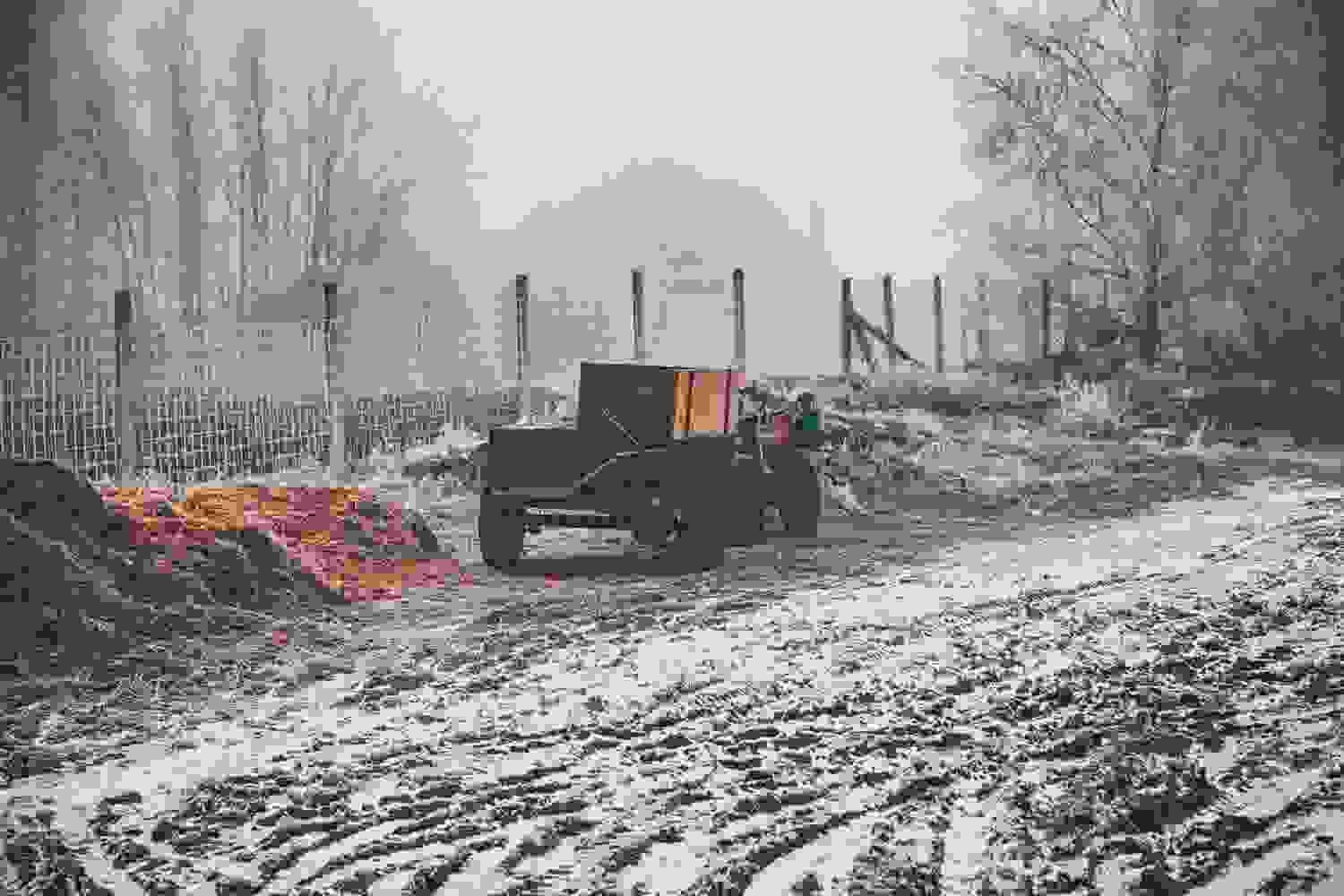
If you’ve ever driven on an Illinois highway in the middle of winter, you know how unpredictable the weather can be. One moment the road is clear, and the next, visibility drops to near zero as snow, sleet, or freezing rain sweeps through. For truck drivers operating 18-wheelers that weigh up to 80,000 pounds, these sudden weather changes can turn an ordinary drive into a deadly situation.
None of what follows is about assigning blame to the weather itself. Weather does not hold a commercial driver’s license, and it does not sign a lease with a motor carrier. People do, and people are the ones a court holds responsible.
1. Winter Weather: Ice, Snow, and Black Ice
Winter is one of the most dangerous times for trucking in Illinois. From late November through March, temperatures routinely drop below freezing, and the mix of Midwest storm systems with Lake Michigan’s lake-effect bands can turn a clear morning commute into a whiteout by afternoon, particularly for carriers running routes through Chicagoland and the collar counties.
- Icy or snow-packed roads that reduce traction and braking ability.
- Black ice, which is nearly invisible and causes trucks to lose control without warning.
- Snow drifts and slush, which can obscure lane markings and hide potholes.
- Freezing rain, which coats windshields, mirrors, and sensors.
Black ice is especially dangerous on elevated sections of Chicago-area expressways. Bridges, overpasses, and elevated roadway segments lose heat from both the top and the bottom, so they freeze before the open pavement around them does. A trucker who handled the last five miles of highway just fine can hit an icy bridge deck with no warning at all.
Truckers are trained to handle winter weather, but not all follow best practices. Under 49 CFR 392.14, a driver facing hazardous conditions like snow, ice, or fog is required to reduce speed, and to stop driving altogether if conditions become unsafe enough to warrant it. Many drivers continue at unsafe speeds or fail to adjust regardless. If a trucking company pressures a driver to stay on schedule during a snowstorm, that pressure does not excuse a crash. Safety comes before delivery deadlines, and a violation of 392.14 is evidence of negligence a jury can weigh against the driver and the carrier.
2. Heavy Rain and Flooded Roads
Illinois sees frequent heavy rainfall, especially in spring and summer. Rain might seem less dangerous than snow, but it can be just as deadly for truck drivers. Hydroplaning, when tires lose contact with the road surface, can cause an 18-wheeler to jackknife or roll over in seconds.
Stopping distance is where wet weather does the most damage. A fully loaded semi already needs far more room to stop than a passenger car, and that gap widens on a wet road because the tires can no longer grip the pavement the way they do when it’s dry. Add in a driver’s reaction time and the distance it takes 80,000 pounds to actually slow down, and a truck following too closely in the rain has no margin left when traffic ahead brakes suddenly. This is exactly why 392.14 requires slower speeds and more following distance once rain starts falling, not just once the crash has already happened.
Heavy rain also reduces visibility and affects how well a truck’s brakes and tires actually perform. Truck drivers are required to:
- Use headlights and wipers during rain.
- Slow down significantly in wet conditions.
- Avoid sudden lane changes and sharp turns.
If they fail to do so and cause a crash, the trucking company can be held responsible for unsafe driving practices, and for any policies that pushed the driver to keep moving instead of adjusting.
3. Fog, Poor Visibility, and Low-Light Conditions
Fog is one of the most underestimated dangers on Illinois roads, particularly along rural highways and open plains downstate. It can reduce visibility to just a few feet, making it nearly impossible for drivers to see brake lights or lane dividers until they’re right on top of them.
Truckers should be trained to:
- Use low-beam headlights and fog lights (never high beams).
- Maintain a safe following distance.
- Pull over if visibility becomes too poor.
Not all do. Some keep driving at unsafe speeds, assuming experience will keep them safe, but overconfidence in fog is one of the most common causes of multi-vehicle pileups on Illinois interstates.
4. High Winds and Tornado Conditions
Illinois is no stranger to strong winds and tornado warnings, especially in spring and early summer. High crosswinds can push large trucks out of their lanes or even cause them to tip over, particularly when they’re lightly loaded.
Empty trailers act like sails in the wind, and when truckers ignore wind advisories or fail to slow down, the results can be catastrophic. Wind-related rollovers are common on open highways such as I-55, I-57, and I-80, where there’s little protection from gusts, as well as on the elevated, exposed stretches of I-294, I-90, and I-94 closer to the city.
In these cases, both driver judgment and company policy matter. Trucking companies should monitor weather alerts and instruct drivers to pull over when winds exceed safe limits, not leave that call entirely up to a driver trying to hit a delivery window.
5. Extreme Heat and Road Deterioration
Winter gets most of the attention, but summer brings its own hazards for Illinois truckers. High temperatures can cause tire blowouts, engine overheating, and even road surface buckling on older stretches of pavement.
Summer is also Illinois construction season. IDOT crews are out in force from spring through fall, narrowing lanes and shifting traffic patterns on the same highways carrying the heaviest truck volume of the year. A blown tire or a driver who isn’t paying attention in a construction zone doesn’t just risk a single-vehicle crash, it risks a chain-reaction pileup in a lane that’s already been cut down to a fraction of its normal width.
Overloaded or poorly maintained trucks are especially vulnerable to heat. A blown tire on a semi traveling at highway speed can cause the driver to lose control, leading to crashes that injure multiple people in surrounding vehicles.
Regular inspections, tire pressure checks, and proper load balancing are all critical during hot-weather months. Skipping them isn’t just negligent, it’s dangerous, and it can turn a routine mechanical failure into grounds for a documented FMCSA violation once an attorney pulls the maintenance records.

6. Seasonal Maintenance and Visibility Issues
Each season affects visibility differently:
- Spring: Glare from rain and fog buildup on mirrors.
- Summer: Sun glare during sunrise and sunset hours.
- Fall: Early darkness and wet leaves that make roads slippery.
- Winter: Snow glare and ice-covered mirrors or sensors.
Truckers are responsible for keeping their vehicles equipped for each season: working wipers, clear lights, functioning defrosters, and tire treads appropriate for the weather. If a trucking company fails to maintain its fleet seasonally, it can be held liable for putting an unsafe vehicle on the road in the first place.
7. When Weather Isn’t the Only Problem, Human Error Makes It Worse
Bad weather doesn’t cause accidents on its own, driver decisions do. Many crashes happen because truckers:
- Drive too fast for conditions
- Fail to increase following distance
- Ignore weather advisories
- Skip rest breaks to stay on schedule
- Fail to check brakes or tires before departure
Weather may set the stage, but negligence causes the crash. That’s why having a skilled Illinois truck accident attorney matters. We investigate not just what happened, but why it happened, and whether the driver or carrier had the ability to prevent it and simply didn’t.
Why “The Roads Were Bad” Isn’t Automatically a Defense
Trucking companies and their insurers lean hard on bad weather as an explanation after a crash. “The roads were bad” sounds like a reasonable excuse, but under federal law it isn’t one on its own.
49 CFR 392.14 puts the responsibility on the driver to respond to hazardous conditions, not to simply push through them. If rain, snow, ice, or fog makes the road dangerous, the driver is required to slow down and, if needed, get off the road entirely. A driver who kept going at normal highway speed through a snowstorm wasn’t a victim of the weather.
He made a choice not to adjust for it, and that choice is what a court and jury will look at.
That doesn’t mean weather plays no role in how a case gets evaluated. Illinois follows comparative fault under 735 ILCS 5/2-1116, so if a victim also bears some responsibility for a crash, that can reduce the recovery, and a victim found more than 50% at fault recovers nothing. Weather is part of that conversation on both sides of a crash, which is exactly why it needs to be examined carefully rather than accepted at face value. We’ve broken down how that fault-sharing rule works in more detail on our page about comparative fault in Illinois truck accidents.
How Weather Evidence Gets Used to Prove Fault
When a trucking company’s defense boils down to an act of God, meaning the weather was so extreme that no reasonable driver could have avoided the crash, that claim has to hold up against actual records, not just a driver’s account of the day.
National Weather Service data shows exactly when a storm, fog bank, or ice event started in a given area, and how much warning existed before the driver reached that stretch of road. IDOT road condition reports and maintenance logs show whether a highway had already been salted, plowed, or flagged for hazardous conditions before the crash. Dashcam footage and the truck’s own electronic logging device data can show the speed the driver was traveling at the moment conditions turned dangerous, and whether he slowed down at all.
Put together, that evidence either supports a genuine act-of-God defense or it dismantles one. If the weather service had issued an advisory an hour before the crash and the driver kept running at highway speed anyway, the storm didn’t cause the wreck. The decision to ignore the warning did.
What to Do If You’re Hurt in a Weather-Related Truck Crash
Get checked out first. Adrenaline masks pain after a high-speed collision, and injuries like disc herniation or a mild traumatic brain injury can take a day or more to show symptoms.
Call 911 even in a blizzard or whiteout. A written police crash report becomes the anchor document every insurer and, later, every attorney works from, and it is far harder to reconstruct after the fact than to request at the scene.
If you’re able to safely do so, photograph the road surface itself, not just the vehicles. Ice sheen, standing water, or drifted snow is evidence that disappears within hours once plows, salt trucks, or the sun get to it.
Note the time. National Weather Service and IDOT records are logged hour by hour, so a timestamped photo matched against when a storm actually arrived is exactly the kind of proof that supports or dismantles an act-of-God defense, as described above.
Get the truck’s USDOT number and carrier name off the cab door before you leave the scene, if you’re able. If you’re hurt too badly to do that, a proper police report will usually capture it instead.
Hold off on repairs to your own vehicle until it’s been inspected. A defense expert may need to examine impact points and damage patterns, and a body shop that fixes the car first can hand the other side a reason to argue about the physics of the crash instead of who caused it.
Quick Answers
Does a snowstorm automatically excuse a trucking company from liability?
No. Under 49 CFR 392.14, severe weather creates a duty to slow down or stop, not a blanket excuse to keep driving as if conditions were normal. A carrier still has to show the driver actually responded to the hazard.
What if I was driving too fast for the conditions too?
Illinois’s comparative fault rule, 735 ILCS 5/2-1116, still lets you recover as long as your own share of fault stays at 50 percent or below, with your award reduced by that percentage. It only bars recovery entirely once your fault crosses that line.
How soon after a winter crash should I contact a lawyer?
As soon as reasonably possible. Weather data, dashcam footage, and electronic logging device records all have limited retention windows, and the act-of-God defense is easiest to disprove while that evidence still exists.
What if poor road maintenance, not just weather, played a role?
That’s a separate claim with its own clock. A road owned or maintained by a municipality falls under the Local Governmental and Governmental Employees Tort Immunity Act, 745 ILCS 10/8-101(a), which shortens the deadline to file suit to one year. A State road maintained by IDOT is different again: that claim goes to the Illinois Court of Claims, where notice is generally due within one year. An unsalted overpass or an unmarked pothole that contributed to a crash is worth investigating separately from the weather itself, and worth investigating fast given how much shorter that deadline is. Photographs of the specific defect, not just the general weather, are what make that separate claim provable months later.
When Weather Turns Dangerous, Responsibility Matters Even More
Illinois weather is unpredictable, but that doesn’t mean truck accidents are unavoidable. Professional drivers and trucking companies have a legal and moral duty to prepare for seasonal hazards and adjust their driving instead of prioritizing profit over safety. When they don’t, innocent people pay the price.
If you or a loved one has been injured in a weather-related truck accident, you’re not powerless. With the right legal team, you can find out what actually went wrong and hold the responsible parties accountable for it.
At Phillips Law Offices, we’ve helped victims across Illinois after devastating weather-related crashes, from icy highways to rain-soaked interstates. We understand how weather affects trucking, and we know how to prove when drivers and companies fail to adapt to it.
Safety isn’t about the weather. It’s about responsibility.
Attorney Advertising. This page provides general information about Illinois law and is not legal advice. Reading it does not create an attorney-client relationship. Deadlines and outcomes depend on the specific facts of your case, speak to a licensed Illinois attorney about your situation.