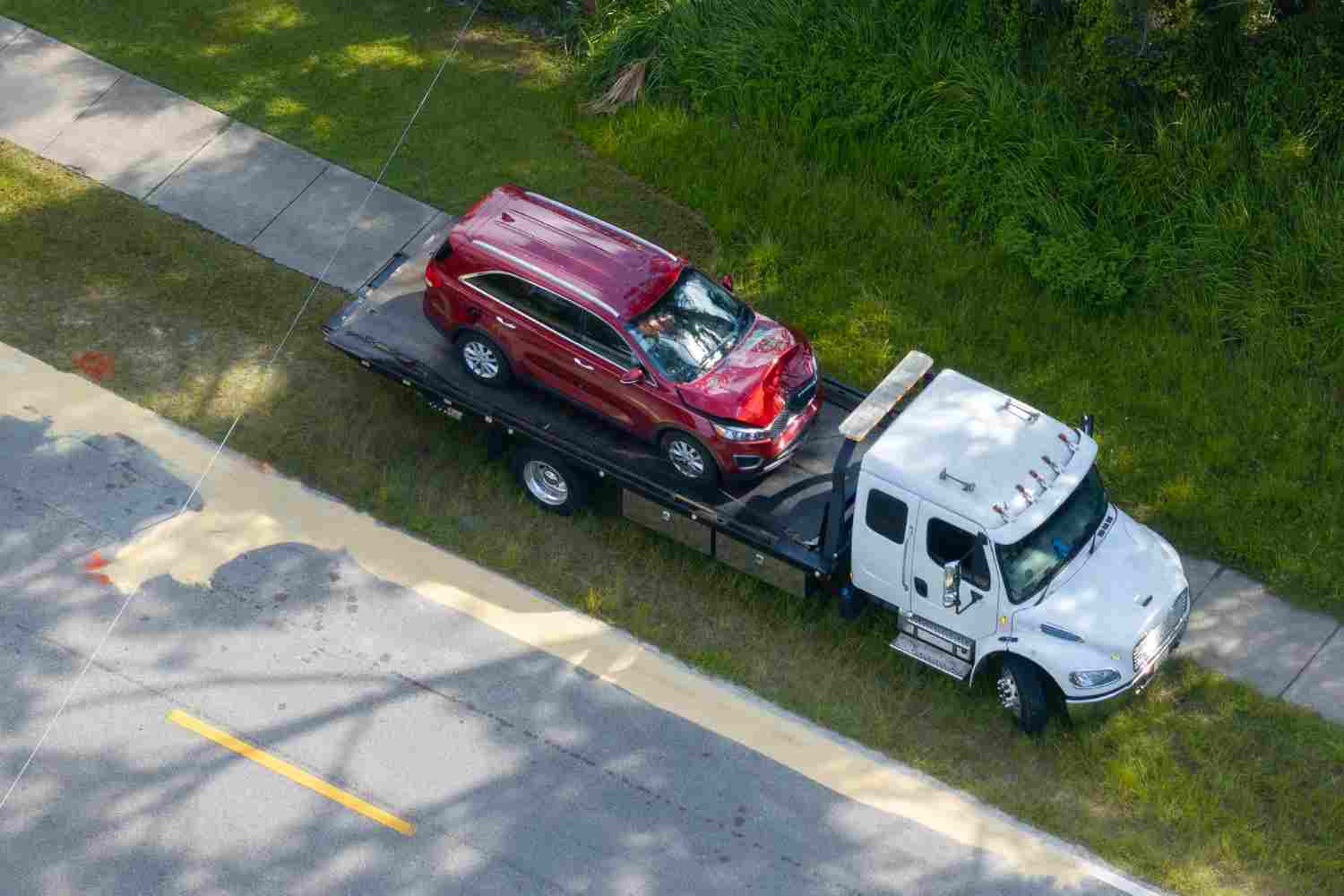
Category: Settlement & Compensation

  • Prejudgment Interest: How Delay Costs Trucking Insurers in Illinois

    Trucking insurers have a financial incentive to stall. Every month a case sits unresolved is a month the carrier keeps its money working for it, not you.

    Illinois law pushes back on that. Prejudgment interest in a truck accident case can add real money, sometimes tens of thousands of dollars, to a final recovery. And the clock on that interest starts the day the lawsuit is filed, not the day of the crash.

    This article shares general legal information. For advice specific to your situation, talk with a licensed Illinois attorney.

    How Prejudgment Interest Works Under Illinois Law

    Under 735 ILCS 5/2-1303(c), prejudgment interest builds at a rate of 6% per year on damages in personal injury and wrongful death cases. That interest starts running on the day the complaint is filed. Not the day of the wreck, and not the day a jury reaches a verdict.

    The statute caps that accrual at five years. Run the math and the ceiling comes out to 30% of the eventual judgment, in simple interest, no compounding.

    Here’s what that looks like with round numbers. Say a truck accident victim files suit in January 2024, and the case goes to trial two years later, in January 2026. If the jury awards $500,000 in damages, prejudgment interest at 6% annually adds $60,000 to that (two years times $500,000 times 0.06). The total judgment comes to $560,000.

    That $60,000 is not a bonus. It’s the price the insurer pays for taking two years to resolve a case it could have settled sooner.

    The Settlement Offer Rule That Changes the Negotiation

    The most tactically significant feature of 735 ILCS 5/2-1303(c) is how it treats settlement offers that fall short of the final verdict. If the defendant makes an offer and the plaintiff ends up with a judgment that beats it, interest keeps accruing from the original filing date. Not from the date of the offer.

    That’s a real shift in who holds the edge in negotiations. Under older frameworks, a defendant could float a token early offer, argue that it stopped future interest from building, and push the risk of accumulating interest onto the plaintiff. Illinois closed that door.

    Under the current statute, a low-ball offer does nothing to the interest clock. The insurer has to offer an amount that meets or beats the eventual judgment, or the full accrual runs from filing regardless. A carrier that offers $200,000 early and then watches a jury award $600,000 is not just short on the verdict. It owes interest on the full $600,000, calculated from the day the case was filed.

    We weigh this mechanic every time we evaluate truck accident insurance and compensation strategy at the start of litigation.

    Why This Rule Matters More in Trucking Cases

    Trucking cases feel the effect of delay tactics more than most. Commercial trucking insurers typically carry high policy limits. Federal minimums for freight carriers sit at $750,000, and many policies run to $1 million or higher. Bigger numbers give insurers more reason to resist an early settlement, and more financial room to fund a long fight. Cases involving catastrophic injury or wrongful death often carry years of medical documentation and expert witness preparation, which stretches the timeline even further.

    The prejudgment interest statute changes that math. A $1 million case held for three years accrues $180,000 in statutory interest at 6%. That’s money a carrier cannot recover, cannot invest, and cannot write off against its litigation budget.

    We’ve used the filing-date accrual rule directly in settlement demand letters, laying out for a carrier exactly what further delay costs in dollar terms.

    Constitutionality and Current Status of the Statute

    The statute has drawn constitutional challenges from defendants and insurers since it took effect, arguing that the 6% rate and the five-year cap overstep what the legislature can impose. It remains active law today, and it applies to personal injury and wrongful death cases filed in Illinois courts. An attorney can walk you through where a specific challenge currently stands if it matters to your case.

    Retroactivity was an early flashpoint too, whether interest could apply to cases filed before the statute’s effective date. For anything filed today, that question is moot.

    For a case filed today, none of that ambiguity applies. Interest accrues at 6% annually from the filing date, stops after five years, and is not tolled by an inadequate settlement offer.

    What This Means If You Are Negotiating With a Trucking Insurer

    If you’ve already filed suit, every month that passes without a fair settlement adds to what the insurer owes. That advantage is yours, but only once a complaint is on file and the interest clock is running.

    Cases still sitting in pre-litigation demand do not accrue statutory interest. That’s one reason filing suit promptly in a serious trucking case can pay off beyond simply protecting the statute of limitations deadline.

    No attorney can promise that prejudgment interest will be awarded in any specific case. Liability still has to be established, and damages still have to be proven at trial or reflected in a settlement.

    But for someone whose case is headed toward litigation against a well-funded trucking insurer, that 6% accrual from the filing date is not theoretical. It’s a real, calculable part of what the claim is worth.

    Talk to a Chicago Attorney: Free Consultation

    Filing strategy, demand timing, and interest accrual are decisions that benefit from experienced legal counsel before the complaint is even drafted. If you were injured in a truck accident in Illinois, the sooner a lawsuit is filed, when that’s the right call, the sooner the prejudgment interest clock starts working in your favor.

    Phillips Law Offices handles serious truck accident cases throughout Chicago and Illinois. Call us at (312) 346-4262 for a free consultation, or visit our contact page to describe your situation. No fee unless we recover for you.

  • Hospital Liens and Your Truck Accident Settlement in Illinois

    When you settle a truck accident case in Illinois, you do not walk away with the full number in the settlement letter. Hospitals, doctors, Medicare, and Medicaid can all stake a claim on that money before it reaches you.

    We have seen clients open a check they were counting on to solve real problems, only to find a third of it already gone to liens nobody told them to watch for. That gap between the settlement number and the number you actually keep is where this gets serious.

    Three separate lien systems can apply to a single truck accident case in Illinois: a state law covering hospitals and providers, a federal Medicare reimbursement rule, and a separate Illinois Medicaid lien. Each one works differently. Missing one can cost you later.

    This article offers general legal information. For advice specific to your situation, talk to a licensed Illinois attorney.

    Illinois Health Care Services Lien Act: 770 ILCS 23

    Illinois hospitals and medical providers collect from your settlement under one specific law: the Health Care Services Lien Act, 770 ILCS 23. Any hospital, physician, dentist, or other licensed health care provider that treated you after the crash can assert a lien against your settlement, judgment, or award.

    That lien attaches automatically. You do not sign anything to create it.

    Here is the part most people misunderstand. The Act caps all health care liens combined at 40 percent of your gross settlement or judgment.

    Not 40 percent per provider. Forty percent total, shared among every hospital, physician, and specialist who treated you.

    If three different providers billed you, they are not each entitled to 40 percent. They are splitting one 40 percent pool.

    Hypothetical example (for illustration only): Say your truck accident case settles for $100,000. Under the Act, every health care provider combined can claim at most $40,000, even if their bills add up to $90,000. This is a hypothetical only. Your case will depend on its own facts, its own settlement amount, and which liens actually apply to it.

    A lien only holds up if the provider did the paperwork right. The provider has to serve written notice on you, on your attorney, and on every defendant and insurer in the case.

    Skip that step, and the lien can fail entirely. We track every lien notice that comes in on a case and check that each one was served the way the law requires. Providers miss this more often than you would expect.

    The Act also builds in a reduction for shared fault. If you bear some percentage of blame for the crash, and your recovery is reduced because of it, the lien amount gets reduced along with it.

    Medicare Secondary Payer Act: 42 U.S.C. § 1395y(b)(2)

    If you are on Medicare, a different set of rules kicks in entirely. This one runs on federal law, not Illinois law, and it does not care about the 40 percent cap above.

    Under the Medicare Secondary Payer Act, 42 U.S.C. § 1395y(b)(2), Medicare is what the statute calls a “secondary payer.” When someone else, like the truck accident defendant’s insurer, is legally responsible for your medical bills, Medicare is not supposed to be the one footing them.

    In practice, Medicare often pays anyway, as what is called a conditional payment, so your treatment does not get held up while liability gets sorted out. That payment is conditional because Medicare expects it back once you settle.

    The agency that tracks these payments is the Benefits Coordination and Recovery Center, known as the BCRC. Before any settlement closes, your attorney has to contact the BCRC directly, get a conditional payment amount, and wait for a final demand.

    Here is where it gets uncomfortable. Failing to reimburse Medicare does not just create a debt. It can expose you and your attorney to double-damage liability under federal law.

    And this obligation stands apart from the 40 percent state cap described above. Medicare’s claim is a federal one. The Health Care Services Lien Act limit does not touch it.

    Resolving a Medicare lien usually means negotiating the conditional payment amount down, especially when the available insurance coverage cannot stretch to cover everything. That negotiation takes real time. It has to be built into your settlement timeline from the start, not tacked on at the end.

    Because this involves truck accident insurance and compensation at the federal level, it takes close, ongoing coordination between your attorney and the BCRC to resolve cleanly.

    Illinois Medicaid Lien: 305 ILCS 5/11-22

    There is a third lien to watch for. If the Illinois Department of Healthcare and Family Services, which runs Medicaid, paid for any part of your treatment, it has its own statutory right to reimbursement under 305 ILCS 5/11-22.

    This lien attaches to any tort settlement or recovery you receive. It is not the same obligation as the private provider liens under 770 ILCS 23, and it does not share that 40 percent pool. It is a separate statutory claim, and the Department has to receive specific notice before your settlement can close.

    Medicaid lien amounts can sometimes be negotiated down, particularly when the settlement is not enough to cover everything you lost. We reach out to the Department early, get a current lien figure, and find out whether a compromise is realistically on the table. Waiting until the end of a case to ask is how people get stuck with a number nobody can move.

    How Lien Negotiation Affects Your Net Recovery

    Put these three systems together, state provider liens capped at 40 percent, federal Medicare reimbursement, and the separate Medicaid obligation, and you can see why the settlement figure by itself tells you almost nothing about what actually lands in your account.

    The settlement is only half the negotiation. The liens are the other half, and they get negotiated too.

    Most health care providers will accept a reduced lien amount if that is what it takes to let the case settle within the insurance limits available. They would rather take less than take nothing from a case that never resolves.

    Medicare works differently but moves in the same direction. It applies a formula that accounts for procurement costs, meaning your attorney fees and litigation expenses, and that formula can bring the reimbursement number down.

    Get this wrong, or miss a lien entirely, and the consequences tend to show up at the worst possible time. A surprise deduction at closing. Personal liability that follows you after the case is over. Malpractice exposure for the attorney who missed it.

    Sit with that for a second. This is not something you want to discover after the money is already gone. It is one of the few parts of a truck accident case where legal representation is not simply helpful. It is what protects the number you actually get to keep.

    Talk to a Chicago Attorney: Free Consultation

    Lien resolution in a truck accident case is detailed work, and the consequences of getting it wrong land on your recovery, not ours. We handle hospital lien negotiations, Medicare coordination, and Medicaid compliance as part of representing truck accident victims across the Chicago area.

    We work on contingency. No fees unless you recover.

    Call (312) 346-4262 or visit our contact page to speak with a Chicago truck accident attorney at no charge.

  • Should You Accept the Trucking Insurer’s First Settlement Offer?

    Should You Accept the Trucking Insurer’s First Settlement Offer?

    After a serious truck accident, the trucking company’s insurance adjuster often calls fast. Sometimes it’s days. We’ve seen it happen within hours of the crash.

    That speed is not an accident. How you respond to that first offer can permanently affect your legal rights.

    Here’s what we want you to understand before you pick up the phone: what the law says about early offers, what you actually sign away when you accept one, and when taking the money early is the right call.

    This article provides general legal information; consult a licensed Illinois attorney for advice specific to your situation.

    What You Are Actually Signing: The Release of Claims

    A settlement is not just a check. It’s a contract.

    To accept money from a trucking insurer, you sign a release of claims. Under Illinois law, that document typically closes out every claim tied to the crash: past, present, and future.

    Sign it, and in nearly every case you can’t go back to court later, even if your injuries turn out worse than the doctors first thought, even if you need a second surgery, even if a chronic condition shows up down the road linked to that crash. Courts do sometimes reopen a release for genuine mutual mistake about an injury neither side knew about at the time, but that’s a narrow exception, not something to count on.

    That’s the piece people miss in the moment. The check clears. The release doesn’t.

    That finality is exactly why we tell clients to slow down on early offers. Not because every first offer is a lowball number. Some aren’t.

    It’s because a release is permanent, and you’re the one holding all the risk if you guessed wrong about what you’d need down the road.

    What Evidence Has Not Been Gathered Yet at the Early Offer Stage

    An insurer who calls within days of a crash is working with an incomplete file. So are you, even if you don’t realize it yet.

    At that stage, a lot of the record simply doesn’t exist yet. The truck’s full electronic logging device (ELD) and event data recorder (EDR) data. The driver’s qualification file and hours-of-service compliance history. Post-accident drug and alcohol test results. The carrier’s prior FMCSA safety audit history. An independent accident reconstruction analysis. And on your side, complete imaging, specialist opinions, and a treating physician’s prognosis for how you’ll actually recover.

    None of that exists on day three. Some of it takes months to obtain.

    The adjuster already has access to their insured’s records. They’ve already run their own liability and damages numbers.

    You haven’t had the same chance yet. Say yes before you do, and you’re resolving your claim on half the picture, on both what happened and what it actually cost you.

    Illinois Law on Insurer Conduct and Prejudgment Interest

    Illinois regulates how insurers are allowed to handle claims. Under 215 ILCS 5/154.6, it’s an improper claims practice for an insurer to sit on communications instead of acting on them promptly, or to push claimants into filing a lawsuit by offering far less than the claim is actually worth.

    A lowball first offer, especially one paired with an artificial deadline, can brush up against those unfair practices provisions. Proving it, though, takes specific facts. It’s not automatic just because the number felt low.

    There’s another piece of Illinois law worth knowing here. 735 ILCS 5/2-1303(c) provides for prejudgment interest on damages in personal injury and wrongful death cases.

    In plain terms: if you turn down an early offer, go to litigation, and win a judgment, the defendant may owe interest on top of the damages, running from when the claim accrued.

    That cuts both ways. It gives carriers a reason to make a fair offer sooner rather than later. It also means dragging litigation out has a real cost, and both sides feel it.

    When Early Resolution May Actually Be Appropriate

    Not every first offer deserves a no. We’ve settled early cases plenty of times, and it was the right call.

    It tends to make sense when liability isn’t really in dispute. When your medical treatment is finished or close to it, so the damages are actually knowable instead of guessed at. When the available insurance coverage is thin enough that fighting for more would just get eaten up by the cost of fighting. Or when your own circumstances make a smaller, certain check today worth more to you than a bigger, uncertain one down the road.

    The real question was never about timing. It’s whether the offer actually matches your provable damages given what the evidence shows right now.

    Answering that requires looking at liability, coverage, damages, and litigation risk together, not one at a time. That’s the kind of review we do on every truck accident claim before we tell a client what we think they should do.

    A Decision Framework, Not a Pressure Test

    Before you respond to any offer, sit with these questions for a minute.

    Is your medical treatment actually finished, or are you still in active care with the prognosis an open question? Have you seen the full crash investigation, the police report, the truck inspection records, any citations issued? Do you know what insurance coverage is actually on the table, both the primary commercial auto policy and any excess or umbrella layers behind it? Has anyone reviewed your claim who works for you, not for the insurer?

    If any answer is no, take more time before you sign anything. That’s the prudent move, not the paranoid one.

    You are not required to answer an offer right away. And an insurer that follows Illinois claims-practice law has no lawful basis to threaten your claim just because you asked for time to talk to an attorney first.

    Talk to a Chicago Attorney: Free Consultation

    If you’ve gotten a settlement offer from a trucking company’s insurer and you’re not sure whether to take it, an independent second opinion costs you nothing. It just gives you the information to decide for yourself.

    We represent truck accident victims across Illinois, and we’ll review your situation at no charge.

    Call (312) 346-4262 or visit our contact page to talk with a Chicago attorney about your options. There’s no fee unless we recover for you.

  • Punitive Damages Against Trucking Companies in Illinois

    Punitive Damages Against Trucking Companies in Illinois

    When a trucking company’s conduct goes beyond ordinary negligence, falsifying driver logs, ignoring safety violations it already knew about, or keeping unfit equipment on the road, Illinois law may let you go after punitive damages on top of what compensates you for your losses.

    Compensatory damages cover what happened to you. Punitive damages punish what the company did.

    We’ve handled cases where that difference decided everything, and it rarely comes down to how bad the crash looked. It comes down to what the company knew and chose to ignore.

    This article provides general legal information; consult a licensed Illinois attorney for advice specific to your situation.

    What Punitive Damages Actually Mean

    Compensatory damages, the medical bills, lost wages, pain and suffering most people think of, are meant to put you back where you were before the crash, at least financially. Punitive damages do something different.

    Illinois courts allow them only when a company’s conduct was fraudulent, intentional, or showed a conscious disregard for the safety of the people it shares the road with. In trucking cases, we’ve seen this look like a carrier dispatching a driver it knew had a suspended commercial driver’s license (CDL), altering electronic logging device (ELD) records after a crash to hide what really happened, or sitting on Hours of Service (HOS) violations an internal audit had already flagged.

    None of that is guesswork. It’s the kind of paper trail a company leaves behind when it decides a schedule matters more than a driver’s fitness to be on the road.

    Here’s where it gets uncomfortable for a lot of the families we talk to. A serious crash, even one that kills someone, does not by itself justify a punitive award.

    You have to show the company’s behavior crossed a specific line: from negligence, which is a mistake, into something the law treats as qualitatively worse, malice, fraud, or what Illinois calls willful and wanton conduct. That means a conscious disregard for human life, not just carelessness.

    Sit with that distinction for a moment, because it’s the one that decides whether a case has punitive potential at all.

    The Leave-of-Court Procedure Under 735 ILCS 5/2-604.1

    Illinois doesn’t let you simply plead punitive damages and see what happens. Under 735 ILCS 5/2-604.1, you first have to ask the court for permission.

    The court holds a threshold hearing before the punitive claim ever reaches a jury. Your attorney has to make a preliminary showing that the facts, if proven at trial, could support a punitive award.

    Think of it as a gate the court checks before the case is allowed to swing in that direction at all.

    This gate exists for a reason. Illinois lawmakers wanted to screen out weak punitive claims early, before the mere threat of a punitive award could be used to pressure a settlement.

    In practice, that means the real work happens before the motion is even filed. We gather internal safety records, maintenance logs, driver qualification files, training records, and dispatch communications, because the court wants to see the evidence, not just the argument.

    If the court denies leave, the punitive claim ends there. Your compensatory claim, the part covering your actual losses, keeps moving forward regardless.

    Why the Survival Act Matters as Much as the Wrongful Death Act

    Illinois wrongful death claims do not carry punitive damages. The reasoning traces back to how the claim works: it belongs to the surviving spouse and next of kin, compensating them for their own loss, not to the person who died. Courts have long held that the punitive rationale, punishing the defendant for the victim’s own injury, does not transfer to a claim that was never the victim’s to begin with.

    That does not mean punitive exposure disappears the moment a victim dies. It means you need the right vehicle to reach it.

    The Survival Act, codified at 755 ILCS 5/27-6, is that vehicle. It preserves whatever claim your loved one could have brought had they lived, filed through the estate. If the trucking company’s conduct before the crash, or in the moments after, was willful and wanton, that claim can include a punitive damages component the same way any injured person’s claim could.

    Here is where it gets uncomfortable. Two families can lose someone in nearly identical crashes, and the one whose attorney filed only a wrongful death claim never gets near punitive damages. The one whose attorney coordinated a Survival Act claim alongside it does.

    That is not a technicality. It is the difference between recovering everything the law allows and leaving part of the claim on the table. We coordinate both statutes in every fatal truck accident case we handle.

    What Evidence Supports a Punitive Claim Against a Trucking Company

    Because punitive damages require proof of conduct well beyond ordinary negligence, the evidentiary bar sits high. We look for patterns, not a single bad moment.

    The kind of evidence that moves a case in this direction includes prior FMCSA safety violations and audit records, internal communications showing management knew about a problem and chose not to fix it, altered or destroyed electronic logging device data, a driver’s history of Hours of Service violations, maintenance records showing deferred repairs on safety-critical systems, and driver qualification files revealing the carrier hired or kept a driver with a disqualifying record.

    Any one of these alone might not carry a case. Together, they tell a story about a company that already knew.

    Illinois courts also look at what the carrier did after learning about a risk. A company that got a formal warning, ignored it, and then had a crash involving that same unaddressed hazard is standing in a very different place than one that fixed the problem when it had the chance.

    Understanding Illinois truck accident laws and how they interact with FMCSA regulatory requirements matters here, because a punitive case is built on that intersection.

    Realistic Expectations: When Punitives Are and Are Not Appropriate

    Not every truck accident case, even a severe one, will support a punitive claim. A driver who misjudges a gap in traffic and causes a collision through ordinary inattention has likely been negligent. That’s not the same as willful and wanton misconduct, and the law treats the two very differently.

    Punitive damages become a real possibility when the evidence points at the company, not just the driver: systematic falsification of logs, a culture that pressures drivers to break Hours of Service limits, or deliberate concealment of a known defect.

    Even strong evidence doesn’t guarantee anything. A court can still decline to grant leave under 735 ILCS 5/2-604.1 if the threshold showing falls short. And even if the claim survives to trial, a jury isn’t required to award punitive damages. That decision stays theirs.

    This is why we give families a realistic assessment before anyone builds expectations around a punitive outcome. It’s not pessimism. It’s what lets you make good decisions about your case.

    Talk to a Chicago Attorney: Free Consultation

    If you believe a trucking company’s reckless or intentional conduct caused your injury or the death of a family member, the legal questions involved, including whether a punitive claim is viable, require a thorough factual investigation and careful legal analysis. Phillips Law Offices provides free consultations to injured victims and families across Illinois.

    Call (312) 346-4262 or visit our contact page to speak with a Chicago truck accident attorney about your case. There is no fee unless we recover for you.

  • How Much Insurance Do Trucking Companies Have to Carry?

    Car accident claims and truck accident claims look similar on paper. They are not.

    The difference comes down to insurance. Federal law requires commercial trucking companies to carry far more liability coverage than any passenger vehicle driver does.

    We look at this question first in nearly every truck crash case we handle. Knowing the minimums, and how they actually work once a claim is filed, tells you what compensation might realistically be on the table.

    This article covers general legal information about Illinois and federal law. If you are dealing with a specific case, talk to a licensed Illinois attorney about your situation.

    Federal Minimum Insurance Requirements Under 49 CFR 387.9

    The Federal Motor Carrier Safety Administration, the FMCSA, sets the minimum insurance a commercial motor carrier has to carry. The rule lives in 49 CFR Section 387.9, and it traces back to the Motor Carrier Act of 1980.

    The number is not one flat figure. It changes based on what the truck is hauling:

    • $750,000 for general freight carriers, the most common type of commercial truck
    • $1,000,000 for carriers transporting oil by truck
    • $5,000,000 for carriers hauling the highest-hazard materials, explosives, poison-inhalation-hazard cargo, and certain radioactive shipments
    • $300,000 for smaller non-hazardous cargo trucks under 10,001 pounds gross vehicle weight

    Treat these numbers as a floor, not a ceiling. Plenty of large carriers, especially ones hauling high-value freight or working under shipper contracts, carry policies well above the minimum. It is common to see $1,000,000 or more in coverage even for standard general freight.

    Here is the part that matters for your claim: the federal minimum is not a cap. It just guarantees a baseline. If the carrier that hit you carries a bigger policy, that is what is available to you.

    Illinois Intrastate Requirements: 625 ILCS 5/18c

    Not every truck on Illinois roads is governed by federal rules. A truck that never leaves the state, one that runs a route entirely within Illinois, falls under state law instead: the Illinois Commercial Transportation Law, 625 ILCS 5/18c.

    For the most part, Illinois mirrors the federal FMCSA minimums for these intrastate carriers. The Illinois Commerce Commission can also layer on additional requirements for carriers operating under its authority. If the truck is big enough to require a commercial driver’s license and it is running commercial loads inside Illinois, this law applies.

    In practice, most of the freight moving through Chicago crosses state lines. A truck coming in from Indiana or Wisconsin, which describes a large share of the trucks on our interstates, falls under the federal FMCSA rules in 49 CFR Part 387 instead.

    The MCS-90 Endorsement: A Critical Victim Protection Mechanism

    There is a piece of this most people never hear about until they need it: the MCS-90 endorsement.

    Federal law requires every motor carrier covered by 49 CFR Part 387 to attach an MCS-90 endorsement to its primary liability policy. It is not a separate insurance policy. It is a mandatory add-on that changes how the existing policy behaves in one specific, important way.

    Here is what it actually does. The insurer agrees to pay a judgment against the carrier up to the federal minimum, even if something in the carrier’s own policy would normally let the insurer walk away.

    Say the driver was using the truck for a trip the policy did not cover, or the carrier never disclosed the route it was actually running. Normally, that kind of exclusion is exactly what an insurance company uses to deny a claim. The MCS-90 takes that option off the table when a third party, the injured victim, is the one asking to get paid.

    This is not a favor to the carrier. It exists so a crash victim never loses a case simply because the trucking company broke a rule buried in its own policy.

    Understanding liability in truck accidents means accounting for every layer of coverage: the carrier’s primary policy, any MCS-90 obligations sitting on top of it, umbrella or excess policies, and the insurance carried by anyone else who might share the blame, like a freight broker or the company that loaded the cargo.

    Why Truck Accident Claims Are Fundamentally Different from Car Accident Claims

    Start with the baseline. Illinois requires drivers to carry at least $25,000 per person and $50,000 per occurrence in bodily injury liability coverage, under 625 ILCS 5/7-203. A single serious injury can burn through that entire policy in one hospital stay.

    Trucking insurance is not that same coverage scaled up. It is a different category entirely.

    A $750,000 federal minimum is thirty times that car insurance floor. A $5,000,000 hazmat policy is two hundred times it.

    Sit with that gap for a second. It is not a rounding difference. It is the difference between a policy sized for an ER visit and a policy sized for a wrongful death claim.

    That gap exists for a reason. Truck crashes tend to produce the kind of injuries that do not have a ceiling: traumatic brain injuries, spinal cord damage, amputations, wrongful death. The economic losses in cases like these routinely blow past what any car insurance policy was ever built to handle.

    Congress set the higher federal minimums because a fully loaded commercial truck does more damage than a passenger car, full stop. That is also why we tell clients a truck accident claim deserves a real investigation. When the coverage behind a crash can run into the millions, it is worth finding out exactly what is there.

    What Happens When the Carrier Is Underinsured or Uninsured?

    Federal requirements do not guarantee compliance. Smaller or newer carriers sometimes let a policy lapse, and it is not always caught right away.

    When that happens, the MCS-90 endorsement is the first line of defense. It obligates the insurer to pay victims even if the carrier failed to keep continuous coverage in place.

    If there is truly no insurance behind the carrier, the case does not necessarily end there. You may have claims against the freight broker who hired the carrier, the shipper who arranged the load, or the company that owned the cargo. Your own uninsured motorist coverage under Illinois law may also come into play, depending on the facts.

    Talk to a Chicago Truck Accident Lawyer for a Free Consultation

    Identifying all available insurance coverage after a truck crash requires pulling policy declarations, reviewing MCS-90 endorsements, investigating whether the carrier had umbrella or excess coverage, and examining whether any other parties contributed to the crash and carry their own insurance. These are tasks that require access to information carriers and insurers do not volunteer.

    Phillips Law Offices represents truck accident victims throughout the Chicago area. Our attorneys understand the federal insurance requirements that apply to commercial carriers and how to pursue every available source of coverage. Call (312) 346-4262 or visit our free consultation page to discuss your case at no cost.

    This article has been prepared for general informational purposes and is subject to attorney review. It does not constitute legal advice and does not create an attorney-client relationship.

  • Truck Accident Settlements vs. Car Accident Settlements: Key Differences

    Truck Accident Settlements vs. Car Accident Settlements: Key Differences

    A truck accident case is not a bigger car accident case. It runs on different insurance rules, pulls in more defendants, and settles for very different numbers.

    We’ve handled hundreds of truck accident claims at Phillips Law Offices, and we’ve watched too many people treat a semi collision like a fender bender with worse injuries. That mistake costs real money. Here’s what actually separates a truck settlement from a car settlement, and what it means for your case.

    Higher Insurance Coverage Means Larger Potential Settlements

    The biggest difference starts with insurance. Illinois only requires passenger vehicle owners to carry $25,000 in liability coverage. Commercial trucks operate under an entirely different set of rules.

    Federal Minimum Requirements

    The Federal Motor Carrier Safety Administration (FMCSA) mandates minimum insurance based on cargo type:

    • General freight trucks – $750,000 minimum
    • Household goods carriers – $750,000 minimum
    • Oil and hazmat transporters – $1,000,000 to $5,000,000 depending on materials

    Most trucking companies carry more than that federal floor, often $1 million to $5 million or more, both because shippers require it by contract and because a single catastrophic crash can produce a judgment that wipes out a smaller policy. For the full breakdown of what carriers are required to hold, see our guide on how much insurance trucking companies have to carry.

    What This Means for Victims

    Bigger policies mean catastrophic injuries can actually get paid. Someone hurt badly in a two car crash with only $25,000 in coverage often recovers a fraction of their medical bills, because the money simply isn’t there. Someone hurt in a truck crash with $1 million or more in coverage has a real shot at a settlement that covers the actual damage.

    The injury doesn’t change based on what hit you. The payout does.

    More Severe Injuries Justify Larger Settlements

    Physics explains a lot of this too. An 80,000-pound loaded semi hitting a 4,000-pound passenger car is not a fair fight, and the injuries that come out of that mismatch tend to be severe and permanent:

    • Traumatic brain injuries
    • Spinal cord injuries and paralysis
    • Multiple bone fractures
    • Internal organ damage
    • Severe burns (especially in hazmat incidents)
    • Amputation and crush injuries
    • Wrongful death

    These catastrophic injuries require lifelong medical care, result in permanent disability, and justify settlements that reflect the true cost of the victim’s losses. For more on how settlement value is calculated, see our overview of what a Chicago accident case is worth.

    What These Injuries Actually Cost Over a Lifetime

    A settlement figure isn’t really about the crash. It’s about everything the injury takes from someone going forward, and that’s where truck cases separate from car cases most sharply.

    Take a spinal cord injury with partial paralysis. The emergency surgery and hospital stay alone can run into six figures. That’s usually the smallest part of the bill. Lifetime attendant care, home modifications, a wheelchair-accessible vehicle, and ongoing therapy can push total future medical costs into seven figures over a normal lifespan. A life care planner, a professional who projects a person’s future medical needs and prices them out year by year, typically has to build that number from scratch for each victim.

    Lost earning capacity works the same way. A commercial driver who loses a leg in a crash and can no longer hold a CDL isn’t just out of work for a few months. That’s a career gone, and the wage loss calculation has to account for decades of income that will never be earned. The same is true for warehouse workers, delivery drivers, and construction workers whose bodies were the asset their job depended on.

    Car accident injuries can absolutely be severe. But the sheer force involved in truck collisions pushes more cases into this territory, where future medical care and lost earning capacity, not the initial hospital bill, drive the settlement number.

    Multiple Liable Parties Increase Recovery

    Unlike car accidents where typically only one driver is at fault, truck accidents often involve multiple liable parties:

    • The truck driver – For negligent driving
    • The trucking company – For negligent hiring, supervision, and vicarious liability
    • The truck owner – If different from the carrier
    • Cargo shippers/loaders – For improper loading
    • Maintenance companies – For negligent repairs
    • Parts manufacturers – For defective components
    • Freight brokers – For negligent carrier selection

    Each liable party typically has separate insurance coverage. Identifying all responsible parties can dramatically increase the total recovery available.

    How the Insurance Layers Actually Stack

    Naming everyone at fault matters, but it only helps if you understand how their coverage applies. In a typical car accident, you’re dealing with one at fault driver and one insurance policy. If that policy is too small, that’s usually the end of the available money.

    Truck cases work in layers. The trucking company usually carries a primary commercial auto policy, often the $750,000 or $1 million policy required under FMCSA rules. Above that, many carriers hold an excess or umbrella policy that only activates once the primary limit is exhausted, sometimes adding several million more. Then there are the separate policies held by the cargo company, the maintenance contractor, or the parts manufacturer, each of which typically only responds to the portion of the harm it caused.

    Sorting out which policy covers which piece of the harm, and in what order, is a big part of why truck settlements take real negotiation instead of a single call to one insurer. Get the sequence wrong and you can leave real money on the table by settling with one party before the others are even identified.

    Federal Regulations Create Stronger Liability Cases

    Commercial trucks are governed by extensive federal regulations that don’t apply to passenger vehicles. When trucking companies or drivers violate these regulations, they create strong evidence of negligence:

    • Hours of Service violations prove fatigued driving
    • Maintenance regulation violations prove equipment neglect
    • Driver qualification violations prove negligent hiring
    • Cargo securement violations prove unsafe loading
    • Drug and alcohol testing violations prove impaired driving risks

    Black Boxes, ELDs, and Why These Cases Run on Data

    A car accident case usually comes down to two conflicting stories and maybe a police report. A truck case comes with a paper trail, if your attorney moves fast enough to preserve it.

    Most commercial trucks carry an engine control module, often called a black box, that records speed, braking, and throttle position in the seconds before a crash. Electronic logging devices, required under federal rules for most interstate carriers, track a driver’s hours behind the wheel and can reveal Hours of Service violations that a paper logbook could hide. Together, this data can confirm, or completely contradict, what the driver told police at the scene. For more on how this evidence gets used, see our breakdown of truck black box and ELD evidence.

    FMCSA also keeps compliance records on every registered carrier, including inspection history, out of service violations, and safety ratings. A carrier with a pattern of prior violations doesn’t just look bad. That history becomes leverage in negotiations and can support a stronger claim that the company knew about a problem and let it continue.

    None of this data sits around waiting to be found. Trucking companies are only required to retain some of it for a matter of months, and rapid response teams are often dispatched to the scene within hours of a serious crash, partly to start managing the narrative before your attorney is even involved.

    Regulatory violations can also support punitive damages, additional compensation meant to punish egregious conduct, which isn’t typically available in standard car accident cases.

    Settlement Negotiations Are More Complex

    Truck accident settlements involve sophisticated negotiations that differ from car accident claims.

    Corporate Legal Teams

    Trucking companies retain experienced defense attorneys immediately after serious accidents. These lawyers know how to minimize liability, challenge medical evidence, and pressure victims into early settlements before the full extent of injuries is known.

    Insurance Adjusters with Authority

    Commercial insurance adjusters handling trucking claims have authority to settle cases for hundreds of thousands or even millions of dollars. They’re also skilled at identifying weaknesses in claims and using them to reduce settlement offers.

    Structured Settlement Considerations

    Large truck accident settlements may involve structured payments over time rather than a lump sum. Proper structuring can provide tax advantages and help ensure lifetime income for catastrophically injured victims.

    Average Truck Accident Settlement Values

    Every case is unique, but truck accident settlements typically exceed car accident settlements significantly:

    • Minor injuries – $50,000 to $100,000 (vs. $10,000-$25,000 in car accidents)
    • Moderate injuries – $100,000 to $500,000
    • Serious injuries – $500,000 to $2,000,000
    • Catastrophic injuries – $2,000,000 to $10,000,000+
    • Wrongful death – $1,000,000 to $10,000,000+ depending on circumstances

    These ranges vary based on liability clarity, injury severity, available insurance, and the strength of evidence. Treat them as a starting point for a conversation with an attorney, not a promise about your own case.

    Longer Timelines but Better Outcomes

    Truck accident cases typically take longer to resolve than car accident claims:

    • More evidence to gather and analyze
    • More parties to investigate and potentially sue
    • More complex liability issues to resolve
    • Higher stakes make defense more aggressive
    • Injury treatment and prognosis may take years to establish

    A Realistic Timeline Comparison

    In plain terms, here’s how the pacing usually differs.

    A straightforward car accident claim, one at fault driver and moderate injuries, might resolve in six months to a year. Liability is often clear from the police report, there’s a single insurer to negotiate with, and once treatment ends the demand package goes out fairly quickly.

    A truck accident claim with serious injuries commonly runs twelve to twenty-four months, sometimes longer where a wrongful death claim is involved or where the parties fight over which insurance layers apply. Investigation alone can take months: pulling ELD and black box data, tracking down maintenance and inspection records, and identifying every company in the chain of responsibility before a demand can even be sent.

    The wait is usually worth it. Settling a truck accident case before injuries are fully diagnosed almost always leaves real money on the table.

    Factors That Increase Truck Accident Settlements

    Several factors tend to push truck accident settlements higher:

    • Clear regulatory violations – Documented Hours of Service, maintenance, or hiring violations
    • Prior similar incidents – Evidence the carrier knew about safety problems
    • Falsified records – Attempts to cover up violations
    • Egregious conduct – Drunk driving, extreme speeding, or conscious disregard for safety
    • Multiple defendants – More insurance policies available
    • Permanent injuries – Long-term care needs and lost earning capacity
    • Strong expert testimony – Medical experts documenting injury severity and prognosis

    Common Mistakes That Reduce Settlements

    Victims sometimes damage their own cases by:

    • Settling too quickly – Before understanding the full extent of injuries
    • Giving recorded statements – Locking in testimony before consulting an attorney
    • Missing evidence preservation – Allowing critical data to be destroyed
    • Accepting the first offer – Initial offers are typically far below case value
    • Posting on social media – Providing ammunition for the defense
    • Not following medical advice – Creating gaps in treatment that defense exploits

    Insurers often lead with a low number specifically because they know most people have no benchmark for what real value looks like. Before you respond to any figure, read our guide on whether you should accept the trucking insurer’s first settlement offer.

    Why You Need a Truck Accident Attorney

    The complexity and higher stakes of truck accident cases require specialized legal representation. An experienced truck accident attorney:

    • Understands federal trucking regulations and how to prove violations
    • Knows how to preserve critical evidence before it’s destroyed
    • Can identify all potentially liable parties and their insurance coverage
    • Has resources to hire accident reconstructionists and medical experts
    • Knows how to negotiate with sophisticated corporate defense teams
    • Can take the case to trial if a fair settlement isn’t offered

    Contact Phillips Law Offices for Truck Accident Representation

    Don’t treat a truck accident case like a simple car accident claim. The higher stakes, complex regulations, and aggressive corporate defense tactics require experienced legal representation.

    Contact Phillips Law Offices today for a free consultation. We’ll evaluate your case, explain the settlement process, and fight to secure the maximum compensation your injuries deserve. With truck accident claims, the difference between an experienced attorney and a general practice lawyer can be worth hundreds of thousands of dollars.

  • Factors That Can Affect How Long Your Truck Accident Case Takes to Settle in Chicago

    Factors That Can Affect How Long Your Truck Accident Case Takes to Settle in Chicago

    When you have been involved in a truck accident in Chicago one of the first questions that naturally comes to mind is how long will it take to settle my case It is an important question and a complicated one Truck accident cases often take longer than regular car accident claims because they tend to involve severe injuries complex liability issues and multiple insurance companies While some cases may settle in a few months others can take a year or more to resolve Understanding the factors that affect your case timeline can help you prepare set realistic expectations and make informed decisions along the way

    1 The Severity of Your Injuries

    One of the biggest factors influencing how long a truck accident case takes to settle is the extent of your injuries If your injuries are minor and you recover quickly your medical treatment and therefore your documentation may be complete within a few months But if your injuries are serious requiring surgeries rehabilitation or long term care your case will take longer

    Your attorney will typically wait until you reach Maximum Medical Improvement MMI before starting serious settlement negotiations This ensures that all future medical costs ongoing care needs and long term effects are accurately calculated so you do not settle for less than your case is worth

    Tip Never rush a settlement before you fully understand your recovery timeline Once you accept a settlement you cannot reopen the case for additional compensation later

    2 Determining Liability Who s at Fault

    Truck accidents are rarely simple Unlike regular car crashes there are often multiple parties involved including the truck driver the trucking company the truck owner or leasing company the cargo loader or shipper and the vehicle or parts manufacturer

    Each of these parties may share some degree of fault and each one may have its own insurance policy and legal team Your attorney will need to conduct a thorough investigation to identify all responsible parties This can involve collecting black box data driver logs maintenance records inspection reports and expert testimony The more complex the liability the longer it takes to reach a fair settlement

    3 Availability and Strength of Evidence

    Evidence is everything in a truck accident case Strong evidence helps your attorney prove fault demonstrate damages and negotiate effectively However gathering that evidence takes time especially when trucking companies delay or deny access to critical information

    Common forms of evidence include

    • Electronic logging device ELD and black box data
    • Truck driver logs and employment records
    • Maintenance and inspection reports
    • Dashcam or surveillance footage
    • Police and accident reconstruction reports
    • Eyewitness statements

    The sooner your lawyer begins the investigation the faster evidence can be preserved and used to strengthen your claim

    4 The Insurance Companies Willingness to Negotiate

    Insurance companies play a huge role in how long your case takes Some insurers handle claims in good faith and move quickly to reach a fair settlement Others use delay tactics to frustrate victims into accepting low offers

    These tactics can include repeatedly requesting the same documents arguing over liability minimizing the severity of injuries and offering quick settlements that undervalue the case

    Your attorney negotiation strategy and their reputation for being willing to go to trial can significantly influence how fast or slow the insurer moves

    5 The Complexity of Damages

    Truck accidents often cause life changing injuries that impact your health career and quality of life Because of this calculating fair compensation can be more complicated than in minor car crashes

    Your damages may include

    • Past and future medical expenses
    • Lost wages and loss of earning capacity
    • Pain and suffering
    • Emotional distress
    • Loss of enjoyment of life
    • Property damage

    Each of these must be carefully documented often with help from medical professionals vocational experts and economists This process can take time but it is essential to ensure your settlement covers every aspect of your losses

    6 Whether Your Case Goes to Court

    Most truck accident cases in Chicago settle out of court but sometimes litigation becomes necessary especially when the insurance company refuses to offer fair compensation Filing a lawsuit adds more time to the process Once a case is filed both sides enter discovery where they exchange evidence take depositions and consult with experts Pre trial motions hearings and mediation sessions can stretch the timeline further

    However going to court can also increase the final payout as juries often award more than insurance companies initially offer

    Settlement timeline documents for a truck accident case in Chicago

    7 The Court s Schedule and Location

    If your case proceeds to trial the court s schedule can also affect timing In Cook County and other busy areas of Illinois court dockets can be crowded meaning hearings and trial dates might be months apart Your lawyer will keep you informed of all updates but it is good to know that court timelines are often beyond your control

    8 Your Attorney s Experience and Strategy

    The skill and strategy of your attorney can make a major difference in both the speed and success of your case Experienced Chicago truck accident lawyers understand how to navigate complex investigations manage multiple insurance companies and apply pressure when insurers delay They also know when to push for settlement and when to take your case to court In other words the right attorney not only helps you move your case forward but also ensures you do not settle for less than what you deserve

    9 The Statute of Limitations in Illinois

    Under Illinois law 735 ILCS 5 13 202 you have two years from the date of your truck accident to file a personal injury lawsuit While that may sound like plenty of time it passes quickly when you are recovering from injuries dealing with insurance paperwork and waiting for medical updates The sooner you contact an attorney the sooner they can protect your rights and begin building your case

    The Road to Justice Why Patience and Persistence Matter

    Recovering from a truck accident is not just about medical treatment it is about rebuilding your life The legal process can feel long and frustrating at times but every step serves a purpose to uncover the truth hold the right people accountable and make sure you receive the compensation that truly reflects what you have lost

    No two cases are ever the same Some resolve in a few months others take longer but the timeline is not a measure of success It is a reflection of how carefully your lawyer is fighting to protect your future

    Insurance companies often count on victims wanting to get it over with But rushing toward a settlement can mean walking away with far less than you deserve The time spent building a strong case gathering evidence documenting medical care calculating long term costs is time invested in your recovery and your peace of mind

    If you have been injured in a truck accident in Chicago remember this You do not have to face the system alone With the right attorney by your side you can focus on healing while your legal team handles the details the negotiations the deadlines and the fight for justice Because this is not just a legal case It is your life your recovery and your right to move forward with dignity and security

    Free Consultation No Fees Unless We Win Contact our Chicago truck accident attorneys today to discuss your case We will help you understand your options your rights and the road ahead at no cost and with no pressure
  • How Long Do Truck Accident Cases Take To Settle in Illinois

    How Long Do Truck Accident Cases Take To Settle in Illinois

    If you’ve been injured in a truck accident in Illinois, one of the first questions that comes to mind is: how long will my case take to settle? It’s a fair question, and a deeply personal one. You’re likely facing a mountain of medical bills, time away from work, and the emotional strain of dealing with insurance adjusters who don’t seem to understand what you’re going through.

    The truth is, there’s no single, simple answer. Truck accident cases take time because they involve serious injuries, complex investigations, and multiple parties, but understanding the process can make it a lot less overwhelming. Below, we walk through what typically happens, why these cases can take months or sometimes years, what makes a truck case different from an ordinary car accident claim, and what you can do to help your case move forward.

    Average Timeline: 6 Months to 2+ Years

    On average, most truck accident cases in Illinois take anywhere from 6 months to over 2 years to reach a settlement or verdict. The timeline depends on several factors: how severe your injuries are, how long it takes you to recover, whether liability is clear, how many parties share fault, and how cooperative or difficult the insurance companies involved turn out to be.

    A truck accident case rarely moves at the same pace as a typical car accident claim. Semi-trucks and commercial vehicles are regulated by federal law, often owned or leased through layered corporate structures, and insured through policies with much higher limits and much more aggressive defense teams. Every one of those differences adds time somewhere in the process.

    1. The First Few Weeks: Recovery and Initial Investigation

    In the first few weeks after a truck accident, your focus should be on one thing: your health. This is the stage where you’re receiving medical care, documenting your injuries, and starting to grasp how the accident will impact your life. Meanwhile, your attorney will begin investigating the crash by:

    • Obtaining the police report and witness statements
    • Securing black box data from the truck’s electronic logging device
    • Reviewing driver logs, company safety records, and truck maintenance histories
    • Gathering photos, videos, and accident reconstruction evidence

    Because trucking companies often deploy their own investigators within hours of a crash, having your lawyer start early is critical. Key evidence, like electronic logging device data, can be legally destroyed or overwritten within days or weeks if it isn’t preserved with a formal request.

    2. The Investigation Phase: Building the Foundation (2 to 6 Months)

    Once the initial evidence is gathered, your attorney moves into a deeper liability investigation. Truck accident cases are rarely straightforward, because multiple parties can share responsibility, including:

    • The truck driver, for negligence, distraction, or fatigue
    • The trucking company, for poor training, overworked drivers, or unsafe scheduling
    • The truck’s owner or leasing company, which may be a separate entity from both the driver and the motor carrier
    • The maintenance provider, for failing to repair known mechanical issues
    • The cargo loader or shipper, if improperly secured or overloaded freight contributed to the crash
    • The manufacturer, for defective brakes, tires, or other parts

    Identifying every responsible party takes real work, especially in owner-operator cases. Many truck drivers technically own their rigs but lease them, and their driving services, to a larger motor carrier. Under federal regulation 49 CFR 376.12(c)(1), a motor carrier that leases an owner-operator’s truck is generally treated as being in control of that vehicle for liability purposes, even though the driver isn’t a direct employee. Sorting out who the lease places in control, and whose insurance actually pays a claim, is its own investigation and can meaningfully add to the timeline. Our page on owner-operators and the independent contractor defense in truck cases covers how carriers try to use these lease arrangements to shift blame.

    Each of these parties may carry separate insurance and bring in its own legal team. That’s a major reason truck cases take longer than car accident claims: there’s more to uncover and more people to hold accountable. During this stage, your lawyer may also work with accident reconstruction experts, medical professionals, and economists to calculate damages and long-term costs.

    3. Medical Recovery and Maximum Medical Improvement (6 to 12 Months)

    Your medical treatment plays a major role in how long your case takes. A settlement shouldn’t be finalized until you’ve reached what doctors call Maximum Medical Improvement, or MMI: the point where your condition has stabilized and future treatment needs can be reasonably predicted.

    Why does this matter so much? Because once you accept a settlement, the case is closed for good. There’s no way to reopen a truck accident claim if your injuries turn out to be worse than expected or if you end up needing a surgery nobody anticipated. If you settle before you understand the true scope of your recovery, you have no way to go back and ask for more.

    This is one of the most common mistakes people make when they’re eager to move on. Insurance adjusters know that someone facing mounting bills is more likely to accept a fast, low offer, and they will sometimes present one before your medical picture is anywhere close to complete. Your lawyer’s job is to hold off until your doctors can speak clearly to the future: whether you’ll need additional surgeries or therapy, whether any disabilities or limitations will be permanent, and how your injuries will affect your ability to work and live day to day.

    Because truck collisions tend to produce more severe injuries than typical car accidents, given the size and weight difference between a passenger vehicle and a fully loaded semi, reaching MMI often takes longer in a truck case than it would after a routine fender-bender. That’s not a reason to rush. It’s a reason to be patient and to work with an attorney who understands the difference.

    Lawyer reviewing how long a truck accident settlement takes in Illinois

    4. Settlement Negotiations Begin (3 to 6 Months)

    Once your medical situation is clear and all the evidence is in hand, your attorney will prepare a demand package: a detailed summary of the accident, your injuries, medical costs, lost income, and other damages like pain and suffering. This is sent to the insurance company, or companies, as the formal opening of negotiations.

    When more than one party shares fault, the demand has to account for that too. Under Illinois law (735 ILCS 5/2-1117), your medical expenses are always recoverable regardless of how fault is divided among defendants, but your other damages, like pain and suffering or lost future income, are apportioned based on each defendant’s individual share of fault once that share is established. When a case involves the driver, the motor carrier, and possibly an owner-operator’s leasing company, sorting out those percentages before you can present a clean demand adds a layer of work and time that a single-driver car accident case simply doesn’t have.

    Insurance adjusters will almost always start with a low offer, hoping you’ll accept quickly. An experienced lawyer will push back with evidence and legal argument and negotiate firmly for fair compensation. Negotiations can take weeks or months depending on how cooperative the insurer is. Many cases settle at this stage, especially when the evidence is strong and your lawyer has built a compelling case.

    5. When Negotiations Fail: Filing a Lawsuit (1 to 2+ Years)

    If the insurance company refuses to make a fair offer, your attorney may file a lawsuit in Illinois court. Filing a lawsuit doesn’t mean you’ll go straight to trial. In fact, most cases still settle before trial, but filing sends a clear message that you’re serious about fighting for what’s fair.

    Here’s what typically happens once a lawsuit is filed:

    • Discovery: both sides exchange evidence, documents, and witness information
    • Depositions: lawyers question witnesses, doctors, and experts under oath
    • Motions and hearings: each side may file motions to strengthen its position
    • Mediation or settlement conferences: courts often encourage both sides to settle before trial

    If a fair settlement still isn’t reached, your case will go to trial, where a judge or jury decides the outcome. Going to court takes time, but it can lead to a much higher award than what insurers initially offer.

    6. Factors That Influence Your Case Timeline

    Every case is unique, but here are some of the most common factors that speed up or slow down the process:

    • Clear liability, such as a truck rear-ending your car, or a cooperative insurer can speed things up. Disputed fault, multiple parties, or insurance company delays can slow things down.
    • Minor or moderate injuries tend to resolve faster, while severe or long-term injuries take longer to fully document and value.
    • Complete, well-organized medical records help move things along, while ongoing treatment or an unclear prognosis slows progress.
    • Cases involving an owner-operator’s lease arrangement, a separate cargo shipper, or a parts manufacturer take longer to investigate than cases with one clearly at-fault driver, because each added defendant means another insurer, another legal team, and another set of facts to apportion under Illinois law.

    Your lawyer’s experience, responsiveness, and willingness to litigate can also make a major difference in how efficiently your case moves forward.

    Why These Cases Take Longer Than a Typical Car Accident Claim

    It helps to understand just how different a truck case is from an ordinary car accident claim, because those differences are exactly what stretches the timeline.

    A car accident claim usually involves two drivers, two insurance policies, and policy limits that are often in the tens of thousands of dollars. A truck accident claim can involve the driver, the motor carrier, an owner-operator’s leasing company under 49 CFR 376.12(c)(1), a maintenance contractor, and a cargo shipper, each carrying its own insurance policy with limits that can run into the millions. More parties and more money on the table means more investigation, more negotiation, and more incentive for insurers to slow the process down rather than pay quickly. See our breakdown of truck accident settlements versus car accident settlements for a closer look at these differences.

    Illinois’s approach to shared fault under 735 ILCS 5/2-1117 adds another layer that car accident cases with a single at-fault driver rarely face: apportioning non-medical damages across multiple defendants based on each one’s individual share of responsibility. That apportionment has to be supported by evidence before a fair settlement is even possible, which is one more reason truck cases take real time to resolve properly.

    7. Illinois Statute of Limitations: Don’t Wait Too Long

    Under Illinois law (735 ILCS 5/13-202), you generally have 2 years from the date of your accident to file a personal injury lawsuit. If you miss this deadline, you lose your right to pursue compensation, no matter how strong your case is. That’s why it’s important to contact a truck accident attorney as soon as possible. They can start investigating early, preserve evidence, and make sure you don’t run out of time. For a closer look at the deadline itself, see how long you have to file a truck accident lawsuit in Illinois.

    8. Why Patience Often Leads to Better Results

    It’s natural to want closure and financial relief as quickly as possible. But in truck accident cases, a quick settlement usually means a smaller one. Insurance companies count on your frustration and financial stress. They hope you’ll accept less just to be done with it. Your attorney’s role is to protect you from that pressure and make sure your settlement truly reflects the full cost of your losses: medical care, past and future; lost wages and loss of future earning capacity; pain, suffering, and emotional distress; long-term or permanent disability; and the impact on your family and quality of life.

    The more complete your medical recovery and documentation, the stronger your case becomes, and the higher your eventual settlement may be.

    A Truck Accident Case Is a Journey, Not a Race

    Every truck accident case in Illinois follows its own path. Some resolve in a few months, others take years, but the goal is always the same: to secure full and fair compensation for everything you’ve lost. This isn’t just about closing a case. It’s about rebuilding your life after a traumatic event, and that takes time, care, and the right legal support.

    If you or a loved one has been injured in a truck accident, you don’t have to face it alone. At Phillips Law Offices, our truck accident team can guide you through every step, from investigation to negotiation to courtroom advocacy, and fight for the compensation you deserve.

  • How Is Compensation Determined After a Semi-Truck Wreck in Chicago

    How Is Compensation Determined After a Semi-Truck Wreck in Chicago

    When we meet clients after a truck accident, one of the first questions they ask is, “How much is my case worth?” It is a fair question because after a serious semi-truck collision, the medical bills, lost income, and emotional trauma can feel overwhelming. But the truth is, there is no one-size-fits-all settlement number. Every case depends on its facts, evidence, and how well our team proves the full extent of your losses. Here is how we determine the value of a truck accident claim in Chicago, based on our years of experience handling complex cases under Illinois law.

    Step 1: Understanding What Compensation Really Means

    In truck accident cases, compensation, legally known as damages, covers the total financial and emotional harm caused by another party’s negligence. Under Illinois law 735 ILCS 5/13-202, victims can recover both economic and non-economic damages.

    Economic Damages include emergency room and hospital bills, future medical treatment or rehabilitation costs, lost wages and loss of earning potential, damage to your vehicle or personal property, and home or vehicle modifications for disability.

    Non-Economic Damages include pain and suffering, emotional distress or PTSD, loss of enjoyment of life, disfigurement or permanent disability, and loss of companionship in wrongful death cases.

    In some rare cases involving gross negligence or reckless behavior, we may also pursue punitive damages, which are designed to punish the at-fault party, such as when a trucking company knowingly violates safety regulations. You can learn more about proving these violations in Who Is Liable in a Truck Accident.

    Step 2: Identifying Every Liable Party and Their Coverage

    In truck accident cases, one of the most important steps we take is finding all potential sources of compensation. Unlike a simple car accident, a truck crash might involve multiple responsible parties.

    • The truck driver for negligent driving
    • The trucking company for unsafe scheduling or poor maintenance
    • The cargo loader for improper freight handling
    • The truck manufacturer for defective parts
    • The maintenance contractor for failed inspections

    Each of these parties may carry separate insurance policies, and under 625 ILCS 5/7-601, commercial carriers in Illinois must carry minimum liability coverage of 750,000 dollars to 5 million dollars depending on what they transport.

    We often find that the trucking company’s insurer tries to settle quickly and quietly before all the facts are known. That is why we conduct a full liability analysis before accepting any offer. You can see how this process works in The Truck Accident Claim Process.

    Step 3: Calculating Economic Losses

    The financial side of your claim starts with hard numbers, but it does not end there. We collect and calculate all measurable costs to make sure nothing is overlooked.

    • Medical bills from every provider
    • Projected future treatment based on doctor testimony
    • Lost wages from time off work
    • Loss of future earning capacity, especially for clients who cannot return to their old jobs
    • Property damage estimates including vehicle replacement and towing

    When necessary, we work with financial and vocational experts to quantify long-term losses such as how a spinal injury impacts lifetime earning potential. Even a single missed detail in this phase can lower total recovery by thousands of dollars, which is why we personally review every financial record before settlement talks begin.

    Step 4: Calculating Pain, Suffering, and Emotional Losses

    No formula can truly measure what victims go through after a truck crash. Illinois law allows us to pursue compensation for non-economic damages, the emotional and physical pain that does not come with a receipt.

    We document this by keeping medical and therapy records, using journal evidence or family statements describing daily pain, including before-and-after narratives about quality of life, and consulting medical experts about chronic pain or permanent limitations.

    In one of our cases, a client suffered a traumatic brain injury after being struck by a semi-truck on I-90 near the Jane Byrne Interchange. The insurance company initially valued her pain and suffering at 50,000 dollars. After presenting testimony from her neurologist and family, we secured a six-figure non-economic award that reflected her real suffering. If you are curious how fault affects these outcomes, we cover that in Who Is Liable in a Truck Accident.

    Calculating compensation after a semi-truck wreck in Chicago

    Step 5: Comparative Negligence and How Fault Affects Compensation

    Illinois uses a modified comparative negligence rule 735 ILCS 5/2-1116. This means your total compensation is reduced by your percentage of fault as long as you are less than 50 percent responsible.

    For example, if your total damages are 400,000 dollars and you are found 10 percent at fault for the crash, you can still recover 360,000 dollars. However, if you are 50 percent or more responsible, you recover nothing.

    We have seen insurance companies exploit this rule, trying to pin partial blame on victims for minor actions like braking suddenly. That is why we collect black box data, witness statements, and reconstruction reports to push back on these tactics. You can read more about how we prove fault in Who Is Liable in a Truck Accident.

    Step 6: Negotiating With Insurance Companies

    Insurance companies are experts at minimizing payouts, especially in truck cases where millions may be at stake. Their first offer is almost never fair.

    When we handle a case, we prepare a comprehensive demand letter outlining all damages, support it with medical reports, expert opinions, and photographs, present liability findings that strengthen our position, negotiate firmly, and prepare for trial if needed.

    If negotiations stall, we do not hesitate to file a lawsuit. That leverage often leads to better settlements because most insurers do not want to face a well-prepared trial team. We explain more about how we manage these phases in The Truck Accident Claim Process.

    Step 7: The Role of Medical Experts and Life Care Planners

    Truck accidents can cause catastrophic injuries from spinal cord trauma to amputations. In such cases, we work closely with medical experts and life care planners to estimate lifetime costs. Their reports cover future surgeries, long-term medication and therapy, home nursing or personal assistance, and adaptive equipment or home modifications.

    This documentation not only strengthens the claim but also ensures our clients have the financial support they will need years down the line. For examples of these injuries, visit What To Do After a Truck Accident in Chicago.

    Step 8: When a Case Goes to Trial

    While most cases settle, we prepare every one as if it is headed for trial. Juries in Cook County and surrounding areas often respond strongly when they see proof of corporate negligence, especially when trucking companies ignore safety rules to protect profits.

    In court, we present expert testimony, black box data visualizations, medical illustrations, and before-and-after impact statements. This level of preparation helps us secure maximum verdicts or settlement leverage even before trial begins.

    Step 9: Your Next Step Toward Full Recovery

    If you have been hit by a semi-truck in Chicago, you deserve a clear understanding of your financial rights. Every case we handle begins with one goal, to recover the full value of what you have lost, not what the insurance company says you deserve.

    Do not guess your case’s worth. Let us talk about the details of your injuries, liability, and recovery path today. To understand how your claim will unfold from start to finish, read The Truck Accident Claim Process. To learn what to do immediately after your accident, visit What To Do After a Truck Accident in Chicago. For a broader legal overview, explore Expert Truck Accident Lawyers in Chicago – Fight for Your Rights.