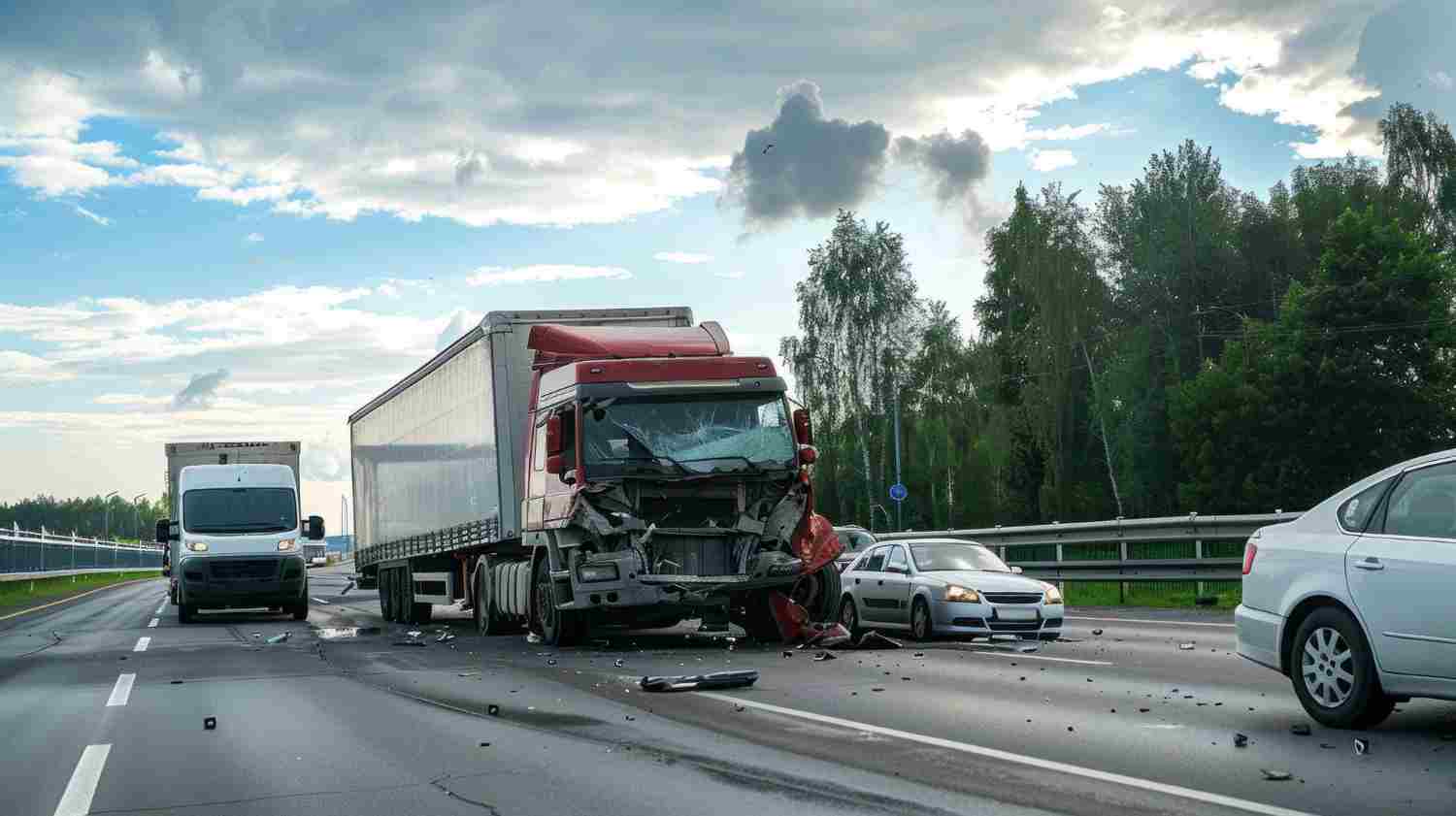
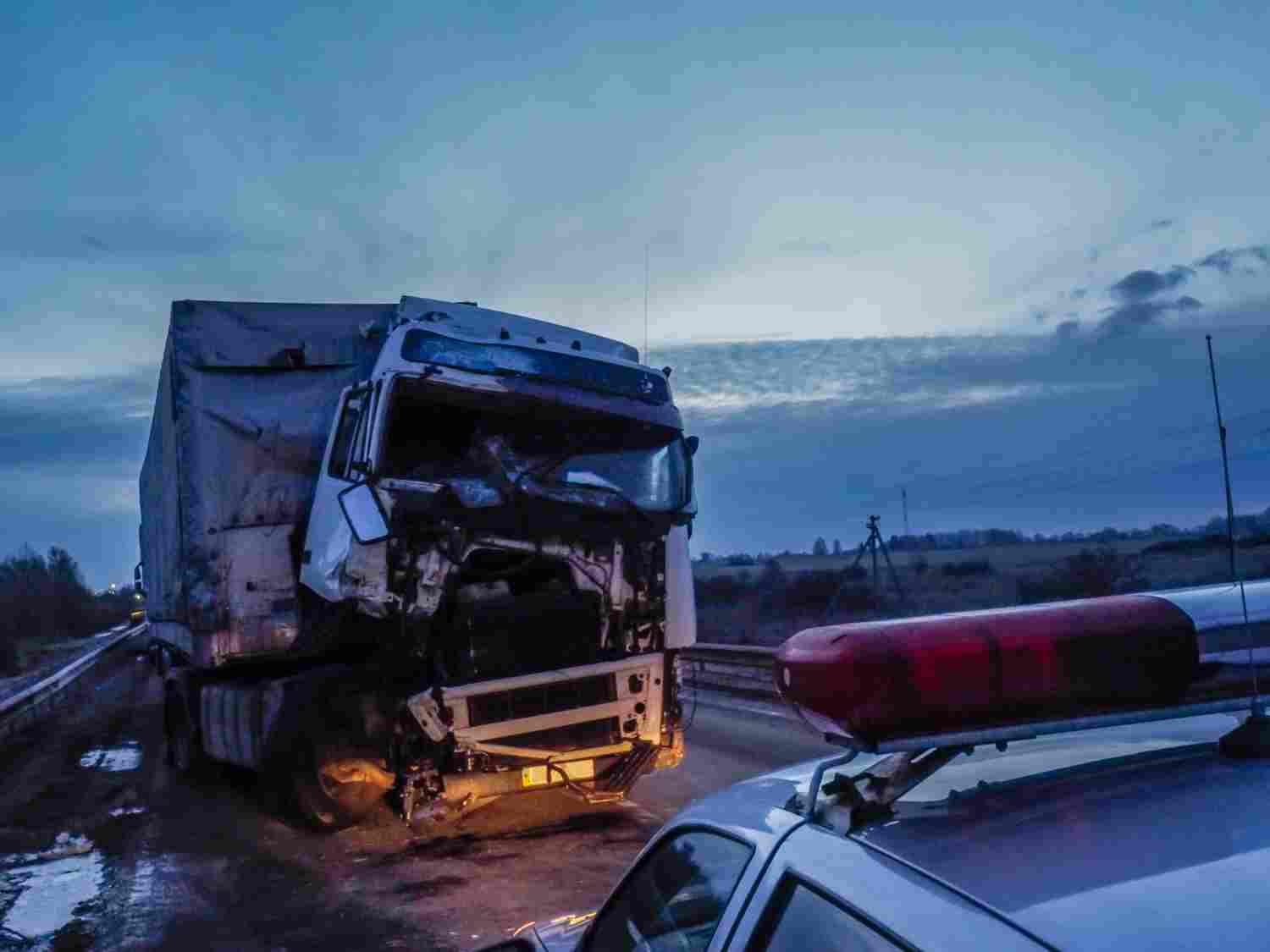
Most car accidents involve one driver, one insurer, and a fairly direct question of fault. A commercial truck crash almost never works that way. Below are the parties that most often carry legal responsibility, and what actually has to be true before each one can be sued.
1. The Truck Driver
In many cases, the most obvious responsible party is the truck driver. If the driver’s actions caused the crash, they can be held directly liable: speeding, distracted driving, fatigue, or driving under the influence of alcohol, drugs, or even a prescription medication that impairs reaction time.
Truck drivers have a duty of care to operate their vehicles safely. When they violate that duty, they can and should be held accountable. But in most cases, they’re not the only ones to blame, and often not the party with the deepest pocket or the clearest paper trail of negligence.
2. The Trucking Company (Employer)
Even if a driver made a mistake, the trucking company they work for is often equally or even more responsible. Under the legal principle of respondeat superior, an employer can be held liable for its employee’s actions if the crash happened while the driver was performing work duties. That scope-of-employment question matters: a driver hauling a load on his assigned route is squarely inside it, while a driver who took a personal detour hours off his route raises a harder argument the carrier’s insurer will absolutely make.
Trucking companies can also be directly, independently negligent, separate from anything the driver did wrong. Hiring an unqualified or unlicensed driver. Failing to train drivers properly. Pressuring drivers to meet unrealistic delivery deadlines, or encouraging them to skip rest breaks and falsify logbooks. Neglecting truck maintenance and safety inspections. Ignoring known safety violations the carrier’s own FMCSA compliance history already flagged.
Many companies cut corners to save time or money. When they do, innocent people pay the price.
3. The Truck’s Owner or Leasing Company
Not every trucking company owns the trucks it uses. A truck or trailer is often leased from another company or an individual owner-operator. Here the law gets counterintuitive: the federal Graves Amendment, 49 U.S.C. § 30106, generally shields a vehicle’s owner or lessor from liability based purely on ownership. Simply owning the truck someone else crashed does not make the owner liable on its own.
What the Graves Amendment does not shield is the owner’s own negligence. If the owner knew about worn-out tires or brakes, faulty lighting, or a defective coupling device between the truck and trailer and put the vehicle on the road anyway, that is a separate, independent claim against the owner for failing to maintain a vehicle it knew was unsafe, not a claim based on ownership alone.
4. The Cargo Loading or Shipping Company
Improperly loaded or secured cargo is a common cause of truck accidents. When cargo shifts suddenly, it can cause a truck to jackknife, roll over, or lose control entirely.
The company responsible for loading the trailer has to follow strict federal cargo securement standards under 49 CFR Part 393, covering weight distribution, securing straps and locks, balancing loads between axles, and staying under legal weight limits. If they fail to do so and a crash occurs, they can be held liable for their negligence, and that liability is separate from whatever the driver or carrier did or didn’t do.
5. The Truck or Parts Manufacturer
Some crashes happen not because of driver error, but because of a mechanical failure. When a truck’s brakes, tires, steering system, or another component fails due to a defective part, the manufacturer of that part may be legally responsible under product liability law.
Product liability applies when a product is unsafe because of a design flaw, a manufacturing defect, or a failure to warn. A tire blowout traced back to a manufacturing defect, a brake system that fails under normal conditions, a coupling mechanism that separates unexpectedly, these are cases where the negligence never touched the driver’s hands at all. These claims also run on a longer investigative timeline than most on this list, since they typically require an engineering expert to examine the failed part itself before it gets scrapped or repaired, which is why preserving the physical wreckage matters as much as preserving digital records.
6. The Maintenance or Repair Contractor
Truck maintenance is critical, and it’s often outsourced to a third-party shop rather than handled in-house. If a mechanic or maintenance company fails to repair a known issue, installs the wrong parts, or skips a required safety check, they can be held liable when that failure contributes to a crash.
A neglected brake inspection. Tires that don’t match the vehicle’s load rating. An oil or fluid leak nobody flagged. A steering issue a competent inspection would have caught. Each of these can become the actual root cause once an attorney pulls the shop’s own service records.
7. The Freight Broker or Logistics Company
A freight broker connects shipping companies with trucking carriers without owning trucks or employing drivers itself, which is exactly why brokers used to be treated as largely off-limits. Federal trucking preemption law made courts reluctant to hold a broker responsible for a carrier’s negligence.
That changed with Montgomery v. Caribe Transport II, LLC, where the Supreme Court held in May of 2026 that a broker’s negligent hiring claim can proceed in court and is not preempted by federal law. A broker that hands a load to a carrier with a poor safety rating, without checking, can now be pursued directly for that failure. A lawyer unfamiliar with this ruling may assume a broker is untouchable when it no longer is, and that assumption can quietly cost a victim an entire source of recovery.
8. Government Entities or Road Maintenance Agencies
Sometimes the cause of a truck crash isn’t a person or a company. It’s the road itself. Poor road design, missing guardrails, inadequate drainage, obstructed signage, or a pothole IDOT or the city knew about and never fixed, any of these can shift responsibility onto a government entity or its contractor.
These claims move on a much shorter clock than the others on this list. The Local Governmental and Governmental Employees Tort Immunity Act, 745 ILCS 10/8-101, cuts the filing deadline to one year instead of the standard two. There is no separate pre-suit notice to serve; the old notice section was repealed in 1986. The one-year deadline is to actually file suit. Miss it, and an otherwise valid claim against a government entity disappears regardless of how clear the road defect was. A city-owned snowplow, a Chicago Transit Authority vehicle, or an IDOT maintenance truck all fall under this shorter deadline the same way a public roadway defect would, so if the truck itself, not just the road, was government-owned, that one-year clock applies to the whole claim, not just the pavement.

A Worked Example: How Fault Splits Across Three Defendants
Say a semi rear-ends a car on I-90 during evening rush hour. The investigation turns up three separate problems. The driver was texting in the moments before impact. The carrier’s own ELD records show he was five hours past his federal hours-of-service limit and dispatch knew it. The freight broker had placed the load with this carrier despite a documented history of hours-of-service violations, without checking that history first.
A jury could reasonably split fault three ways: 40 percent to the driver for the distraction, 45 percent to the carrier for scheduling a fatigued driver, and 15 percent to the broker for negligent selection. None of those three defendants individually crosses the 50 percent mark that would bar a claim against them under 735 ILCS 5/2-1116, but together they account for the entire crash.
Here is why naming all three matters beyond fairness. If the driver’s personal auto policy caps out at $50,000, and the case is worth $2,000,000 in medical costs and lost income, that policy alone does not come close to covering it. The carrier’s federally mandated $750,000 minimum, plus whatever the broker’s own liability coverage adds, is what actually makes the victim whole. Suing only the easiest defendant to identify, the driver, would leave the vast majority of the claim’s value uncollected.
Why Multiple Defendants Usually Means Multiple Insurance Policies
Each party above tends to carry its own, separate layer of coverage, and that separation is a large part of why identifying every liable party matters so much in a truck case. The carrier’s primary commercial policy is only the starting point.
Above that primary layer often sits an excess or umbrella policy that only activates once the primary limit is exhausted. If the driver leases his own truck as an owner-operator, his personal or independent commercial policy can form a separate layer entirely, one an inexperienced attorney may not even know to request. The broker, if one was involved, typically carries its own contingent liability coverage, distinct from the carrier’s policy and negotiated under a completely separate contract. The shipper or cargo loader, if named, brings yet another policy into the mix.
A general personal injury lawyer accustomed to a single insurer on a routine car accident is not equipped to sort out which of these policies applies to which defendant, in what order, or to catch a carrier’s adjuster trying to push a claim onto whichever layer pays out the least. Untangling that stack, not just proving fault, is often what separates a settlement that covers a lifetime of care from one that runs out halfway through it.
How an Experienced Truck Accident Lawyer Finds Every Liable Party
Truck accidents are complex because liability is rarely clear-cut, and most of the parties above never show up in a police report. Finding them takes deliberate investigative work, not a single records request.
An attorney pulls the driver’s Electronic Logging Device data and the truck’s Event Data Recorder before either gets overwritten on the carrier’s routine retention schedule, sometimes as short as six months. The carrier’s Driver Qualification File shows whether the company hired and trained the driver properly in the first place. FMCSA’s public compliance database shows whether this carrier had a pattern of violations serious enough that a broker or shipper should have known better than to use them. Dispatch communications, text messages, and call logs between the driver and the company often reveal exactly what pressure was applied to keep a truck moving past a safe stopping point. And the paper trail connecting the load, from shipper to broker to carrier to owner-operator, shows exactly who agreed to what, and who cut which corner.
By uncovering every negligent act and every responsible party, a lawyer can pursue compensation from all liable entities, not just the one whose name is on the police report.
Filing Deadlines Vary by Defendant, Not Just by Case
Most of the defendants on this list, the driver, the carrier, the manufacturer, the broker, fall under Illinois’s standard personal injury statute of limitations, 735 ILCS 5/13-202: two years from the date of the crash to file suit. That deadline does not move just because there are multiple defendants, and it does not pause while an attorney is still investigating which parties belong in the case.
Two situations change that timeline. A government entity, as covered above, shortens it to one year. And if the injured person is a minor, Illinois tolls the standard two-year clock until they turn 18, which extends the filing window for the injury claim itself, though it does nothing to preserve time-sensitive evidence like ELD data, which still needs a preservation letter sent within days of the crash regardless of the victim’s age.
Quick Answers
Can I sue more than one party from this list at the same time?
Yes, and in a serious truck crash that’s usually exactly what happens. Illinois allows a single lawsuit to name multiple defendants, and the jury then allocates fault among them under the state’s comparative negligence rule at 735 ILCS 5/2-1116.
What if the truck owner says they just leased the truck to someone else?
That fact alone, under the Graves Amendment, may genuinely limit an ownership-based claim. It does not eliminate a claim based on the owner’s own negligence, such as leasing out a truck the owner knew had a maintenance problem.
Does it matter which party has insurance if several are at fault?
It matters a great deal in practice. Naming every liable party, not just the easiest one to identify, is often what determines whether a judgment can actually be collected, since some parties in a trucking chain carry far more coverage than others.
What if the trucking company has since gone out of business?
That doesn’t necessarily end the case. The carrier’s insurance policy typically survives even if the company itself dissolves, and under the MCS-90 endorsement required by 49 CFR Part 387, coverage can still respond to a valid judgment in many circumstances.
Do I have to figure out who’s liable before I file a claim?
No. Identifying every liable party is investigative work an attorney does after taking the case, not something a victim is expected to sort out from the scene of a crash. What matters early on is preserving evidence and getting medical care, not naming defendants correctly on day one.
Finding Accountability in the Chaos
After a truck crash, it’s easy to feel lost. But you’re not powerless, and you don’t have to face this alone. Holding the right people accountable is about more than just money, it’s about justice, safety, and closure.
At our firm, we’ve helped countless Chicago families rebuild after devastating truck crashes. We know where to look, what questions to ask, and how to hold negligent drivers and corporations accountable. Because when lives are changed forever by a truck accident, accountability is the first step toward healing. Every additional party we identify is one more chance at making a family whole again, and that is worth the extra weeks of investigation it sometimes takes.
Attorney Advertising. This page provides general information about Illinois law and is not legal advice. Reading it does not create an attorney-client relationship. Deadlines and outcomes depend on the specific facts of your case, speak to a licensed Illinois attorney about your situation.