Author: Phillips Law Offices Legal Team

  • How Long Do Truck Accident Cases Take To Settle in Illinois

    How Long Do Truck Accident Cases Take To Settle in Illinois

    If you’ve been injured in a truck accident in Illinois, one of the first questions that comes to mind is: how long will my case take to settle? It’s a fair question, and a deeply personal one. You’re likely facing a mountain of medical bills, time away from work, and the emotional strain of dealing with insurance adjusters who don’t seem to understand what you’re going through.

    The truth is, there’s no single, simple answer. Truck accident cases take time because they involve serious injuries, complex investigations, and multiple parties, but understanding the process can make it a lot less overwhelming. Below, we walk through what typically happens, why these cases can take months or sometimes years, what makes a truck case different from an ordinary car accident claim, and what you can do to help your case move forward.

    Average Timeline: 6 Months to 2+ Years

    On average, most truck accident cases in Illinois take anywhere from 6 months to over 2 years to reach a settlement or verdict. The timeline depends on several factors: how severe your injuries are, how long it takes you to recover, whether liability is clear, how many parties share fault, and how cooperative or difficult the insurance companies involved turn out to be.

    A truck accident case rarely moves at the same pace as a typical car accident claim. Semi-trucks and commercial vehicles are regulated by federal law, often owned or leased through layered corporate structures, and insured through policies with much higher limits and much more aggressive defense teams. Every one of those differences adds time somewhere in the process.

    1. The First Few Weeks: Recovery and Initial Investigation

    In the first few weeks after a truck accident, your focus should be on one thing: your health. This is the stage where you’re receiving medical care, documenting your injuries, and starting to grasp how the accident will impact your life. Meanwhile, your attorney will begin investigating the crash by:

    • Obtaining the police report and witness statements
    • Securing black box data from the truck’s electronic logging device
    • Reviewing driver logs, company safety records, and truck maintenance histories
    • Gathering photos, videos, and accident reconstruction evidence

    Because trucking companies often deploy their own investigators within hours of a crash, having your lawyer start early is critical. Key evidence, like electronic logging device data, can be legally destroyed or overwritten within days or weeks if it isn’t preserved with a formal request.

    2. The Investigation Phase: Building the Foundation (2 to 6 Months)

    Once the initial evidence is gathered, your attorney moves into a deeper liability investigation. Truck accident cases are rarely straightforward, because multiple parties can share responsibility, including:

    • The truck driver, for negligence, distraction, or fatigue
    • The trucking company, for poor training, overworked drivers, or unsafe scheduling
    • The truck’s owner or leasing company, which may be a separate entity from both the driver and the motor carrier
    • The maintenance provider, for failing to repair known mechanical issues
    • The cargo loader or shipper, if improperly secured or overloaded freight contributed to the crash
    • The manufacturer, for defective brakes, tires, or other parts

    Identifying every responsible party takes real work, especially in owner-operator cases. Many truck drivers technically own their rigs but lease them, and their driving services, to a larger motor carrier. Under federal regulation 49 CFR 376.12(c)(1), a motor carrier that leases an owner-operator’s truck is generally treated as being in control of that vehicle for liability purposes, even though the driver isn’t a direct employee. Sorting out who the lease places in control, and whose insurance actually pays a claim, is its own investigation and can meaningfully add to the timeline. Our page on owner-operators and the independent contractor defense in truck cases covers how carriers try to use these lease arrangements to shift blame.

    Each of these parties may carry separate insurance and bring in its own legal team. That’s a major reason truck cases take longer than car accident claims: there’s more to uncover and more people to hold accountable. During this stage, your lawyer may also work with accident reconstruction experts, medical professionals, and economists to calculate damages and long-term costs.

    Federal Hours-of-Service rules under 49 CFR Part 395 require most commercial drivers to log their on-duty and driving time electronically. When a crash suggests driver fatigue, pulling those ELD records and cross-checking them against dispatch logs and fuel receipts becomes its own mini-investigation, since the two don’t always match.

    Sometimes that data disappears faster than it should.

    3. Medical Recovery and Maximum Medical Improvement (6 to 12 Months)

    Your medical treatment plays a major role in how long your case takes. A settlement shouldn’t be finalized until you’ve reached what doctors call Maximum Medical Improvement, or MMI: the point where your condition has stabilized and future treatment needs can be reasonably predicted.

    Why does this matter so much? Because once you accept a settlement, the case is closed for good. There’s no way to reopen a truck accident claim if your injuries turn out to be worse than expected or if you end up needing a surgery nobody anticipated. If you settle before you understand the true scope of your recovery, you have no way to go back and ask for more.

    This is one of the most common mistakes people make when they’re eager to move on. Insurance adjusters know that someone facing mounting bills is more likely to accept a fast, low offer, and they will sometimes present one before your medical picture is anywhere close to complete. Your lawyer’s job is to hold off until your doctors can speak clearly to the future: whether you’ll need additional surgeries or therapy, whether any disabilities or limitations will be permanent, and how your injuries will affect your ability to work and live day to day.

    Because truck collisions tend to produce more severe injuries than typical car accidents, given the size and weight difference between a passenger vehicle and a fully loaded semi, reaching MMI often takes longer in a truck case than it would after a routine fender-bender. That’s not a reason to rush. It’s a reason to be patient and to work with an attorney who understands the difference.

    Lawyer reviewing how long a truck accident settlement takes in Illinois

    4. Settlement Negotiations Begin (3 to 6 Months)

    Once your medical situation is clear and all the evidence is in hand, your attorney will prepare a demand package: a detailed summary of the accident, your injuries, medical costs, lost income, and other damages like pain and suffering. This is sent to the insurance company, or companies, as the formal opening of negotiations.

    When more than one party shares fault, the demand has to account for that too. Under Illinois law (735 ILCS 5/2-1117), your medical expenses are always recoverable regardless of how fault is divided among defendants, but your other damages, like pain and suffering or lost future income, are apportioned based on each defendant’s individual share of fault once that share is established. When a case involves the driver, the motor carrier, and possibly an owner-operator’s leasing company, sorting out those percentages before you can present a clean demand adds a layer of work and time that a single-driver car accident case simply doesn’t have.

    Insurance adjusters will almost always start with a low offer, hoping you’ll accept quickly. An experienced lawyer will push back with evidence and legal argument and negotiate firmly for fair compensation. Negotiations can take weeks or months depending on how cooperative the insurer is. Many cases settle at this stage, especially when the evidence is strong and your lawyer has built a compelling case.

    5. When Negotiations Fail: Filing a Lawsuit (1 to 2+ Years)

    If the insurance company refuses to make a fair offer, your attorney may file a lawsuit in Illinois court. Filing a lawsuit doesn’t mean you’ll go straight to trial. In fact, most cases still settle before trial, but filing sends a clear message that you’re serious about fighting for what’s fair.

    Here’s what typically happens once a lawsuit is filed:

    • Discovery: both sides exchange evidence, documents, and witness information
    • Depositions: lawyers question witnesses, doctors, and experts under oath
    • Motions and hearings: each side may file motions to strengthen its position
    • Mediation or settlement conferences: courts often encourage both sides to settle before trial

    In Cook County, most truck accident lawsuits are filed in the Law Division, and claims within a certain damages range may first be routed to mandatory arbitration under Illinois Supreme Court Rule 86 before either side can demand a full jury trial. That extra step can add several months on its own. Either party can reject the arbitrator’s award and proceed to trial if they’re not satisfied with it, which is common in cases with serious injuries.

    If a fair settlement still isn’t reached, your case will go to trial, where a judge or jury decides the outcome. Going to court takes time, but it can lead to a much higher award than what insurers initially offer.

    6. Factors That Influence Your Case Timeline

    Every case is unique, but here are some of the most common factors that speed up or slow down the process:

    • Clear liability, such as a truck rear-ending your car, or a cooperative insurer can speed things up. Disputed fault, multiple parties, or insurance company delays can slow things down.
    • Minor or moderate injuries tend to resolve faster, while severe or long-term injuries take longer to fully document and value.
    • Complete, well-organized medical records help move things along, while ongoing treatment or an unclear prognosis slows progress.
    • Cases involving an owner-operator’s lease arrangement, a separate cargo shipper, or a parts manufacturer take longer to investigate than cases with one clearly at-fault driver, because each added defendant means another insurer, another legal team, and another set of facts to apportion under Illinois law.

    Your lawyer’s experience, responsiveness, and willingness to litigate can also make a major difference in how efficiently your case moves forward.

    Why These Cases Take Longer Than a Typical Car Accident Claim

    It helps to understand just how different a truck case is from an ordinary car accident claim, because those differences are exactly what stretches the timeline.

    A car accident claim usually involves two drivers, two insurance policies, and policy limits that are often in the tens of thousands of dollars. A truck accident claim can involve the driver, the motor carrier, an owner-operator’s leasing company under 49 CFR 376.12(c)(1), a maintenance contractor, and a cargo shipper, each carrying its own insurance policy with limits that can run into the millions. More parties and more money on the table means more investigation, more negotiation, and more incentive for insurers to slow the process down rather than pay quickly. See our breakdown of truck accident settlements versus car accident settlements for a closer look at these differences.

    Illinois’s approach to shared fault under 735 ILCS 5/2-1117 adds another layer that car accident cases with a single at-fault driver rarely face: apportioning non-medical damages across multiple defendants based on each one’s individual share of responsibility. That apportionment has to be supported by evidence before a fair settlement is even possible, which is one more reason truck cases take real time to resolve properly.

    7. Illinois Statute of Limitations: Don’t Wait Too Long

    Under Illinois law (735 ILCS 5/13-202), you generally have 2 years from the date of your accident to file a personal injury lawsuit. If you miss this deadline, you lose your right to pursue compensation, no matter how strong your case is. That’s why it’s important to contact a truck accident attorney as soon as possible. They can start investigating early, preserve evidence, and make sure you don’t run out of time. For a closer look at the deadline itself, see how long you have to file a truck accident lawsuit in Illinois.

    8. Why Patience Often Leads to Better Results

    It’s natural to want closure and financial relief as quickly as possible. But in truck accident cases, a quick settlement usually means a smaller one. Insurance companies count on your frustration and financial stress. They hope you’ll accept less just to be done with it. Your attorney’s role is to protect you from that pressure and make sure your settlement truly reflects the full cost of your losses: medical care, past and future; lost wages and loss of future earning capacity; pain, suffering, and emotional distress; long-term or permanent disability; and the impact on your family and quality of life.

    The more complete your medical recovery and documentation, the stronger your case becomes, and the higher your eventual settlement may be.

    Common Questions About Truck Accident Case Timelines

    Can I get money while my case is still pending?

    Sometimes. If your own auto policy includes medical payments coverage, or the at-fault carrier’s insurer is willing to make interim payments on clear liability, you may see some funds before final settlement. Don’t count on it as a plan, though. Most compensation arrives at the end, not along the way.

    What if the trucking company’s insurer offers a quick settlement?

    Be skeptical. A fast offer usually means the adjuster wants to close the file before your medical picture, and your damages, are fully known. Once you sign a release, that’s final, no matter what surgery or complication shows up six months later.

    Does filing a lawsuit mean my case will definitely go to trial?

    No. Filing a lawsuit is a negotiating tool as much as a legal one. Most truck accident lawsuits still settle, often after discovery makes the strength or weakness of each side’s case clear, without ever reaching a jury.

    Will an Hours-of-Service violation speed up my case?

    It can strengthen liability quickly if the electronic logging device data is preserved and clearly shows a violation. But proving how that violation caused the crash, and calculating what it’s worth, still takes the same medical and damages work as any other case.

    How does a Cook County case differ from one filed in a collar county?

    Cook County’s Law Division carries one of the heaviest caseloads in Illinois, which can mean a longer wait for a trial date once a case is filed. Collar counties like DuPage or Lake sometimes move faster simply because their court calendars aren’t as backed up, though the underlying law and settlement value don’t change based on which county the crash happened in.

    A Truck Accident Case Is a Journey, Not a Race

    Every truck accident case in Illinois follows its own path. Some resolve in a few months, others take years, but the goal is always the same: to secure full and fair compensation for everything you’ve lost. This isn’t just about closing a case. It’s about rebuilding your life after a traumatic event, and that takes time, care, and the right legal support.

    If you or a loved one has been injured in a truck accident, you don’t have to face it alone. At Phillips Law Offices, our truck accident team can guide you through every step, from investigation to negotiation to courtroom advocacy, and fight for the compensation you deserve.

    Attorney Advertising. This page provides general information about Illinois law and is not legal advice. Reading it does not create an attorney-client relationship. Deadlines and outcomes depend on the specific facts of your case — speak to a licensed Illinois attorney about your situation.

  • The Truck Accident Claim Process in Illinois: Step-by-Step Legal Timeline

    The Truck Accident Claim Process in Illinois: Step-by-Step Legal Timeline

    After a truck crash in Chicago, clients want to know one thing above all else: what happens next. Truck accident claims move through a specific sequence of legal steps, and knowing that sequence helps you understand why your case is at the stage it’s at. Below, we walk through the process we follow at Phillips Law Offices, from the first phone call to the final check in your hands. If you’re wondering how long each of these stages actually takes, we cover that separately in How Long Do Truck Accident Cases Take To Settle in Illinois. Here, we’re focused on what actually happens at each stage.

    Step 1: The Free Consultation

    Every case starts with a conversation, not a contract. When you reach out, we ask about:

    • How the accident occurred
    • What injuries you sustained
    • Whether the police report identifies the truck or driver
    • What medical treatment you have received so far

    Small details matter here. The truck’s logo, the direction it was traveling, a nearby business with a camera facing the road. Any of these can become evidence later. We also check your filing window against the Illinois statute of limitations (735 ILCS 5/13-202) so you know exactly how much time you have. Learn more about the key statutes at play in Understanding Illinois Truck Accident Laws.

    Step 2: Investigation and Evidence Collection

    The moment you hire us, the investigation starts. Trucking companies deploy rapid response teams to the scene within hours of a serious crash, sometimes before you’ve even left the hospital. Those teams are there to build the carrier’s defense before the wreckage is even cleared. We move just as fast, on your side, to preserve evidence before it disappears.
    Truck cases involve a category of evidence a typical car accident case never touches. We request the Driver Qualification File (DQF), the FMCSA-mandated record every carrier must keep on each driver. It covers licensing, road test results, drug and alcohol screening, and employment history going back years. A thin or incomplete DQF often points straight to negligent hiring, and a driver with a pattern of prior violations who was hired anyway can reshape the entire liability picture.
    We also pull data from the truck’s Electronic Logging Device (ELD) and Event Data Recorder (EDR), sometimes called the black box. The ELD shows whether the driver was violating Hours-of-Service limits before the crash, down to the minute. The EDR captures speed, braking, and throttle input in the seconds before impact, data that’s difficult to dispute once it’s in evidence. Roadside inspection reports and prior citation history round out the picture, showing us whether this truck and this carrier had a history of cutting corners before your crash ever happened. For more on how this data gets used, see Truck Black Box Evidence: How ELD and EDR Data Proves Fault in Chicago Truck Accidents.
    Beyond the driver-specific records, we collect:

    • Maintenance and inspection reports
    • Dashcam and surveillance footage
    • Witness statements and accident scene photos
    • The official Illinois Traffic Crash Report

    We send a spoliation letter to the trucking company as soon as we’re retained, putting them on formal legal notice that they must preserve every one of these records. Without that letter, ELD data and dashcam footage can be overwritten or deleted within weeks. Read more about how this fits into our broader process in What Does a Truck Accident Lawyer Do?.

    Step 3: Determining Liability

    Truck accident liability is rarely a one-driver question. Depending on what the investigation turns up, responsibility can extend to:

    • The truck driver for fatigue, distraction, or impairment
    • The trucking company for negligent hiring or unsafe scheduling
    • The cargo loader for improperly secured freight
    • The manufacturer for mechanical failure or defective brakes
    • The maintenance contractor for skipped inspections

    Illinois follows a comparative negligence rule (735 ILCS 5/2-1116), so your compensation can be reduced if you share some fault, but only if your share is under 50%. Learn more about how fault gets assigned in Who Is Liable in a Truck Accident?.

    Step 4: Managing Insurance Communication

    Once we’ve identified who’s liable, we take over every conversation with the insurers involved, including:

    • The trucking company’s commercial carrier
    • The cargo owner’s insurer, where applicable
    • Your own personal vehicle insurer, if applicable

    Insurance adjusters are trained to get recorded statements that undercut your claim. Once we’re on the case, you don’t give statements or sign anything without our review first. See how we calculate what a settlement offer should actually reflect in How Is Compensation Determined After a Semi-Truck Wreck?.

    Step 5: Medical Documentation and Ongoing Care

    Your medical record is the backbone of your claim. We work with your doctors, therapists, and specialists to track:

    • Diagnosis and treatment history
    • Prognosis and long-term care needs
    • Future surgeries, rehabilitation, or assistive devices
    • Psychological impact such as PTSD, anxiety, or depression

    Every visit and every prescription adds weight to your case. We also help you keep receiving care while your claim is still pending, so a gap in treatment doesn’t get used against you later. Learn more about the injuries we see most often in What To Do After a Truck Accident in Chicago.

    Step 6: Building the Demand Package and Starting Negotiations

    Once you’ve reached maximum medical improvement, or your condition has stabilized enough to project future costs, we build the demand package. This is the document that makes your case to the insurance company, and it’s built in layers.
    The medical layer includes every diagnosis and treatment record, plus physician narratives connecting your injuries directly to the crash. The economic layer lays out lost wages and reduced earning capacity, backed by pay stubs, tax records, and vocational documentation. For serious injuries, we bring in life care planners to project future medical costs and vocational analysts to quantify how the injury affects your ability to work over the rest of your career.
    The liability layer ties it together with the DQF findings, the ELD and EDR data, and, where needed, an accident reconstruction expert’s report showing exactly how the crash happened and why the truck driver or carrier is at fault.
    We send the completed package to the insurer with a formal settlement demand and a deadline to respond. That deadline matters. It signals we’re prepared to file suit if the carrier drags its feet, and it puts pressure on their adjuster to get authority from a supervisor rather than sitting on the file. Negotiations begin from there, usually with a lowball counteroffer we expect and reject. If the carrier won’t move to a number that reflects the real value of your losses, we don’t settle for less just to close the file. We move toward litigation instead.

    Step-by-step truck accident claim process in Illinois

    Step 7: Filing the Lawsuit

    If the insurance company won’t negotiate in good faith, we file suit in Cook County Circuit Court or the county where the crash occurred. Filing stops the statute of limitations clock and moves your claim into formal litigation. In cases involving especially reckless conduct, such as a carrier that ignored repeated Hours-of-Service violations, filing suit is also when we evaluate whether to seek leave of court to plead punitive damages under 735 ILCS 5/2-604.1. That motion has to be made and granted before punitive damages can be added to the case.
    Most claims still settle after filing, once the defense sees the strength of the evidence we’ve assembled and realizes a jury will see it too.

    Step 8: Discovery Phase

    Discovery is where both sides formally exchange evidence and put witnesses under oath. It starts with written discovery: interrogatories, requests for production, and requests to admit, aimed at pinning down the carrier’s records and forcing specific answers on paper. If the carrier stonewalls, we file motions to compel and get the court to order compliance.
    Then come the depositions. In a trucking case, that typically means:

    • The truck driver
    • A corporate representative or safety director from the trucking company, testifying to hiring, training, and safety practices
    • Eyewitnesses to the crash
    • Law enforcement officers who responded to the scene
    • Accident reconstruction and other retained experts

    The corporate representative deposition, taken under Illinois Supreme Court Rule 206(a)(1), matters more than people expect. The company has to send someone prepared to answer for its policies, its training records, and its safety culture as a whole, not just for what one driver did on one afternoon. That’s often where negligent hiring or negligent supervision claims get their strongest support.
    Both sides also disclose their expert witnesses during this stage, along with detailed reports laying out each expert’s opinions and the basis for them. Once disclosures are exchanged, opposing counsel gets to depose those experts too. Discovery is frequently where a case tips decisively in our favor. A safety director’s deposition can reveal that the company knew about a driver’s prior violations and put him on the road anyway. Logbooks compared against ELD data can expose falsification. These are the details that turn a defensible claim into a case the carrier wants to settle rather than try.

    Step 9: Mediation and Settlement Conferences

    Before trial, both sides typically sit down for mediation, a structured negotiation guided by a neutral third party. We present your evidence directly and push for a figure that reflects what your case is actually worth. If the defense won’t move to a reasonable number, we take the case to trial.

    Step 10: Trial and Verdict

    Most truck accident claims resolve before trial. Insurers generally prefer a negotiated settlement to the risk and expense of a jury verdict, and the evidence gathered during investigation and discovery usually makes the strength of your claim hard to ignore.
    A case proceeds to trial when the gap between what the carrier is offering and what your claim is actually worth won’t close, or when liability itself is still genuinely disputed after discovery. At that point, going to trial isn’t a setback, it’s the only way to get you what you’re owed. Trial starts with jury selection, where we screen out jurors carrying bias against injury claims. From there, we present your case through the evidence we built from day one: the DQF findings, the ELD and EDR data, the depositions, and expert testimony walking the jury through exactly how the trucking company’s negligence caused your injuries and losses. For a closer look at what that stage involves, see What Happens If Your Truck Accident Case Goes to Trial in Cook County.

    Step 11: Post-Settlement Support

    After your case concludes, whether by settlement or verdict, we help with:

    • Resolving liens with medical providers
    • Disbursing settlement funds
    • Addressing tax or financial questions
    • Protecting future benefits, such as structured payments

    Our job isn’t finished when the check is issued. We want you walking away from this understanding exactly what you’re getting and why.

    How Long Does Each Stage Take?

    Timelines vary case by case, depending on injury severity, how many parties are involved, and whether the case settles or goes the distance to trial. Rather than repeat that breakdown here, we’ve laid out the full timeline, stage by stage, in How Long Do Truck Accident Cases Take To Settle in Illinois. Whatever your timeline looks like, we keep you updated at every step.

    Why Legal Guidance Matters

    Truck accident claims sit at the intersection of federal trucking regulations and Illinois state law, and the carriers involved usually have legal teams working to limit their own exposure from day one. Having a Chicago attorney who knows how to pull the right records and push a case through litigation when negotiation stalls changes the outcome. From your first call to the final resolution, we’re the ones standing between you and an insurance company that would rather you settle for less.

    Attorney Advertising. This page provides general information about Illinois law and is not legal advice. Reading it does not create an attorney-client relationship. Deadlines and outcomes depend on the specific facts of your case — speak to a licensed Illinois attorney about your situation.

  • Who Is Liable in a Truck Accident? Understanding Responsibility Under Illinois Law

    Who Is Liable in a Truck Accident? Understanding Responsibility Under Illinois Law

    Most people assume liability after a truck accident is simple, the driver was driving, so the driver is at fault. It’s rarely that clean. Behind most semi-trucks sits a network of companies, contractors, and insurers, and more than one of them can share the blame.

    Getting this right changes the outcome. Here’s how liability actually gets sorted out under Illinois law.

    Start With the Driver, But Don’t Stop There

    The first question is always about the person behind the wheel. Distracted? Fatigued? Speeding? Under the influence?

    A driver can be held liable for violating traffic laws, ignoring FMCSA Hours of Service rest requirements, driving impaired, or using a phone while driving, prohibited under 625 ILCS 5/12-610.2. But in most cases the driver works for someone else. That’s where liability expands, not ends. See What To Do After a Truck Accident in Chicago for how early evidence connects to this question.

    The Trucking Company Is Often the Real Target

    Hiring. Training. Maintenance schedules. Dispatch pressure. All of it sits with the carrier, and all of it affects road safety.

    A trucking company can be held liable for hiring or retaining unqualified drivers, failing to maintain its fleet, pushing schedules that cause fatigue, ignoring DOT/FMCSA safety standards, or neglecting cargo weight and securement rules. This is vicarious liability, an employer answering for its employee’s actions.

    Companies frequently try to dodge this by labeling a driver an independent contractor instead of an employee. That label doesn’t always hold up once dispatch records, pay structures, and internal contracts get pulled. Once the employment relationship is established, the company’s commercial insurance, usually far larger than any individual driver’s policy, comes into play. More on how that gets pursued in The Truck Accident Claim Process.

    Mechanical Failure: Manufacturer and Maintenance Liability

    Not every crash starts with human error. Brake failure, tire blowouts, and defective steering systems cause real wrecks on I-90 and Lake Shore Drive every year.

    When mechanical failure is the cause, liability can shift to the manufacturer for a defective part or design, the maintenance provider for negligent inspection or repair, or the parts supplier if a faulty component made it into the vehicle. Worn brake pads that should have been replaced at the last service interval, for instance, are exactly the kind of maintenance failure that shows up in service logs once they’re pulled and reviewed. That’s why requesting maintenance and inspection records is one of the first steps in any case involving equipment failure.

    Cargo Loaders and Shipping Companies

    Improperly loaded freight causes trailer imbalance, rollovers, cargo spills, and loss of control on turns, more often than most people assume.

    If a separate shipping or logistics company handled the loading, liability can extend to them under federal cargo securement regulations (49 CFR sections 393.100-136). A single shipment often passes through the carrier, a freight broker, and a warehouse loader, and any of them can carry partial responsibility. Sorting that out usually takes accident reconstruction and forensic review to pinpoint where the failure started. See The Truck Accident Claim Process for how that evidence fits into a claim timeline.

    When the Road Itself Is a Factor

    Sometimes it isn’t the truck. Poor road design, missing signage, unrepaired potholes, or malfunctioning traffic signals can put a city or state agency partially on the hook.

    Claims against government entities move on a much tighter clock than standard injury claims, generally around one year under the Illinois Court of Claims Act, with strict notice requirements on top of that. Waiting to investigate whether a government agency’s negligence played a role is one of the more costly delays a truck accident victim can make.

    Shared Fault and Comparative Negligence

    Illinois follows modified comparative fault (735 ILCS 5/2-1116). Under 50% at fault, you still recover, reduced by your percentage. At 50% or more, you recover nothing.

    Say total damages come to $200,000 and a victim is found 20% at fault. The recovery becomes $160,000, not zero. This is exactly why insurers push hard to inflate a victim’s share of blame, every percentage point they add directly reduces what they owe. Dashcam footage, witness statements, and reconstruction reports are what push back against that.

    A Realistic Example

    A box truck merges without checking its blind spot and sideswipes a sedan on the Kennedy Expressway. The truck is owned by a regional delivery company, but the driver behind the wheel had been leased to that company by a separate staffing agency for the day.

    Untangling who employed the driver, the delivery company that controlled the route and schedule, or the staffing agency that issued the paycheck, becomes its own investigation. Illinois courts look past the paperwork to who actually directed the work: who set the route, who could fire the driver on the spot, who owned the truck. In this case, dispatch records showed the delivery company controlled every aspect of the shift, which made it the liable employer despite the staffing agency’s name on the pay stub.

    That kind of layered employment relationship is common in trucking, temp drivers, leased trucks, subcontracted routes, and it’s exactly why the first liability question in any case is never as simple as looking at who signed the paycheck.

    Freight Brokers Can Now Be Held Liable Too

    A 2026 Illinois Supreme Court ruling in Montgomery v. Caribe Transport II LLC opened a new avenue that didn’t exist a few years ago: freight brokers, the companies that connect shippers with carriers but don’t own trucks themselves, can be held liable for negligently selecting an unsafe carrier.

    Before that ruling, brokers argued federal law preempted any state negligent-hiring claim against them. Illinois courts rejected that argument, at least for claims based on how the broker vetted the carrier’s safety record before booking the load. If a broker matched a shipper with a carrier that had a documented history of FMCSA violations, that broker’s own liability insurance can become part of the recovery.

    Owner-Operators Complicate the Employee Question

    Roughly a third of commercial trucks on Illinois highways are driven by owner-operators, drivers who own their own rig but lease it to a carrier under that carrier’s operating authority. Federal leasing regulations (49 CFR 376.12 and 390.5) generally make the carrier responsible for the leased truck’s operation regardless of who technically owns it, specifically to prevent carriers from using ownership structure to dodge liability.

    That doesn’t mean the owner-operator is automatically off the hook. If the owner-operator skipped required maintenance on equipment they personally owned, that negligence can still attach directly to them, separate from whatever liability flows to the carrier through the lease. Both angles usually get investigated in parallel rather than one replacing the other.

    When Punitive Damages Enter the Picture

    Most truck accident cases settle on compensatory damages alone, medical bills, lost wages, pain and suffering. Illinois allows punitive damages in a narrower set of cases involving willful and wanton conduct, not ordinary negligence.

    Falsified driver logs to hide hours-of-service violations. A carrier that kept a driver on the road after multiple documented safety complaints. Deliberately ignoring a known mechanical defect to avoid downtime. These fact patterns move a case from simple carelessness into something closer to conscious disregard for safety, and Illinois courts treat that difference as meaningful when punitive damages are on the table.

    How an Attorney Investigates a Multi-Party Case

    Building a liability case against several parties starts with requests that have to go out fast: preservation letters to the carrier, the broker if one was involved, and any maintenance contractor named in service records. ELD data and dashcam footage can be gone within weeks if nobody asks for it in writing.

    From there, the investigation typically runs in parallel tracks. One track pulls the driver’s qualification file, employment history, and any prior safety violations on record with FMCSA. Another pulls maintenance and inspection logs going back months, sometimes years, looking for a pattern rather than a single missed service. A third looks at the load itself, who packed it, who inspected the securement, whether the bill of lading matches what was actually on the trailer.

    None of these tracks move especially fast on their own. Records requests get delayed, companies claim documents were routine and discarded, insurers slow-walk cooperation until a formal demand or lawsuit forces the issue. That’s normal, and it’s also why starting the investigation in the first weeks after a crash, rather than months later once memories and paper trails have faded, tends to produce a much stronger case than waiting to see how the injuries play out before deciding who to pursue.

    Following the Insurance Money

    Multiple policies typically apply to a single truck accident claim. Illinois requires commercial vehicles to carry higher liability limits than passenger cars, often ranging from $750,000 up toward $5 million depending on cargo type, particularly hazardous materials.

    A thorough investigation maps every layer: the driver’s personal policy, the carrier’s commercial policy, any umbrella or excess coverage, cargo insurance if freight was damaged, and sometimes broker or shipper coverage on top of that. Missing a layer means leaving compensation on the table. See How Is Compensation Determined After a Semi-Truck Wreck for how these layers factor into settlement value.

    The Evidence That Actually Proves Liability

    Electronic logging device and black box data. Driver qualification files. Maintenance logs. Cargo manifests. GPS and cell phone records. Witness statements. Dashcam footage.

    None of it proves anything on its own. Together, it reconstructs a timeline that shows what actually happened, not just who was holding the wheel when it did.

    Prior Safety Violations as Evidence of a Pattern

    A single speeding ticket doesn’t prove much on its own. A pattern does. FMCSA maintains a public Safety Measurement System score for every registered carrier, tracking hours-of-service violations, vehicle maintenance citations, and crash history over a rolling 24-month window.

    Pulling a carrier’s safety history before litigation starts often reveals whether a crash was a one-off mistake or the predictable result of a company running drivers past legal limits or skipping inspections for months at a time. That history becomes especially important in a negligent hiring or negligent retention claim, where the question isn’t just what the driver did on the day of the crash but what the company knew, or should have known, before putting that driver back on the road.

    Courts weigh this kind of pattern evidence heavily, both for establishing liability and for the punitive damages question when conduct crosses from careless into reckless.

    Filing Against Multiple Defendants in Cook County

    Once liability investigation identifies more than one responsible party, the lawsuit itself typically names all of them jointly, the driver, the carrier, and any broker, maintenance contractor, or cargo loader whose negligence contributed to the crash. Illinois allows joint and several liability in many personal injury contexts, meaning each defendant can be held responsible for the full judgment, not just their proportional share, though the specifics depend on how fault gets allocated at trial.

    Cook County’s Law Division handles the bulk of these multi-defendant truck cases, and out-of-state carriers frequently try to remove the case to federal court under diversity jurisdiction once multiple parties from different states are involved. That doesn’t change the underlying Illinois law that applies, but it does change the procedural rules, discovery deadlines, and sometimes the jury pool.

    None of this happens automatically. A plaintiff’s attorney has to make the strategic call on who to name, when to file, and whether removal to federal court helps or hurts the case, decisions that get made well before a jury ever hears the facts.

    How Multiple Liable Parties Change Settlement Value

    A case against one driver caps out at that driver’s insurance limits. A case that correctly identifies the carrier, a maintenance contractor, and a cargo loader as jointly liable opens up multiple policies at once, which is often the difference between a settlement that covers a fraction of the damages and one that covers all of them. This is the main reason liability investigation happens before, not after, settlement talks begin.

    Holding Every Liable Party Accountable

    Once liability across multiple parties is clear, the next step is filing against all of them, not just the most obvious one. That can mean a multi-defendant lawsuit, coordinated negotiations with several insurers at once, and trial preparation if any of them deny fault. The goal isn’t just proving liability; it’s making sure every negligent party actually contributes to the recovery.

    Frequently Asked Questions

    Can more than one party be liable for the same truck accident?

    Yes, and it’s common. Driver, carrier, maintenance provider, and cargo loader can all carry a share of fault in the same crash.

    What if the trucking company says the driver was an independent contractor?

    That label gets tested, not accepted automatically. Pay structure, dispatch control, and equipment ownership often tell a different story than the paperwork does.

    How is fault determined when the evidence is disputed?

    Through a combination of physical evidence, electronic data (ELD, black box, dashcam), witness accounts, and often accident reconstruction analysis when the dispute is significant.

    Does it matter if I was partly at fault?

    Under Illinois’s modified comparative fault rule, you can still recover as long as you’re not more than 50% at fault, with your award reduced proportionally.

    How long do I have to identify a government entity’s role in the crash?

    Much less time than a standard claim, roughly one year under the Illinois Court of Claims Act, with notice requirements that can be even shorter. Investigate this possibility early.

    Why does insurance coverage layering matter so much in truck cases?

    Because commercial trucking claims routinely exceed what a single policy can cover. Identifying every applicable policy is often what makes full compensation possible instead of a capped, partial recovery.

    Can a carrier’s FMCSA safety score really be used against them in court?

    Yes, though it usually comes in through the underlying violation records rather than the summary score itself. A documented pattern of hours-of-service or maintenance violations in the two years before a crash can support a negligent hiring or retention claim against the carrier, especially when the same violation type recurs across multiple inspections rather than showing up once. Isolated incidents carry less weight; recurring ones start to look like a policy of looking the other way.

    Can I sue the company that arranged the shipment even if they don’t own any trucks?

    Sometimes. Following the 2026 Illinois Supreme Court ruling, freight brokers can face liability for negligently selecting a carrier with a poor safety record, separate from the carrier’s own liability for the crash itself.

    What if the truck was leased to the carrier by its actual owner?

    Federal leasing rules generally place responsibility on the carrier operating under its own authority, regardless of who owns the truck, though the owner-operator can still carry separate liability for maintenance failures on equipment they controlled.

    What happens if two companies both point fingers at each other?

    That’s common, and it’s exactly the kind of dispute a lawsuit resolves through discovery rather than negotiation. Naming both as defendants preserves the claim against whichever one the evidence ultimately points to, rather than gambling on picking the right party upfront.

    Liability in a truck accident case isn’t guesswork, it’s built from logbooks, contracts, and maintenance records, cross-checked against what actually happened on the road. The parties responsible rarely announce themselves; someone has to go find them. Call (312) 346-4262 for a free case review.

    Attorney Advertising. This page provides general information about Illinois law and is not legal advice. Reading it does not create an attorney-client relationship. Deadlines and outcomes depend on the specific facts of your case — speak to a licensed Illinois attorney about your situation. Prior results do not guarantee a similar outcome; every case is decided on its own facts.
  • Understanding Illinois Truck Accident Laws (Key Statutes You Should Know)

    Understanding Illinois Truck Accident Laws (Key Statutes You Should Know)

    Truck accidents in Illinois are governed by a complex mix of state traffic laws, federal trucking regulations, and local Chicago ordinances. If you have been injured in a collision involving a semi-truck or commercial vehicle, knowing these laws can make the difference between a denied claim and a full recovery. As Chicago truck accident lawyers, we guide our clients through this legal maze every day. Below, we explain the essential Illinois and federal laws that could impact your case in clear and practical terms.

    1. Illinois Statute of Limitations (735 ILCS 5/13-202)

    Under Illinois law, you generally have two years from the date of your accident to file a personal injury lawsuit. This deadline applies to all bodily injury claims, including those caused by truck collisions. If your claim involves property damage only, such as vehicle repairs, the deadline extends to five years under 735 ILCS 5/13-205.

    Why it matters: Missing this window can permanently bar your right to recover compensation, no matter how strong your case is. If you are unsure when your time limit runs out, contact us as soon as possible. We can verify your filing deadline and protect your rights from the very beginning.

    Read more about how timing affects your case in The Truck Accident Claim Process.

    2. Duty to Stop and Report (625 ILCS 5/11-402 and 625 ILCS 5/11-403)

    Illinois law requires every driver involved in a crash, especially those operating large commercial vehicles, to stop immediately at the scene, provide contact and insurance information, render aid if someone is injured, and report the accident to law enforcement.

    Failure to do so is not just negligent—it is a criminal offense. Truck drivers who flee or fail to report can face license suspension, fines, or even jail time. If you were hit by a truck that fled the scene, we can help identify the vehicle through camera footage, black box data, and police reports.

    Learn how evidence is preserved in What Does a Truck Accident Lawyer Do?.

    3. Commercial Insurance Requirements (625 ILCS 5/7-601)

    Trucking companies and drivers must carry higher insurance coverage than typical passenger vehicles. Illinois law requires minimum liability limits that can range from $750,000 to several million dollars, depending on the cargo type and route.

    Federal regulations under the FMCSA (49 CFR §387) also impose additional coverage requirements, especially for hazardous materials, interstate carriers, and passenger transport vehicles. This means there is often more insurance coverage available to pay for your medical bills, lost wages, and pain and suffering.

    However, dealing with multiple insurers can be complicated. We coordinate with all parties to ensure every responsible insurer is held accountable. See how compensation is calculated in How Is Compensation Determined After a Semi-Truck Wreck?.

    4. Comparative Fault in Illinois (735 ILCS 5/2-1116)

    Illinois follows a modified comparative negligence rule, meaning you can recover damages even if you were partly at fault, as long as your share of fault is less than 50%. If you are found 50% or more responsible, you cannot recover damages.

    For example, if your total damages are $200,000 but you are found 20% at fault, your compensation would be reduced to $160,000. Insurance companies often try to overstate fault to reduce payouts. Our team pushes back by using police reports, reconstruction experts, and witness statements to prove the truck driver’s true liability.

    Learn more about liability in Who Is Liable in a Truck Accident?.

    5. Federal Trucking Regulations (FMCSA Rules)

    Truck drivers and carriers operating across state lines must comply with Federal Motor Carrier Safety Administration (FMCSA) regulations. These include:

    • Hours-of-Service Limits (49 CFR §395): Drivers can only operate up to 11 hours after 10 consecutive off-duty hours.
    • Vehicle Maintenance (49 CFR §396): Trucks must be regularly inspected and documented.
    • Drug and Alcohol Testing (49 CFR §382): Mandatory pre-employment, random, and post-accident testing.
    • Weight and Load Restrictions: Overloaded or improperly secured cargo can cause catastrophic crashes.

    We review the driver’s logbooks, electronic records, and inspection reports to identify violations. Even a single FMCSA breach can establish negligence and strengthen your case.

    6. Chicago-Specific Ordinances and Truck Routes

    Chicago enforces specific truck routing rules to control heavy vehicle traffic. The Chicago Municipal Code (Chapter 9-72) restricts truck operations on certain residential streets and mandates designated truck routes. If a truck driver violates these routes, such as cutting through a prohibited area, that can serve as evidence of recklessness or negligence.

    Additionally, city data identifies high-risk intersections such as the I-90/I-94 Kennedy Expressway merge zones, Cicero Avenue near Midway, and the Pulaski Road industrial corridor. We use this data to support accident reconstruction and prove that a crash occurred in a known hazard zone.

    7. Damages and Compensation Under Illinois Law

    Illinois law allows victims of truck accidents to recover both economic and non-economic damages, including medical expenses, lost wages, property damage, pain and suffering, emotional distress, and loss of companionship. Punitive damages may also apply if the trucking company acted with gross negligence, such as forcing drivers to exceed legal hours or falsifying maintenance logs.

    Illinois truck accident laws and legal statute books

    8. Wrongful Death and Survival Actions

    If a loved one was killed in a truck accident, Illinois law provides two legal paths:

    • Wrongful Death Act (740 ILCS 180/1): Allows surviving family members to recover damages for loss of support, companionship, and emotional grief.
    • Survival Act (755 ILCS 5/27-6): Allows the estate to recover damages the deceased could have claimed if they had survived, such as medical expenses and pain.

    We handle both types of cases with compassion and precision to ensure every family receives justice and financial stability after an unimaginable loss.

    Learn more in What To Do After a Truck Accident in Chicago.

    Why These Laws Matter

    Truck accident cases are complex because they combine state, federal, and local laws. If your attorney does not understand how these rules overlap, key evidence can be missed or your claim could be dismissed on a technicality. Our role is to ensure every statute, regulation, and ordinance is leveraged to build the strongest case possible for you.

    Attorney Advertising. This page provides general information about Illinois law and is not legal advice. Reading it does not create an attorney-client relationship. Deadlines and outcomes depend on the specific facts of your case — speak to a licensed Illinois attorney about your situation.

  • How Is Compensation Determined After a Semi-Truck Wreck in Chicago

    How Is Compensation Determined After a Semi-Truck Wreck in Chicago

    When we meet clients after a truck accident, one of the first questions they ask is, “How much is my case worth?” It is a fair question because after a serious semi-truck collision, the medical bills, lost income, and emotional trauma can feel overwhelming. But the truth is, there is no one-size-fits-all settlement number. Every case depends on its facts, evidence, and how well our team proves the full extent of your losses. Here is how we determine the value of a truck accident claim in Chicago, based on our years of experience handling complex cases under Illinois law.

    Step 1: Understanding What Compensation Really Means

    In truck accident cases, compensation, legally known as damages, covers the total financial and emotional harm caused by another party’s negligence. Under Illinois law 735 ILCS 5/13-202, victims can recover both economic and non-economic damages.

    Economic Damages include emergency room and hospital bills, future medical treatment or rehabilitation costs, lost wages and loss of earning potential, damage to your vehicle or personal property, and home or vehicle modifications for disability.

    Non-Economic Damages include pain and suffering, emotional distress or PTSD, loss of enjoyment of life, disfigurement or permanent disability, and loss of companionship in wrongful death cases.

    In some rare cases involving gross negligence or reckless behavior, we may also pursue punitive damages, which are designed to punish the at-fault party, such as when a trucking company knowingly violates safety regulations. You can learn more about proving these violations in Who Is Liable in a Truck Accident.

    Step 2: Identifying Every Liable Party and Their Coverage

    In truck accident cases, one of the most important steps we take is finding all potential sources of compensation. Unlike a simple car accident, a truck crash might involve multiple responsible parties.

    • The truck driver for negligent driving
    • The trucking company for unsafe scheduling or poor maintenance
    • The cargo loader for improper freight handling
    • The truck manufacturer for defective parts
    • The maintenance contractor for failed inspections

    Each of these parties may carry separate insurance policies, and under 625 ILCS 5/7-601, commercial carriers in Illinois must carry minimum liability coverage of 750,000 dollars to 5 million dollars depending on what they transport.

    We often find that the trucking company’s insurer tries to settle quickly and quietly before all the facts are known. That is why we conduct a full liability analysis before accepting any offer. You can see how this process works in The Truck Accident Claim Process.

    Step 3: Calculating Economic Losses

    The financial side of your claim starts with hard numbers, but it does not end there. We collect and calculate all measurable costs to make sure nothing is overlooked.

    • Medical bills from every provider
    • Projected future treatment based on doctor testimony
    • Lost wages from time off work
    • Loss of future earning capacity, especially for clients who cannot return to their old jobs
    • Property damage estimates including vehicle replacement and towing

    When necessary, we work with financial and vocational experts to quantify long-term losses such as how a spinal injury impacts lifetime earning potential. Even a single missed detail in this phase can lower total recovery by thousands of dollars, which is why we personally review every financial record before settlement talks begin.

    Step 4: Calculating Pain, Suffering, and Emotional Losses

    No formula can truly measure what victims go through after a truck crash. Illinois law allows us to pursue compensation for non-economic damages, the emotional and physical pain that does not come with a receipt.

    We document this by keeping medical and therapy records, using journal evidence or family statements describing daily pain, including before-and-after narratives about quality of life, and consulting medical experts about chronic pain or permanent limitations.

    In one of our cases, a client suffered a traumatic brain injury after being struck by a semi-truck on I-90 near the Jane Byrne Interchange. The insurance company initially valued her pain and suffering at 50,000 dollars. After presenting testimony from her neurologist and family, we secured a six-figure non-economic award that reflected her real suffering. If you are curious how fault affects these outcomes, we cover that in Who Is Liable in a Truck Accident.

    Calculating compensation after a semi-truck wreck in Chicago

    Step 5: Comparative Negligence and How Fault Affects Compensation

    Illinois uses a modified comparative negligence rule 735 ILCS 5/2-1116. This means your total compensation is reduced by your percentage of fault as long as you are less than 50 percent responsible.

    For example, if your total damages are 400,000 dollars and you are found 10 percent at fault for the crash, you can still recover 360,000 dollars. However, if you are 50 percent or more responsible, you recover nothing.

    We have seen insurance companies exploit this rule, trying to pin partial blame on victims for minor actions like braking suddenly. That is why we collect black box data, witness statements, and reconstruction reports to push back on these tactics. You can read more about how we prove fault in Who Is Liable in a Truck Accident.

    Step 6: Negotiating With Insurance Companies

    Insurance companies are experts at minimizing payouts, especially in truck cases where millions may be at stake. Their first offer is almost never fair.

    When we handle a case, we prepare a comprehensive demand letter outlining all damages, support it with medical reports, expert opinions, and photographs, present liability findings that strengthen our position, negotiate firmly, and prepare for trial if needed.

    If negotiations stall, we do not hesitate to file a lawsuit. That leverage often leads to better settlements because most insurers do not want to face a well-prepared trial team. We explain more about how we manage these phases in The Truck Accident Claim Process.

    Step 7: The Role of Medical Experts and Life Care Planners

    Truck accidents can cause catastrophic injuries from spinal cord trauma to amputations. In such cases, we work closely with medical experts and life care planners to estimate lifetime costs. Their reports cover future surgeries, long-term medication and therapy, home nursing or personal assistance, and adaptive equipment or home modifications.

    This documentation not only strengthens the claim but also ensures our clients have the financial support they will need years down the line. For examples of these injuries, visit What To Do After a Truck Accident in Chicago.

    Step 8: When a Case Goes to Trial

    While most cases settle, we prepare every one as if it is headed for trial. Juries in Cook County and surrounding areas often respond strongly when they see proof of corporate negligence, especially when trucking companies ignore safety rules to protect profits.

    In court, we present expert testimony, black box data visualizations, medical illustrations, and before-and-after impact statements. This level of preparation helps us secure maximum verdicts or settlement leverage even before trial begins.

    Step 9: Your Next Step Toward Full Recovery

    If you have been hit by a semi-truck in Chicago, you deserve a clear understanding of your financial rights. Every case we handle begins with one goal, to recover the full value of what you have lost, not what the insurance company says you deserve.

    Do not guess your case’s worth. Let us talk about the details of your injuries, liability, and recovery path today. To understand how your claim will unfold from start to finish, read The Truck Accident Claim Process. To learn what to do immediately after your accident, visit What To Do After a Truck Accident in Chicago. For a broader legal overview, explore Expert Truck Accident Lawyers in Chicago – Fight for Your Rights.

    Attorney Advertising. This page provides general information about Illinois law and is not legal advice. Reading it does not create an attorney-client relationship. Deadlines and outcomes depend on the specific facts of your case — speak to a licensed Illinois attorney about your situation.
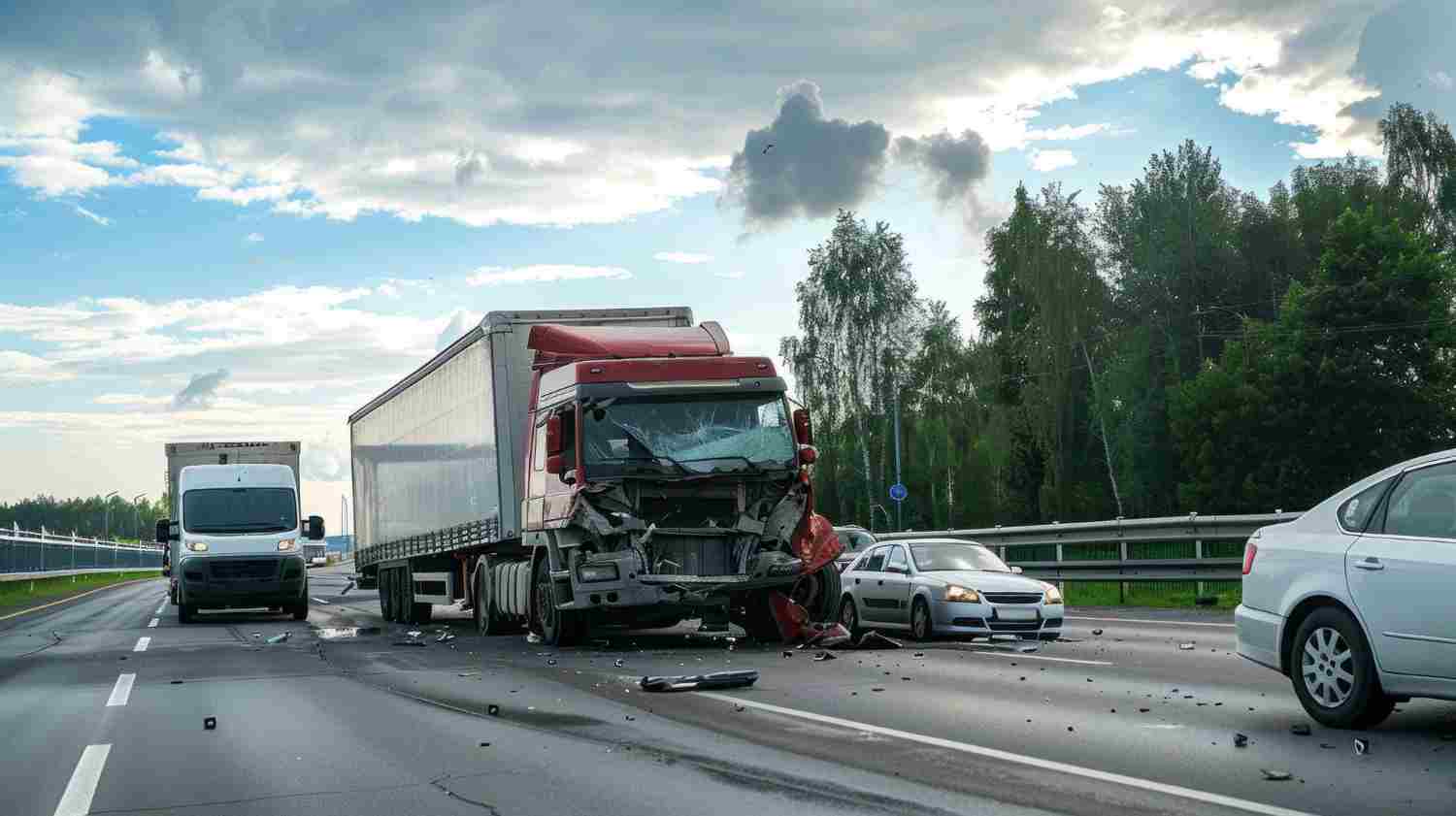
  • What To Do After a Truck Accident in Chicago: Our Step-by-Step Legal Guide

    What To Do After a Truck Accident in Chicago: Our Step-by-Step Legal Guide

    Most people don’t know what to do in the first hour after a truck accident. That’s not a criticism, nobody gets practice for this. But the choices made in that first hour, and the first week after it, tend to decide how a claim turns out months later.

    Here’s what actually matters, step by step, based on what we see happen in real Chicago truck cases.

    Step 1: Get Safe, Then Call 911

    Move to a safe spot if you’re able to, especially on highways like I-90, I-290, or I-55, where secondary collisions happen constantly. Then call 911, even if the damage looks minor.

    Responders create the Illinois Traffic Crash Report. That report becomes the spine of the case: timestamps, weather, witness names, the responding officer’s own observations. See The Truck Accident Claim Process for how that report gets used later.

    Step 2: Document Everything You Can, Fast

    Truck accident scenes disappear quickly. Tow trucks clear the wreckage, debris gets swept, witnesses drive off. If you’re physically able:

    • Photograph the truck itself, company name, DOT number, license plate.
    • Photograph all vehicles, road conditions, skid marks, debris, traffic signals, and visible injuries.
    • Photograph any hazmat placards or cargo that spilled.
    • Get names and phone numbers from witnesses before they leave.

    Witness statements matter most when a trucking company tries to shift blame afterward. Once retained, we send preservation letters immediately to lock down black box data, driver logs, and dashcam footage, more on that in What Does a Truck Accident Lawyer Do.

    If Police Don’t Respond to the Scene

    Not every truck accident scene gets an officer, especially minor-looking crashes on side streets where dispatch prioritizes injury calls first. Illinois law still requires the driver to file a written crash report with the Illinois Secretary of State within 10 days if the accident caused injury, death, or more than $1,500 in property damage to any vehicle (625 ILCS 5/11-406). This is separate from, and in addition to, any report an officer files at the scene.

    Missing that self-report deadline doesn’t kill a personal injury claim outright, but it removes a piece of documentation an insurer will notice is missing. If police never came, request the incident number from 911 dispatch and file the SR-1 form yourself, then keep a copy with everything else.

    Step 3: Get Checked Out, Even If You Feel Fine

    Go to the hospital. Adrenaline hides pain. Internal bleeding, back injuries, and brain trauma routinely show up days later in people who felt “okay” at the scene and skipped the ER.

    Save everything: hospital records, ambulance bills, prescriptions, therapy receipts, follow-up summaries. This is how medical damages get calculated, see How Is Compensation Determined After a Semi-Truck Wreck.

    Step 4: Don’t Talk to the Trucking Company’s Insurer Yet

    An adjuster will call, usually within days. They’ll sound helpful. They’re not working for you.

    You’re not legally required to give them a statement. Anything you say gets used to minimize the claim, adjusters are trained to get an admission of partial fault or a fast lowball settlement before anyone knows the full extent of the injuries. Once we’re involved, we take every one of those calls so you don’t have to.

    Why Black Box and ELD Data Disappears Fast

    Electronic logging devices don’t keep data forever. Depending on the carrier’s system, records can be limited to weeks or a few months before being overwritten in the normal course of operation. Federal regulations require preservation once a formal request goes out, but that request has to go out first. Every day of delay is a day closer to that data being gone for good.

    Step 5: Keep Every Document in One Place

    Police reports. Photos and video. Insurance correspondence. Medical bills. Repair invoices. Pay stubs or employer letters showing missed work. Keep it all together, digital or physical.

    A short daily note on pain, sleep, and what you couldn’t do that day is worth more than people expect. It becomes real evidence for non-economic damages later, not just a diary entry.

    Dealing With Your Own Vehicle

    The truck did more than injure you, it probably wrecked your car too, and Chicago has its own version of a trap here: tow yards that charge daily storage fees starting the moment your vehicle gets impounded. Those fees add up fast, sometimes into the thousands, and yards aren’t always upfront about the daily rate until the bill arrives.

    Ask for the storage rate in writing before you leave the vehicle there, and if a claim is developing, tell your attorney about the vehicle location immediately, storage costs can sometimes be negotiated down or covered by the at-fault carrier’s insurer once liability is clear.

    For repairs, get an independent estimate rather than relying solely on the insurer’s assigned shop. If the vehicle is declared a total loss, Illinois doesn’t set a fixed formula for valuation, but insurers are required to use a reasonable method, comparable local sales, not just a national average that ignores regional pricing. A rental car during repairs or replacement shopping is usually covered under the at-fault party’s property damage liability, though getting it authorized can take longer than most people expect.

    Step 6: Bring In a Lawyer Early

    Trucking companies start their own investigation almost immediately, sometimes before the victim has left the hospital. Once we’re retained, we send legal preservation notices, pull police and DOT reports, request ELD data, identify every potentially liable party, and start building the claim on evidence instead of memory.

    Step 7: Know the Clock Is Running

    Illinois gives two years from the date of the crash to file a personal injury lawsuit (735 ILCS 5/13-202). That sounds like a lot of time. It isn’t, once investigation, medical treatment, and negotiation eat into it.

    If a government vehicle or municipal truck was involved, the deadline can shrink to months, with a formal notice of claim required well before the two-year mark. Confirm this early rather than assuming the standard rule applies.

    If the Injured Person Is a Minor, or You Were Working

    Illinois tolls the statute of limitations for minors injured in a crash. Instead of the standard two years from the accident date, a minor generally has until two years after turning 18 to file suit on their own behalf (735 ILCS 5/13-211), though a parent can still pursue a claim sooner on the child’s behalf.

    If you were working, driving for a delivery service, on a job site, or commuting on the clock, a truck crash can trigger a workers’ compensation claim against your own employer at the same time as a personal injury claim against the trucking company. These run on separate tracks with separate rules, and a comp claim doesn’t bar the injury claim against the third-party truck driver or carrier. It does mean any comp benefits paid typically have to be reimbursed out of a third-party settlement, similar to how a health insurance lien works.

    Step 8: Track the Full Cost, Not Just the Obvious Ones

    A complete claim accounts for lost wages, reduced future earning capacity, medical expenses, pain and suffering, emotional distress, and, for spouses, loss of consortium. Wrongful death cases add funeral costs, loss of support, and loss of companionship. See How Is Compensation Determined After a Semi-Truck Wreck for how these categories get calculated.

    If You Have Health Insurance or MedPay Coverage

    Your own health insurer, or a MedPay provision on your auto policy if you carry one, often pays medical bills first while the liability claim against the trucking company is still being built. That’s normal and usually the right move, treatment shouldn’t wait on a lawsuit.

    The catch is subrogation: the insurer that paid your bills has a legal right to be reimbursed out of any eventual settlement or verdict. Illinois caps certain health care provider liens at 40% of the settlement under 770 ILCS 23, but a private health insurer’s subrogation claim under an ERISA plan can work differently and isn’t always subject to that state cap.

    None of this should stop someone from getting treated. It just means the final number in a settlement isn’t the number a victim actually keeps, liens get resolved first, and that negotiation is worth having someone handle rather than assuming the stated settlement figure is the take-home amount.

    Step 9: Understand How Fault Gets Split

    Illinois uses modified comparative negligence (735 ILCS 5/2-1116). You recover damages as long as you’re not more than 50% at fault, reduced by your share. At 50% or more, you recover nothing.

    Say the truck driver was speeding and you were five miles over the limit too. You’d likely still recover, just reduced by whatever percentage of fault gets assigned to you. This is exactly why fault disputes get contested so hard, see Who Is Liable in a Truck Accident for how liability gets determined among driver, carrier, and other parties.

    Common Mistakes That Quietly Hurt These Claims

    • Posting about the crash on social media. Insurers look. A photo that looks fine out of context can be used to argue injuries are exaggerated.
    • Accepting a fast settlement offer. Early offers are calculated before the full medical picture is known, almost always in the insurer’s favor.
    • Downplaying symptoms to the police or the ER. “I’m fine” on the record is hard to walk back later.
    • Waiting to see a doctor. Gaps in treatment get used to argue the injury wasn’t serious, or wasn’t caused by the crash at all.

    If the Truck Driver Leaves the Scene

    Hit-and-run truck accidents happen, particularly in low-visibility or nighttime conditions. Note the direction of travel, any visible company markings, trailer type, and cargo if you can, then let police handle identification through DOT records and traffic camera footage. Illinois uninsured motorist coverage may apply if the driver is never identified.

    When Multiple Vehicles Are Involved

    Chain-reaction crashes involving a semi and several passenger vehicles complicate everything, evidence, insurance coverage, and fault. Illinois’ comparative negligence rule still applies, but with more vehicles comes more insurers, each trying to shift blame toward someone else’s policy.

    In a pile-up, the order of impacts matters. Did the truck cause the initial collision, or did it plow into cars that were already stopped from an earlier crash? Black box data showing speed and braking in the seconds before impact often settles this dispute faster than witness accounts, people rarely agree on what they saw in a multi-car chain reaction. If you’re in this kind of crash, note your position in the accident sequence as best you can, and don’t assume the other drivers involved will remember it the same way.

    A Realistic Example

    A driver merging onto I-290 near Cicero Avenue gets rear-ended by a semi that failed to slow for stopped traffic. She feels shaken but not seriously hurt, exchanges information, and drives home rather than waiting for police, since the truck driver seemed cooperative and admitted fault at the scene.

    Three days later her neck pain gets worse, not better, and an MRI shows a herniated disc. By then, the trucking company’s insurer is already arguing the injury developed after the crash, not because of it, since there’s no police report and no same-day medical record connecting the two. The admission of fault at the scene means little without documentation.

    This is the pattern that shows up again and again: cooperative-seeming drivers, no police report, delayed treatment, and an insurer that uses every one of those gaps against the claim later. None of the individual choices seem unreasonable in the moment. Together, they weaken a case that should have been straightforward.

    Step 10: Let Someone Else Carry the Legal Weight

    The period after a truck accident is chaotic enough without also managing insurance calls, paperwork deadlines, and settlement negotiations. That’s the part we take over, explaining each step, keeping you updated, and pushing for what the claim is actually worth rather than what gets offered first.

    It costs nothing to ask whether you have a case. Waiting, on the other hand, can cost quite a bit. For a broader look at how we approach these cases, see Expert Truck Accident Lawyers in Chicago. Call (312) 346-4262 for a free consultation.

    Frequently Asked Questions

    Do I have to give a recorded statement to the trucking company’s insurer?

    No. You’re not legally obligated to, and doing so before speaking with a lawyer rarely helps your claim.

    What if I didn’t call the police at the scene?

    File a report as soon as possible afterward. It’s harder without one, not impossible, but police involvement from the start makes the case significantly stronger.

    How long does the investigation typically take?

    It varies by complexity, straightforward liability can move in weeks, while multi-party or disputed-fault cases can take several months of evidence gathering before a demand goes out.

    What if the truck was owned by one company but leased to another?

    This is common in trucking and often means more than one party can be held liable. Identifying every responsible entity is part of what an early investigation is for.

    Can I still file a claim if I already spoke to the insurance adjuster?

    Yes, though it’s worth reviewing exactly what was said as soon as possible so it can be addressed before it becomes an issue in negotiations.

    What does it cost to talk to a lawyer about this?

    Nothing upfront. These cases are typically handled on contingency, meaning legal fees come from the recovery, not out of pocket during treatment.

    What if the trucking company’s driver admitted fault at the scene?

    That admission helps, but it isn’t a substitute for a police report and documented evidence. Drivers sometimes recant or claim they were mistaken once their employer’s insurer gets involved, so treat a verbal admission as one piece of evidence, not the whole case.

    Do I need to report the crash to my own insurance company even if the truck driver was at fault?

    Yes. Most auto policies require prompt notice of any accident regardless of fault, and failing to report can create coverage problems later if you need uninsured motorist benefits or MedPay.

    Does it matter which tow yard my car ends up at?

    It can. Some Chicago-area yards charge steep daily storage rates that climb quickly if a claim takes weeks to resolve. Get the rate in writing early and flag the location to your attorney so the cost doesn’t become its own problem on top of the crash itself. It happens more often than most people expect, and by the time anyone notices, the bill is already three or four figures deep.

    Key Takeaways

    • Safety first, then 911, the police report becomes the foundation of the case.
    • Document the scene fast; evidence and witnesses disappear within hours.
    • Get medical care immediately, even without visible injury.
    • Don’t give a statement to the trucking company’s insurer without legal advice.
    • ELD and black box data can be overwritten quickly, preservation requests need to go out early.
    • Illinois gives two years to file, but shorter deadlines can apply against government entities.
    • Fault under 50% still allows recovery, reduced by your share of responsibility.

    Attorney Advertising. This page provides general information about Illinois law and is not legal advice. Reading it does not create an attorney-client relationship. Deadlines and outcomes depend on the specific facts of your case — speak to a licensed Illinois attorney about your situation.

  • What Does a Truck Accident Lawyer Do? Inside Our Legal Process

    What Does a Truck Accident Lawyer Do? Inside Our Legal Process

    People usually call us with the same question sitting underneath everything else: do I actually need a lawyer, or can I just deal with the insurance company myself? Fair question. You’re already dealing with pain, missed work, and medical bills, the last thing you want is more complexity.

    Here’s the honest answer. Truck accident cases are not car accident cases with bigger vehicles. A commercial truck crash typically pulls in the driver, the motor carrier, sometimes a separate owner-operator, occasionally a freight broker, and an insurance defense team whose entire job is limiting payout. Federal trucking regulations layer on top of Illinois state law. That combination is why we exist.

    Step 1: Free Consultation and Case Evaluation

    Every case starts with a real conversation, not an intake script. We walk through how the crash happened, what got hurt, and whether a traffic or federal safety rule was broken. You work directly with the attorney handling your file, not a call center, not a rotating cast of paralegals.

    We also explain your filing deadline at this stage, because it matters more than people expect. Illinois gives most crash victims two years to file suit under 735 ILCS 5/13-202. If a government-owned truck was involved, a Streets and Sanitation vehicle, for instance, that window shrinks to one year under 745 ILCS 10/8-101. Missing either deadline doesn’t just weaken a claim. It ends it.

    Step 2: Immediate Investigation and Evidence Preservation

    Truck accident evidence disappears fast. Federal rule 49 CFR 390.15 only requires carriers to retain accident-register data for a limited period, and electronic logging device data can be overwritten in a routine cycle if nobody stops it. So we move immediately, a spoliation letter goes out demanding the carrier preserve black box data, hours-of-service logs, GPS records, dash-cam footage, and maintenance files before any of it can legally or conveniently vanish.

    Our investigators go to the scene. Skid marks. Debris field. Road conditions. Witness statements while memories are still sharp.

    Trucking companies send their own rapid-response teams too, often before you’ve left the hospital. Their investigator isn’t there to help you. See Who Is Liable in a Truck Accident for how fault typically gets established once both sides have gathered evidence.

    Step 3: Proving Negligence and Liability

    Truck crashes rarely trace back to one cause. We look at the driver, fatigue, distraction, hours-of-service violations under 49 CFR Part 395. We look at the carrier, unsafe dispatch schedules, negligent hiring, deferred maintenance. We look at the maintenance contractor. Sometimes a parts manufacturer.

    Accident reconstruction experts read the physical evidence: impact angles, braking distance, weight distribution. Their analysis frequently surfaces a regulatory violation that wasn’t obvious from the police report alone, a brake system out of compliance with 49 CFR Part 393, or a driver who’d logged more hours than federal rules allow.

    One more thing worth knowing: if a freight broker negligently selected an unsafe carrier, Illinois courts have opened a path to hold that broker liable too, following the 2026 ruling in Montgomery v. Caribe Transport II LLC. That’s a relatively new avenue, and it’s easy to miss if nobody’s looking for it.

    Step 4: Handling Insurance Companies

    Insurers have one job: pay as little as they can get away with. We take over every call, every form, every recorded-statement request, so nothing you say gets used to shrink your claim later. When an early offer lands on the table, we measure it against what the case is actually worth, not what’s convenient for the carrier’s reserve fund.

    Commercial trucks carry far more insurance than passenger vehicles. Federal law under 49 CFR 387.9 sets minimums between $750,000 and $5,000,000 depending on cargo type, which changes the settlement math considerably compared to an ordinary car accident claim.

    Step 5: Medical Documentation and Expert Support

    Your treatment record carries your case. We coordinate with your doctors so every diagnosis, therapy session, and expense gets documented correctly the first time, not reconstructed months later from memory.

    In serious injury cases, that means bringing in a life-care planner to project future medical costs, a vocational expert to assess work limitations, and sometimes a mental health professional to document trauma. Skipping any of these usually means leaving real money on the table.

    Step 6: Calculating Full Compensation

    Two categories. Economic damages: medical bills, lost income, reduced future earning capacity, rehabilitation. Non-economic damages: pain, emotional suffering, loss of normal life. Both matter, and both require documentation an insurance adjuster can’t wave away.

    Illinois also allows prejudgment interest, 6% annually, running from the date the complaint is filed. That single rule quietly tilts the negotiating balance toward the injured party the longer a carrier drags its feet.

    Truck accident lawyer working on a client legal case file

    Step 7: Settlement Negotiations

    By the time negotiations start, we’ve built a full demand package, medical records, expert reports, liability analysis. Most cases settle here, because insurers can see the case is prepared for trial if it needs to go there.

    Not all of them settle in good faith, though.

    Step 8: Litigation and Trial Preparation

    When a carrier won’t negotiate fairly, we file suit in Cook County Circuit Court. Depositions. Corporate document requests. Expert testimony. We build the courtroom case with the same rigor we’d use if we already knew it was headed there, because readiness to try a case is often what pushes a fair settlement across the line before trial even starts.

    Step 9: Ongoing Client Support

    You’ll know where your case stands at every stage. We handle medical liens, coordinate with providers, and manage the post-settlement paperwork so nothing catches you off guard. That doesn’t stop when the check clears.

    Step 10: Protecting Your Future

    Getting a settlement is only half the job. We help clients understand lien payoffs, structured settlement options for large recoveries, and what to do with a lump sum that has to cover years of care. Real representation means the money still matters a year later, not just the day it arrives.

    Frequently Asked Questions

    How much does hiring a truck accident lawyer cost upfront?

    Nothing. Truck accident cases are handled on contingency, legal fees come out of the settlement or verdict, not your pocket, and only if we win.

    How is a truck accident case different from a car accident claim?

    More defendants, more insurance, and a layer of federal regulation that doesn’t exist in ordinary car crashes. FMCSA hours-of-service rules, maintenance requirements under 49 CFR Part 396, and carrier insurance minimums all become part of the evidence.

    What if the trucking company already has lawyers investigating?

    Expect it. Most carriers dispatch a rapid-response team within hours. That’s exactly why early evidence preservation on your side matters, see The Truck Accident Claim Process for the full timeline.

    Can I still recover if I was partly at fault?

    Yes, as long as your share of fault doesn’t exceed 50% under Illinois’s modified comparative fault rule. Your recovery gets reduced by your percentage of fault, but it isn’t barred outright below that threshold.

    What if I already talked to the trucking company’s insurance adjuster?

    It happens more often than you’d think, and it’s rarely fatal to a case. What you said matters less than most people fear, we review the statement, understand what was actually said, and build the case around the real facts rather than around one nervous phone call made before you knew better.

    The Federal Rules That Shape Every Truck Case

    Passenger car accidents get decided mostly under state law. Truck accidents don’t work that way. A commercial motor vehicle over 10,001 pounds operating in interstate commerce falls under the Federal Motor Carrier Safety Regulations, and violating one of these rules can become powerful evidence of negligence in an Illinois courtroom.

    Hours-of-service limits under 49 CFR Part 395 cap how long a driver can be behind the wheel before a mandatory rest break, currently 11 hours of driving within a 14-hour on-duty window, followed by 10 consecutive hours off. Electronic logging devices, required under the same regulatory framework, record exactly when a driver crossed that line, which is why preserving ELD data in Step 2 matters so much.

    Drug and alcohol testing rules are stricter for commercial drivers too. A CDL holder’s legal blood alcohol limit is 0.04%, half the 0.08% standard that applies to ordinary drivers. Post-accident testing is mandatory under certain crash-severity thresholds, and a positive result, or a refusal to test, becomes significant evidence almost immediately.

    Vehicle maintenance carries its own regulatory layer. 49 CFR Parts 393 and 396 require systematic inspection, repair, and maintenance records for brakes, tires, lighting, and cargo securement. When a brake failure or blown tire causes a crash, these records either show a carrier stayed compliant or expose exactly where they cut corners.

    A Typical Case, Start to Finish

    Every case is different, but the shape tends to follow a pattern. Consider a rear-end collision on I-90 where a fully loaded semi strikes a passenger vehicle stopped in traffic. The driver claims the car “stopped suddenly.” The carrier’s insurer offers a quick settlement within two weeks, before medical treatment is even complete.

    That offer usually undervalues the claim substantially. A commercial truck’s stopping distance at highway speed can run 40% longer than a passenger car’s, a fact federal safety data supports and that becomes relevant almost immediately once ELD and dash-cam data come back. If the data shows the driver was traveling too fast for conditions, or exceeded permitted hours before the crash, “sudden stop” stops being a defense.

    What typically follows: full medical workup, wage-loss documentation, a demand package built once treatment plateaus (not before), and negotiation from a position that accounts for the driver’s regulatory exposure. Some of these resolve in weeks. Injury cases involving surgery, ongoing therapy, or disputed liability can take considerably longer, sometimes over a year, because rushing a demand before medical treatment is finished almost always undervalues the claim.

    What Makes Cook County Different

    If a case doesn’t settle, it heads to the Cook County Circuit Court Law Division, which handles the largest civil docket in Illinois. Trial scheduling here moves differently than in smaller counties, case management conferences, mandatory arbitration for certain damage thresholds, and a jury pool drawn from one of the country’s largest metro areas.

    Out-of-state trucking companies frequently attempt to remove Illinois cases to federal court using diversity jurisdiction, when the carrier is incorporated elsewhere and damages exceed $75,000. That shift changes procedural rules, discovery timelines, and sometimes the jury pool itself, it’s a tactical decision insurers make deliberately, not an accident of paperwork.

    Do most truck accident cases actually go to trial?

    No. Most resolve through settlement once liability and damages are well-documented. Trial becomes necessary when a carrier disputes fault entirely or when their settlement offer doesn’t come close to covering the actual damages.

    What happens if the trucking company carries minimum insurance and my damages exceed it?

    This is where identifying every potentially liable party matters, the carrier, a negligent maintenance contractor, sometimes a freight broker, or even the driver’s personal assets in extreme cases. Umbrella and excess policies also come into play more often in commercial cases than in ordinary auto claims.

    How long do I actually have before evidence is gone for good?

    There’s no fixed universal answer, but ELD data retention cycles, dash-cam overwrite loops, and standard document-retention policies mean the practical window is measured in days to weeks, not months. That’s the entire reason Step 2 happens immediately, not after the first consultation wraps up.

    Mistakes That Quietly Hurt a Truck Accident Claim

    A few patterns show up again and again in cases that come to us after being mishandled elsewhere.

    Giving a recorded statement to the trucking company’s insurer before speaking with a lawyer. Adjusters are trained to ask questions in a way that generates useful-sounding admissions, “I guess I could have been going a little faster” becomes evidence of fault, even when it isn’t.

    Accepting the first settlement offer before treatment is complete. An early number always looks better than nothing, especially with bills piling up. But once you sign a release, the case is closed permanently, even if a diagnosis three months later reveals the injury was worse than anyone realized.

    Waiting too long to send a preservation letter. Every week that passes increases the odds that ELD data, dash-cam footage, or driver logs have already been overwritten through routine retention cycles, not through any intent to destroy evidence, just ordinary business practice that works against an unrepresented claimant.

    Assuming the truck driver is the only defendant worth pursuing. In most cases, the driver’s personal assets are the least valuable target in the case. The carrier’s commercial policy, and sometimes a broker’s or contractor’s liability, are where real recovery potential lives.

    What to Bring to Your First Consultation

    A few things speed up that first meeting considerably.

    The police crash report, if one exists. Photos from the scene, even blurry phone photos. Contact information for any witnesses who stopped. Insurance correspondence you’ve already received, unopened is fine. A rough list of medical providers you’ve seen so far.

    None of this is required to start. We’ve opened plenty of cases with nothing but a name and a date. But when it’s available, it shortens the investigation timeline meaningfully.

    Truck Types We Handle

    Not every commercial truck crash looks the same, and the liability analysis shifts depending on what kind of vehicle was involved. Tractor-trailers and semis bring FMCSA hours-of-service and cargo-securement rules into play. Delivery trucks, Amazon, FedEx, UPS, raise questions about whether the driver was an employee or an independent contractor operating under the Graves Amendment, which affects who can actually be sued. Dump trucks and cement mixers carry municipal weight-limit and load-securement issues under 625 ILCS 5/15-111. Tanker and hazmat trucks add federal transport regulations and potential toxic-exposure claims on top of the ordinary crash analysis.

    Each type changes which regulations apply, which records we request first, and sometimes who the actual defendants turn out to be. Treating a dump truck crash and a tanker crash identically would miss evidence specific to each.

    Working With Your Medical Providers

    We don’t just collect records after the fact, we stay in contact with providers throughout treatment. That matters for two reasons. First, gaps in treatment get explained rather than left for an insurance adjuster to speculate about. Second, when a specialist recommends a procedure your health insurer initially denies, having an attorney already coordinating with the provider often speeds up the appeal.

    For catastrophic injuries, spinal cord damage, traumatic brain injury, amputation, this coordination extends to life-care planning years into the future, not just the immediate treatment window.

    If you’re weighing whether a case like this is worth pursuing, start with a free consultation. There’s no cost to find out where you stand, and the earlier evidence gets preserved, the stronger the case tends to be.

    Attorney Advertising. This page provides general information about Illinois law and is not legal advice. Reading it does not create an attorney-client relationship. Deadlines and outcomes depend on the specific facts of your case — speak to a licensed Illinois attorney about your situation.

  • Expert Truck Accident Lawyers in Chicago – Fight for Your Rights

    Expert Truck Accident Lawyers in Chicago – Fight for Your Rights

    If you have been injured in a truck accident in Chicago, you already know how quickly life can change. One moment you are driving down the Dan Ryan Expressway or through a neighborhood street, and the next, you are dealing with serious injuries, property damage, and insurance companies more focused on profits than people.

    We have seen firsthand how devastating truck accidents can be, physically, emotionally, and financially. Our role as Chicago truck accident lawyers is to stand by your side, protect your rights, and fight for the full compensation you deserve.

    We have spent years helping clients across Cook County, DuPage County, and Will County rebuild their lives after crashes involving semi-trucks, 18-wheelers, and commercial vehicles. If you have been hurt, you do not have to face this alone.

    Why Truck Accidents in Chicago Are So Serious

    Truck accidents are unlike other vehicle collisions. When a fully loaded tractor-trailer weighing up to 80,000 pounds collides with a passenger car, the results are often catastrophic.

    Based on our experience handling truck accident cases across Illinois, the most common causes include:

    • Fatigued truck drivers violating federal rest rules
    • Distracted or impaired driving
    • Poor vehicle maintenance or brake failures
    • Speeding or reckless lane changes on congested expressways
    • Improperly loaded cargo that shifts during transport

    Every case comes down to accountability. Unfortunately, trucking companies often try to hide behind complex regulations and insurance loopholes. Our team knows how to trace violations, recover driver logs, and uncover the truth.

    If you want to learn more about liability, read Who Is Liable in a Truck Accident?

    Common Injuries We See After Truck Crashes

    Truck accidents frequently cause life-changing injuries. Some clients come to us with visible trauma, while others suffer internal injuries that are just as serious. Common truck accident injuries include:

    • Traumatic brain injuries (TBI)
    • Spinal cord injuries and paralysis
    • Multiple fractures
    • Severe burns and disfigurement
    • Internal bleeding and organ injuries
    • Chronic pain and emotional trauma
    • Wrongful death

    Your health always comes first. As your legal team, we make sure that your financial recovery receives the same level of care and attention.

    To understand how compensation is calculated, see How Is Compensation Determined After a Semi-Truck Wreck?

    Where Truck Accidents Commonly Happen in Chicago

    Over the years, we have investigated truck crashes across every part of Chicago. Some areas are especially dangerous because of heavy traffic, construction zones, and constant freight movement. The most common accident hotspots include:

    • I-90/94 (Dan Ryan, Kennedy, and Edens Expressways)
    • I-55 (Stevenson Expressway)
    • Cicero Avenue and Pulaski Road
    • Lake Shore Drive
    • Warehouse and industrial areas near Bedford Park, Bridgeview, and Joliet

    Truck accidents in Chicago are complex because they involve state, local, and federal regulations. Our familiarity with Illinois law and local courts gives our clients a strong advantage.

    To learn what happens after a crash, read The Truck Accident Claim Process.

    The Illinois Truck Accident Laws That Protect You

    We always start by explaining the laws that protect victims of negligence and the deadlines that apply to every truck accident case.

    Statute of Limitations

    Under 735 ILCS 5/13-202, you generally have two years from the date of the accident to file a personal injury lawsuit. If your case involves only property damage, 735 ILCS 5/13-205 gives you five years to file. For a deeper overview, see our guide to the Illinois statute of limitations for personal injury.

    Missing these deadlines can lead to your case being dismissed. That is why it is critical to contact a lawyer as soon as possible.

    Comparative Negligence in Illinois

    Illinois follows the modified comparative negligence rule under 735 ILCS 5/2-1116. You can still recover compensation even if you were partially at fault, as long as your share of fault is less than 50%.

    For example, if you were found to be 20% responsible, your award would be reduced by that percentage.

    Federal Trucking Regulations

    Truck drivers and trucking companies must also follow strict FMCSA and DOT regulations, which cover:

    • Hours of service (HOS)
    • Weight and cargo limits
    • Vehicle inspections and maintenance
    • Driver qualifications and drug testing

    We use these federal regulations to establish negligence and strengthen your claim.

    To understand more about how we handle these cases, visit What Does a Truck Accident Lawyer Do?

    Who Is Liable in a Truck Accident?

    In most truck accident cases, more than one party may be responsible. Sometimes it is the driver, sometimes the trucking company, and sometimes multiple parties share liability. Those potentially responsible include:

    • The truck driver, for speeding, distraction, or impairment
    • The trucking company, for improper training or unsafe scheduling
    • Cargo handlers, for overloading or unbalanced cargo
    • Manufacturers, for defective brakes, tires, or components

    Our job is to identify every liable party and pursue all available insurance coverage. This can significantly increase the total compensation available to you.

    Learn more at Who Is Liable in a Truck Accident?

    Chicago truck accident lawyer ready to fight for your rights
    Truck accident Legal Process

    The Compensation We Fight to Recover

    Our goal is simple: to help you recover the maximum compensation allowed by law. We pursue damages for:

    • Medical expenses (past and future)
    • Lost income and reduced earning ability
    • Pain and suffering
    • Emotional distress
    • Loss of companionship or consortium
    • Property damage
    • Wrongful death damages

    Insurance companies often try to minimize these claims, but we do not back down. We collect medical evidence, financial records, and expert reports to demonstrate the full extent of your losses.

    The Truck Accident Claim Process

    We know that dealing with a truck accident claim can feel overwhelming. Our process is designed to handle the legal burden while you focus on healing. Here is how we approach every case:

    1. Free Consultation: We listen to your story and evaluate your claim.
    2. Investigation: We collect crash reports, black box data, driver logs, and witness statements.
    3. Evidence Building: We work with reconstruction and medical experts to strengthen your case.
    4. Negotiation: We handle all communication with insurance companies.
    5. Filing a Lawsuit: If a fair settlement is not reached, we take your case to court.
    6. Discovery & Mediation: We exchange evidence and explore settlement options.
    7. Trial: If needed, we present your case before a judge and jury.
    8. Resolution & Recovery: After the case, we manage liens and ensure you receive your compensation promptly.

    Why Clients Choose Our Chicago Truck Accident Lawyers

    We treat every client with the attention and respect they deserve. What sets our firm apart is our dedication and experience handling complex truck accident claims. We:

    • Know Illinois truck accident law inside and out
    • Have a track record of success in challenging cases
    • Prepare every case as if it will go to trial
    • Work on a contingency fee basis, you pay nothing unless we win

    Ready to Take the Next Step?

    If you have been injured in a truck accident in Chicago or the surrounding area, now is the time to act. The sooner you contact us, the sooner we can begin protecting your rights and preserving critical evidence.

    Call us today or fill out a free case review form. We will evaluate your case, explain your options, and guide you through the next steps with care and commitment.

    We proudly represent clients throughout:

    • Chicago
    • Cicero
    • Oak Lawn
    • Naperville
    • Joliet
    • Evanston
    • Cook County and surrounding areas

    You do not have to face this alone, we are here to help every step of the way.

    Attorney Advertising. This page provides general information about Illinois law and is not legal advice. Reading it does not create an attorney-client relationship. Deadlines and outcomes depend on the specific facts of your case — speak to a licensed Illinois attorney about your situation. Contingency fees cover legal fees only. Clients may remain responsible for case costs and expenses such as filing fees, expert witnesses, and medical records.

  • Role of Commercial Truck Accident Lawyer

    Role of Commercial Truck Accident Lawyer

    From investigating the accident scene to negotiating settlements or litigating in court, their role is crucial in ensuring clients receive fair compensation for damages, including medical expenses, lost wages, and pain and suffering. Commercial truck accident lawyers strive to protect the rights of their clients and hold responsible parties accountable for negligence or misconduct, offering comprehensive legal support throughout the often-challenging aftermath of these serious accidents.

    What Is A Commercial Truck Accident?

    A commercial truck accident is a collision involving a large vehicle for transporting goods or passengers for commercial purposes. These trucks include tractor-trailers, semi-trucks, delivery trucks, and other vehicles exceeding a certain weight and size threshold.

    Causes Of Commercial Truck Accident

    Commercial truck accident lawyer consulting with an injured client
    A very severe accident happens due to the high speed of the truck.

    Commercial truck accidents can occur due to a variety of factors, including:

    • Driver Fatigue: Truck drivers often work long hours and may exceed legal limits for driving time, leading to fatigue, decreased alertness, and slower reaction times.
    • Speeding and Aggressive Driving: Pressure to meet delivery deadlines may cause drivers to speed or engage in aggressive driving behaviors, increasing the risk of accidents.
    • Distracted Driving: Activities like using mobile phones, eating, or adjusting GPS devices can distract truck drivers from focusing on the road and other vehicles.
    • Improper Loading or Cargo Securement: Incorrectly loaded or unsecured cargo can shift during transit, causing the truck to become unstable or difficult to control.
    • Mechanical Failures: Issues with brakes, tires, steering mechanisms, or other mechanical components can lead to loss of vehicle control and accidents.
    • Poor Weather Conditions: Adverse weather such as rain, snow, ice, or fog can reduce visibility and traction, increasing the likelihood of accidents.
    • Inexperienced or Inadequately Trained Drivers: Lack of experience or insufficient training in handling large commercial vehicles can contribute to accidents, especially in challenging driving conditions.
    • Drug or Alcohol Use: Substance abuse by truck drivers can impair judgment, coordination, and reaction times, posing serious risks on the road.
    • Failure to Follow Safety Regulations: Non-compliance with federal and state regulations governing hours of service, vehicle maintenance, weight limits, and other safety standards can lead to accidents.
    • Roadway Conditions: Poorly maintained roads, construction zones, and inadequate signage or lighting can create hazardous conditions for truck drivers and increase the likelihood of accidents.

    Complications In A Commercial Truck Accident

    Commercial truck accidents can lead to various complications, both for the victims involved and in terms of legal and logistical challenges.

    Here are some key complications that can arise:

    • Severe Injuries and Fatalities: Due to the size and weight of commercial trucks, accidents often result in serious injuries or fatalities for drivers and passengers of smaller vehicles involved.
    • Complex Liability Issues: Determining liability in commercial truck accidents can be intricate. It may involve multiple parties, including the truck driver, trucking company, cargo loaders, maintenance providers, and manufacturers of truck parts.
    • Regulatory Compliance: Commercial trucks are subject to numerous federal and state regulations governing driver qualifications, hours of service, vehicle maintenance, and cargo securement. Non-compliance with these regulations can complicate legal proceedings.
    • Insurance Coverage: Insurance policies in commercial truck accidents can be complex, involving different types of coverage. Coordination among various insurers may be necessary to cover damages adequately.
    • Evidence Collection: Gathering evidence in commercial truck accidents is crucial but challenging. It may involve obtaining data from onboard electronic logging devices, vehicle black boxes, witness statements, and accident reconstruction reports.
    • Long-Term Consequences: Victims of commercial truck accidents may face long-term consequences such as chronic pain, disabilities, psychological trauma, and financial hardship due to medical bills, lost wages, and ongoing rehabilitation.
    • Legal Proceedings: Lawsuits stemming from commercial truck accidents can be lengthy and complex. They may involve negotiations with insurance companies, depositions, expert testimony, and potentially a trial if a settlement cannot be reached.
    • Public Safety Concerns: Commercial truck accidents can impact public safety, especially if they occur in densely populated areas or on major transportation routes, leading to traffic delays and potential hazards for other motorists.

    Who Is The Truck Accident Lawyer?


    A truck accident lawyer is a legal professional who specializes in representing clients involved in accidents with commercial trucks, such as tractor-trailers, semi-trucks, and delivery vehicles. These lawyers have expertise in the specific laws and regulations governing commercial trucking, including federal and state safety standards, hours of service regulations, and insurance requirements. They handle cases involving serious injuries, fatalities, property damage, and complex liability issues.

    Truck accident lawyers investigate the accident thoroughly, gather evidence, negotiate with insurance companies, and litigate in court if necessary to secure compensation for their client’s medical expenses, lost wages, pain and suffering, and other damages. Their goal is to protect the rights of accident victims and achieve the best possible outcome for their clients amidst the complexities of truck accident litigation.

    What Are The Characteristics Of A Truck Accident Lawyer?

    Semi-truck on a highway representing commercial trucking claims
    Truck accident lawyers investigate the accident thoroughly, gather evidence, negotiate with insurance companies, and litigate in court.

    Effective truck accident lawyers possess several key characteristics that enable them to handle complex cases and advocate effectively for their clients:

    • Specialized Knowledge: They have in-depth knowledge of trucking laws, regulations, and industry standards specific to commercial vehicles.
    • Investigative Skills: They are skilled in conducting thorough investigations, gathering evidence, and analyzing data such as black box recordings and maintenance records.
    • Negotiation Expertise: They excel in negotiating with insurance companies and other parties to achieve fair settlements for their clients without the need for litigation, when possible.
    • Litigation Experience: They are prepared to take cases to trial if necessary, with experience in presenting compelling arguments and cross-examining witnesses.
    • Compassion and Empathy: They demonstrate empathy towards their clients’ situations, understanding the physical, emotional, and financial toll of truck accidents.
    • Communication Skills: They communicate clearly and effectively with clients, explaining legal concepts and providing updates on case developments.
    • Resourcefulness: They are resourceful in leveraging expert witnesses, accident reconstruction specialists, and other professionals to strengthen their cases.
    • Attention to Detail: They pay meticulous attention to detail in documenting injuries, damages, and liability issues to build a strong case.
    • Client Advocacy: They are committed advocates for their clients, fighting for justice and fair compensation in the aftermath of devastating truck accidents.

    Role Of Truck Accident Lawyer

    The role of a truck accident lawyer is multifaceted and crucial in helping clients navigate the aftermath of a commercial truck accident.

    Here are the primary roles they play:

    • Legal Representation: Truck accident lawyers provide legal representation to clients who have been injured or suffered losses due to a truck accident. They advocate for their client’s rights and interests throughout the legal process.
    • Investigation: They conduct thorough investigations into the accident, gathering evidence such as police reports, witness statements, and data from the truck’s black box. This helps determine liability and build a strong case.
    • Determining Liability: Truck accident lawyers identify and assess liability, which can involve the truck driver, trucking company, vehicle manufacturers, maintenance providers, or other parties responsible for the accident.
    • Navigating Complex Regulations: They are knowledgeable about federal and state regulations governing the trucking industry, including safety standards, hours of service rules, and licensing requirements.
    • Negotiation and Settlement: They negotiate with insurance companies and other parties on behalf of their clients to secure fair settlements that cover medical expenses, lost wages, pain and suffering, and other damages.
    • Client Support: They provide guidance, support, and clear communication to clients throughout the legal process. This includes explaining legal options, updating clients on case developments, and addressing their concerns.
    • Ensuring Fair Compensation: Truck accident lawyers work to ensure their clients receive fair compensation for their injuries, financial losses, and other damages resulting from the accident.

    Eligibility To Become A Truck Accident Lawyer

    Educational Requirements

    To become a truck accident lawyer, the first step is to obtain a bachelor’s degree from an accredited university. There is no specific undergraduate major required, coursework in areas such as political science, history, or criminal justice can be beneficial. Aspiring lawyers must attend law school and earn a Juris Doctor (J.D.) degree, a three-year program. Law school provides a comprehensive education in various areas of law, including tort law, which is relevant to personal injury and accident cases.

    Licensing

    After completing law school, graduates must pass the bar exam in the state where they intend to practice. The bar exam is a rigorous test that assesses knowledge of state-specific and general legal principles. Passing this exam grants the individual a license to practice law in that state. Some states require passing the Multistate Professional Responsibility Examination (MPRE), which tests knowledge of professional ethics.

    Specialization and Experience

    Gaining experience in personal injury law, specifically related to truck accidents, is highly advantageous. This can be achieved through internships, clerkships, or entry-level positions at law firms specializing in personal injury or transportation law. Practical experience helps in understanding the nuances of truck accident cases, including dealing with insurance companies, understanding trucking regulations, and handling complex liability issues.

    Continuing Education

    Lawyers must engage in continuing legal education (CLE) to stay updated with changes in laws and regulations pertinent to truck accidents and personal injury law. Many states require a certain number of CLE hours annually to maintain licensure. Specialized courses or certifications in personal injury law can further enhance a lawyer’s expertise and credibility in handling truck accident cases.

    FAQs

    What should I do immediately after a truck accident?

    Ensure your safety and call emergency services. Seek medical attention, even if you don’t feel seriously injured. Document the scene by taking photos and gathering contact information from witnesses.

    How is a truck accident different from a car accident?

    Truck accidents often involve more severe injuries due to the size and weight of commercial trucks. They also involve complex regulations and multiple parties, such as the trucking company, driver, and manufacturers, which can complicate the case.

    Who can be held liable in a truck accident?

    Multiple parties may be liable, including the truck driver, trucking company, cargo loaders, maintenance providers, and truck or parts manufacturers.

    What compensation can I receive after a truck accident?

    Compensation may cover medical expenses, lost wages, pain and suffering, property damage, and, in some cases, punitive damages. The amount depends on the specifics of your case and the extent of your injuries and losses.

    How long do I have to file a claim after a truck accident?

    The statute of limitations for filing a truck accident claim varies by state but is generally between one and three years.

    Seeking For Help. Contact Us Our Commercial Truck Accident Lawyer

    If you or a loved one has been involved in a commercial truck accident, our experienced truck accident lawyers are here to help. We understand the complexities and challenges these cases present and are committed to securing the compensation you deserve. Contact us today for a free consultation, where we will review your case, answer your questions, and discuss your legal options.


    Interested Reads:

    Common Truck Accident Injuries

    Attorney Advertising. This page provides general information about Illinois law and is not legal advice. Reading it does not create an attorney-client relationship. Deadlines and outcomes depend on the specific facts of your case — speak to a licensed Illinois attorney about your situation.