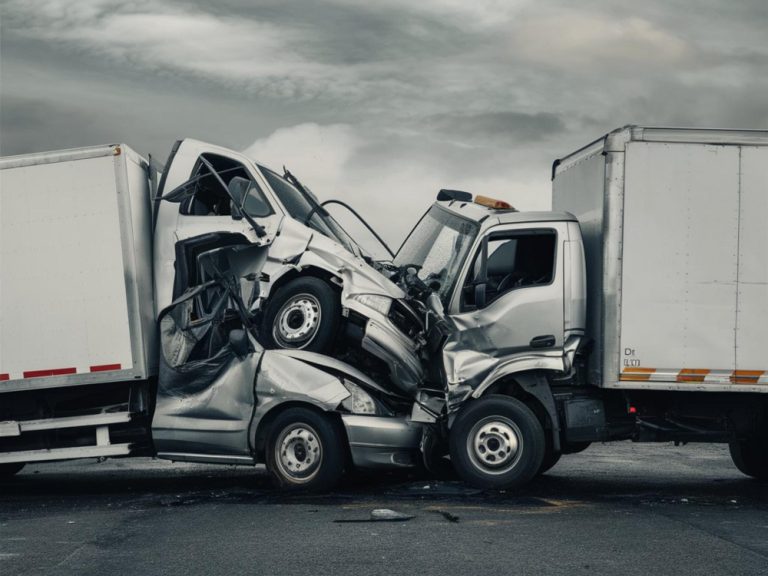

Underride accidents—where a car slides beneath a semi-truck’s trailer—are among the deadliest crashes on American roads. These catastrophic collisions often decapitate or crush vehicle occupants, leaving survivors with devastating injuries. Understanding why these accidents happen and who’s liable is critical for victims and families.
What Is an Underride Accident?
An underride accident occurs when a smaller vehicle slides under the trailer of a semi-truck or tractor-trailer. Because trailers ride high off the ground, passenger vehicles can pass underneath, with the trailer striking at windshield or roof level—directly impacting occupants’ heads and upper bodies.
There are two main types:
Rear Underride
The most common type, occurring when a car crashes into the back of a truck trailer. This often happens when:
- A truck stops suddenly or is parked on the roadway
- A truck’s rear lights are defective or obscured
- Poor visibility (fog, rain, darkness)
- The truck is traveling slowly on a highway
Side Underride
Occurs when a car impacts the side of a trailer, typically during:
- Truck turns at intersections
- Lane change accidents
- Trucks crossing highways
Side underride crashes are particularly deadly because most trucks lack effective side guards.
Why Underride Accidents Are So Deadly
Modern vehicles are engineered with crumple zones, airbags, and safety structures designed to protect occupants in frontal and side impacts. In an underride crash, none of these safety features engage—the car’s safety cage passes under the trailer while the passenger compartment is sheared off.
The Insurance Institute for Highway Safety (IIHS) estimates that 400+ people die annually in underride crashes. The actual number may be higher because underride incidents aren’t consistently coded in crash reports.
Federal Underride Guard Requirements
Rear Guards (49 CFR 571.224)
Federal regulations under 49 CFR 571.224 require rear underride guards on most trailers manufactured after 1998. However, these standards have significant weaknesses:
- Strength requirements are inadequate: Current standards allow guards to fail at 50 mph impacts
- Height limits aren’t enforced: Guards can ride too high to be effective
- Exemptions exist: Some trailer types don’t require guards
- Older trailers: Pre-1998 trailers may have no guards at all
Side Guards
The U.S. has no federal requirement for side underride guards, despite their proven effectiveness. Studies show side guards could prevent hundreds of deaths annually. Several cities (including Boston and New York) now require side guards on city-owned trucks, and some trucking companies install them voluntarily.
Common Causes of Underride Accidents
- Truck parked on roadway without adequate warning triangles or lights
- Truck without functioning lights or reflective tape
- Inadequate or missing underride guards
- Truck crossing highway from side road
- Truck driver misjudging speed of oncoming traffic
- Low visibility conditions (darkness, weather)
- Following too closely by car driver
Proving Liability in Underride Accidents
Multiple parties may share liability:
The Truck Driver
For negligent operation, improper parking, or failure to use warning devices as required by 49 CFR 392.22 (emergency signals for stopped trucks).
The Trucking Company
For vicarious liability, plus direct liability for:
- Failing to maintain lights and reflectors
- Failing to maintain or install adequate underride guards
- Negligent training on safety procedures
Trailer Manufacturers
For designing trailers without adequate guards, or guards that fail to prevent underride in foreseeable crashes. Product liability claims can succeed even when the guard meets minimum federal standards, if safer designs were feasible.
Guard Manufacturers
If an underride guard was defectively designed or manufactured.
Illinois Law and Underride Accidents
Illinois follows modified comparative negligence (735 ILCS 5/2-1116). Even if the car driver shares some fault (following too closely, speeding), recovery is possible as long as the driver was less than 50% at fault.
The statute of limitations is two years under 735 ILCS 5/13-202, or two years for wrongful death claims under 735 ILCS 5/13-212.
Damages in Underride Accident Cases
Because underride crashes cause such severe injuries or death, damages are typically substantial:
- Medical expenses: Emergency care, surgeries, rehabilitation
- Future medical care: For survivors with permanent injuries
- Lost wages and earning capacity
- Pain and suffering
- Disfigurement: Underride crashes often cause visible injuries
- Wrongful death damages: For surviving family members
Critical Evidence in Underride Cases
- Underride guard inspection: Was it properly installed and maintained?
- Lighting and reflector condition: Were they functional?
- Accident reconstruction: Speed, angle, and point of impact
- Truck’s location and reason for stopping
- Warning device deployment: Did driver set out triangles/flares?
Contact a Chicago Truck Accident Attorney
Underride accidents require aggressive investigation to identify all liable parties and prove negligence. Contact our office for a free consultation if you or a loved one was injured or killed in an underride crash. We’ll fight to hold negligent trucking companies and manufacturers accountable.