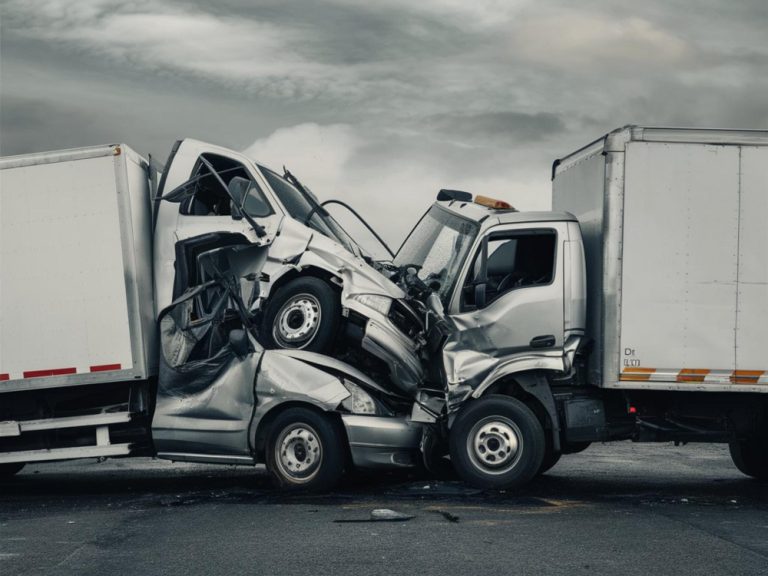
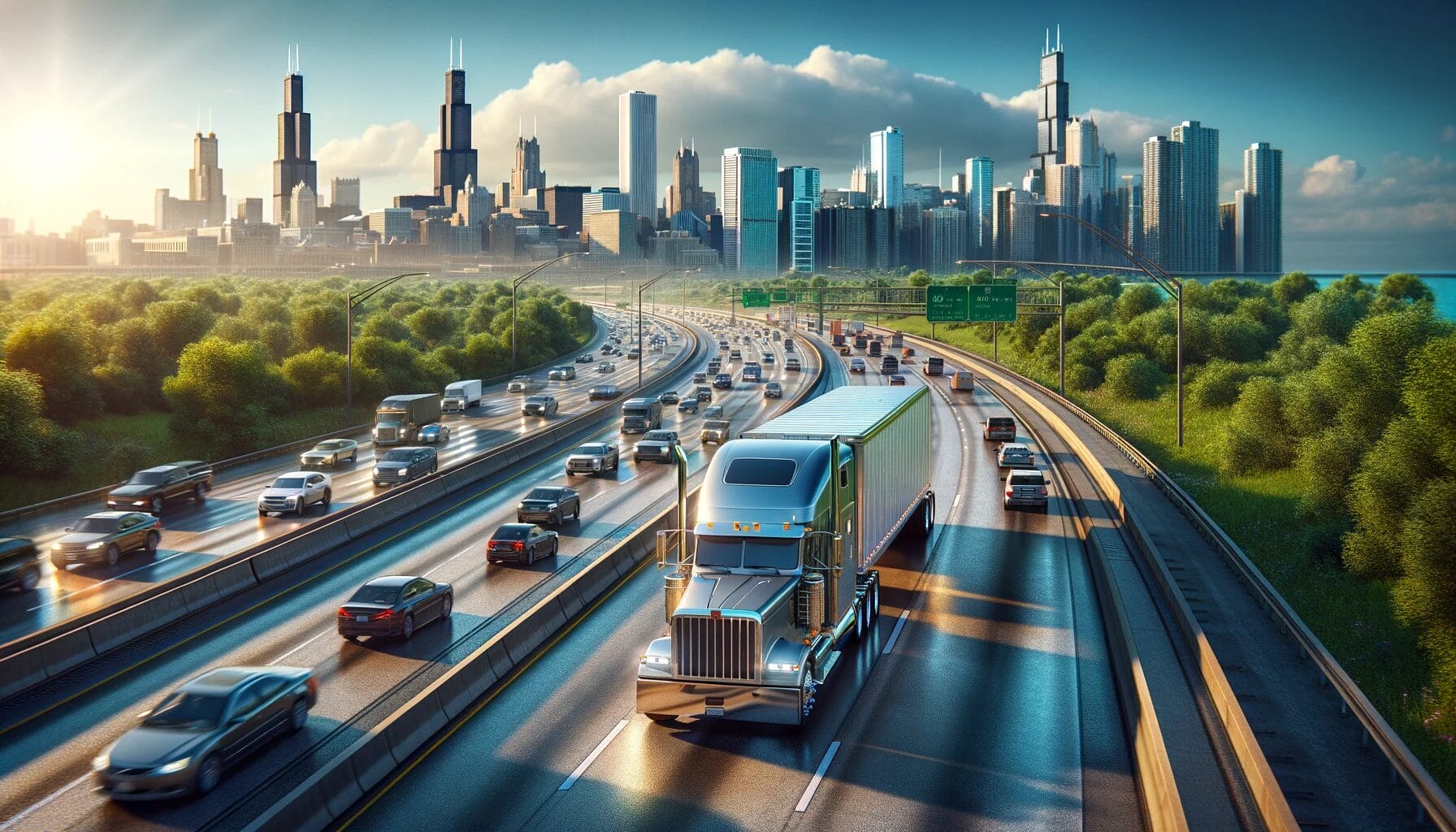
Chicago’s expressway system handles more commercial truck traffic than almost any other metropolitan area in the United States. The intersection of I-90, I-94, and I-294 creates one of the nation’s busiest freight corridors—and one of the most dangerous for truck accidents.
At Phillips Law Offices, we’ve represented countless victims injured in truck crashes on these highways. Understanding where and why these accidents occur is essential for drivers who share the road with 80,000-pound semi-trucks every day.
Why Chicago Is the Trucking Capital of America
Chicago’s position as a freight hub creates unique dangers. According to the Illinois Department of Transportation (IDOT), Illinois highways carry more than 500 million tons of freight annually, with a significant portion moving through the Chicago metropolitan area.
- Six major interstate highways converge in Chicago
- The region is home to the nation’s largest intermodal rail facilities
- O’Hare International Airport generates substantial truck traffic
- Distribution centers in the I-55, I-80, and I-88 corridors feed trucks into the system
- East-West and North-South freight routes all pass through Chicago
This concentration of commercial vehicles creates a perfect storm for serious truck accidents.
I-94: The Dan Ryan and Kennedy Expressways
I-94 through Chicago—comprising both the Dan Ryan and Kennedy expressways—consistently ranks among the most dangerous truck corridors in Illinois.
Dan Ryan Expressway Dangers
The Dan Ryan carries an average of 300,000 vehicles daily, with commercial trucks comprising a significant percentage. Key danger zones include:
- The Circle Interchange – Where I-90/94 meets I-290, featuring tight curves and merging traffic
- The 95th Street interchange – Heavy truck traffic accessing the Chicago Skyway
- Express/local lane transitions – Trucks moving between lanes create dangerous weaving patterns
- Chinatown curve – Sharp turns that have caused numerous truck rollovers
Kennedy Expressway Hazards
The Kennedy sees intense truck traffic serving O’Hare Airport and connecting to I-294. Common accident locations include:
- The O’Hare interchange – Complex merging with I-190 and airport-bound traffic
- Montrose Avenue curves – Where trucks must navigate tight bends at highway speed
- Express lane access points – Limited merge areas create dangerous conditions
I-90: The Jane Addams and Skyway
I-90 handles heavy truck traffic connecting Chicago to Wisconsin and the northwest suburbs. The Jane Addams Memorial Tollway sees some of the highest truck percentages in the state.
High-Risk Segments
- Elgin area interchanges – Where I-90 meets Route 20 and Route 25
- Rockford vicinity – Long-haul trucks entering from Wisconsin often show fatigue
- O’Hare-area convergence – Where I-90 joins I-94 and I-294
Chicago Skyway
The Skyway connects Chicago to Indiana and sees heavy truck traffic serving the Indiana toll road. The elevated structure presents unique dangers:
- Wind exposure makes trucks difficult to control
- Limited shoulders leave no room for error
- Toll plazas create sudden speed changes
I-294: The Tri-State Tollway
I-294 circles Chicago’s western suburbs and handles enormous truck volumes connecting I-80, I-88, I-90, and I-94. IDOT data consistently shows I-294 among the highest crash corridors.
Critical Danger Zones
- I-294/I-80 interchange – One of the busiest freight intersections in the Midwest
- I-294/I-88 junction – Where trucks from the East-West Tollway merge onto the Tri-State
- O’Hare vicinity – Airport freight traffic creates congestion and accident risk
- Northbrook Court area – Where three-lane sections narrow, creating bottlenecks
Why Truck Accidents Are More Severe on These Highways
Several factors make truck crashes on Chicago expressways particularly catastrophic:
High Speed Differentials
When traffic slows suddenly, fully loaded trucks traveling at 65+ mph cannot stop in time. The speed differential between stopped traffic and approaching trucks leads to devastating rear-end collisions.
Limited Escape Routes
Many Chicago expressway sections have concrete barriers on both sides. When a truck loses control, there’s nowhere for the vehicle—or surrounding cars—to go.
Multi-Vehicle Pileups
High traffic density means truck accidents often involve multiple vehicles. A single truck crash can trigger chain-reaction collisions involving dozens of cars.
Hazardous Cargo
Industrial chemicals, fuel, and other hazardous materials regularly travel these routes. Crashes involving hazmat loads can create secondary dangers including fires, explosions, and toxic releases.
Common Causes of Truck Accidents on Chicago Highways
Our investigation of Chicago expressway truck crashes reveals recurring causes:
- Driver fatigue – Long-haul drivers pushing through Chicago after hours on the road
- Congestion-related crashes – Trucks unable to stop for sudden traffic slowdowns
- Lane change accidents – Trucks changing lanes without seeing vehicles in blind spots
- Construction zone crashes – Narrow lanes and barriers leave no margin for error
- Weather-related incidents – Snow, ice, and rain affect truck handling on curves
- Mechanical failures – Brake problems, tire blowouts, and steering failures
- Distracted driving – Truckers using phones, GPS, or dispatch systems while driving
IDOT Crash Data: The Numbers
According to Illinois Department of Transportation crash reports, Cook County consistently leads the state in commercial vehicle accidents. Key statistics include:
- Illinois averages over 10,000 truck crashes annually statewide
- Approximately 30% of fatal truck crashes occur in the Chicago metropolitan area
- Truck crashes on interstates are more likely to result in fatalities than crashes on other roads
- Peak accident times coincide with rush hour congestion and overnight freight movements
Protecting Yourself on Chicago Expressways
While you can’t control truck driver behavior, you can reduce your risk:
- Avoid truck blind spots – If you can’t see the truck’s mirrors, the driver can’t see you
- Never cut off trucks – They need 40% more distance to stop than passenger cars
- Pass trucks quickly – Don’t linger alongside a semi-truck
- Leave extra following distance – Allow room to stop if a truck has problems ahead
- Watch for tire blowouts – Keep distance to avoid flying debris
- Be extra cautious in construction zones – Trucks have less room to maneuver
Contact Phillips Law Offices After a Highway Truck Accident
If you’ve been injured in a truck accident on I-90, I-94, I-294, or any Chicago-area expressway, you need experienced legal representation. These cases involve complex investigations, multiple potentially liable parties, and aggressive insurance company tactics.
Contact Phillips Law Offices today for a free consultation. We’ve successfully represented truck accident victims throughout the Chicago area and will fight to secure the compensation you deserve.